Sénégal: lenders regain confidence with new funding amid political shifts

Aldiouma Sow, a presidential adviser, has highlighted the significance of two major funding agreements: 340 billion FCFA from the World Bank and 20 billion FCFA from the African Development Bank, signaling a renewed trust from international lenders in Senegal’s economic direction.
New funding agreements spark political debate
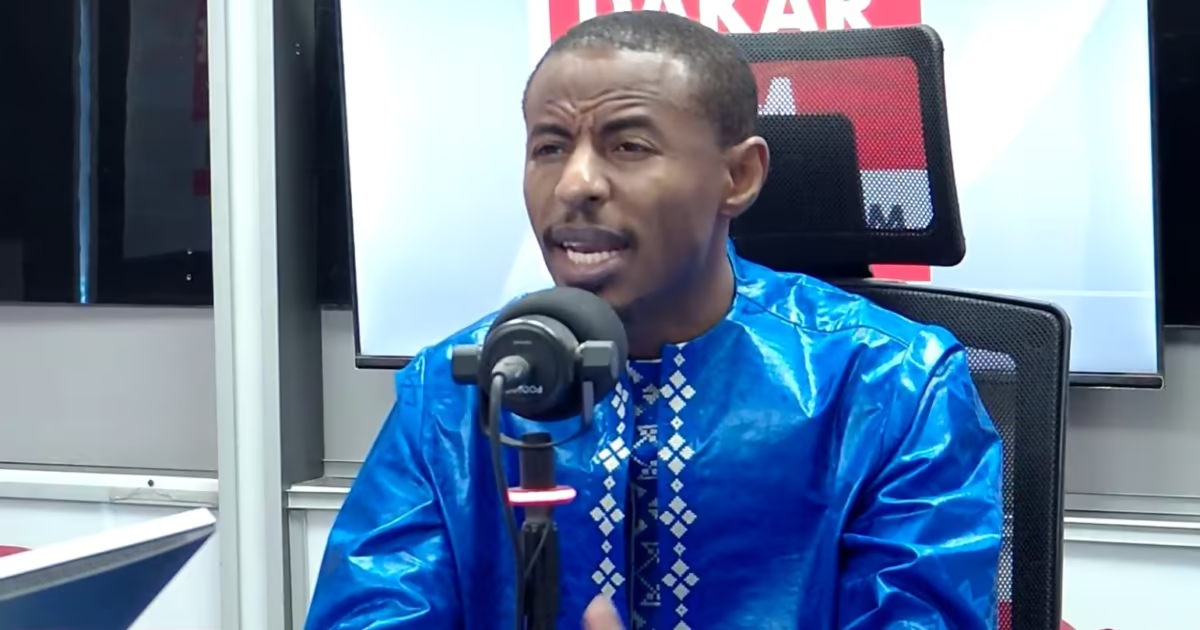
The recent financial boost to Senegal’s economy has triggered a strong reaction from Aldiouma Sow, a key advisor within the administration. In a pointed statement, he framed these developments as a turning point after years of political turbulence.
« Actions now speak louder than words; ideology is giving way to patriotic pragmatism. For the past two years, Senegal has endured a climate of perpetual confrontation and divisive rhetoric, which stifled progress and eroded trust among international partners. The evidence is clear: the real barrier to the country’s advancement was not external circumstances, but rather the failure to implement sound policies and the systematic undermining of the president’s mandate by what he and his circle—now rebranded within the National Assembly—once hailed as the ‘Messiah,’ » declared the advisor, who is also a founding member of the Kiiraay movement.
Financial confidence returns to Senegal
Aldiouma Sow emphasized that the fresh injections of capital—totaling 360 billion FCFA—demonstrate a clear shift in how international institutions view Senegal’s leadership. He argued that the funds reflect a broader recognition of the current administration’s commitment to stability, dialogue, and inclusive governance under President Bassirou Diomaye Faye.
« These financing deals mark the restoration of Senegal’s credibility among donors, who prioritize tangible projects over inflammatory rhetoric. They invest in serious initiatives aligned with a republican and stable vision, as championed by the Head of State and his team, » he stated. « The takeaway is simple: Senegal does not need perpetual institutional crises; it needs pragmatism, dialogue, and collaboration. »