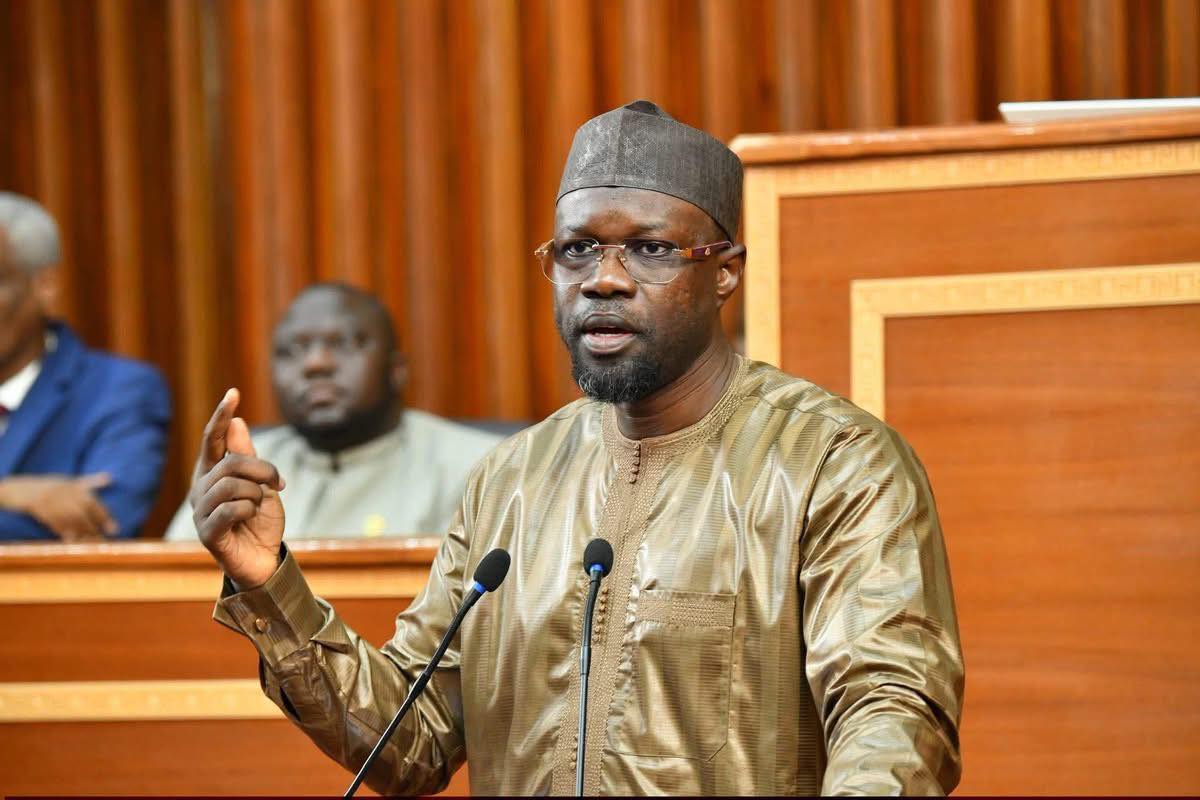
The swift ascension of Ousmane Sonko to the presidency of Senegal’s National Assembly has unfolded with such calculated precision that its chronological sequence appears meticulously designed rather than coincidental. Following his abrupt removal from a prior governmental role, Sonko’s political exile proved fleeting. Within days, he was reinstated—not merely as a backbencher, but as the presiding officer of the legislative chamber, a position traditionally reserved for figures of considerable influence.
The timing of this transition has left many political observers in a state of bewilderment. Just 24 hours after Sonko’s official removal from office, the sitting President of the National Assembly tendered an unanticipated resignation. Days later, without any apparent transitional phase, Sonko assumed the role, effectively seizing control of the legislative machinery. To his critics, the maneuver is unmistakable: the new Speaker now wields unprecedented authority over Senegal’s legislative apparatus.
Legislative dominance as a tool of political confrontation
With this newly acquired position, Sonko has positioned himself as a direct adversary to the executive branch. The circumstances suggest a deliberate strategy aimed at fostering a contentious cohabitation, one that could severely impede the President’s ability to govern. By dictating legislative agendas, shaping laws, and influencing budgetary allocations, the Speaker now possesses a formidable instrument of obstruction—one capable of stalling or redirecting the entire governmental machinery.
« This is no longer standard political maneuvering; it represents an institutional suffocation tactic, » remarked a political analyst who requested anonymity. « The battle for institutional supremacy has now been openly declared. »
Power acquisition: principle or pragmatism?
Among his detractors, Sonko is increasingly portrayed not as a champion of reform, but as a shrewd operator whose rhetoric of change masks a relentless pursuit of power. The image of the selfless tribune has, for many, given way to that of a cunning strategist, adept at exploiting crises to consolidate his influence. His opponents argue that his ascent mirrors the very system he once condemned—where power is seized, not earned through transparent means.
Today, Sonko holds a position he has long pursued: a pivotal institutional role that grants him direct access to the levers of legislative and political control. Yet the question remains: will this consolidation of power serve the broader interests of the Senegalese people, or is it merely the opening salvo in a broader campaign to destabilize the highest echelons of the state? One certainty persists—the realignment of political forces is in full motion, and the struggle to dominate Senegal’s institutions has only just begun.