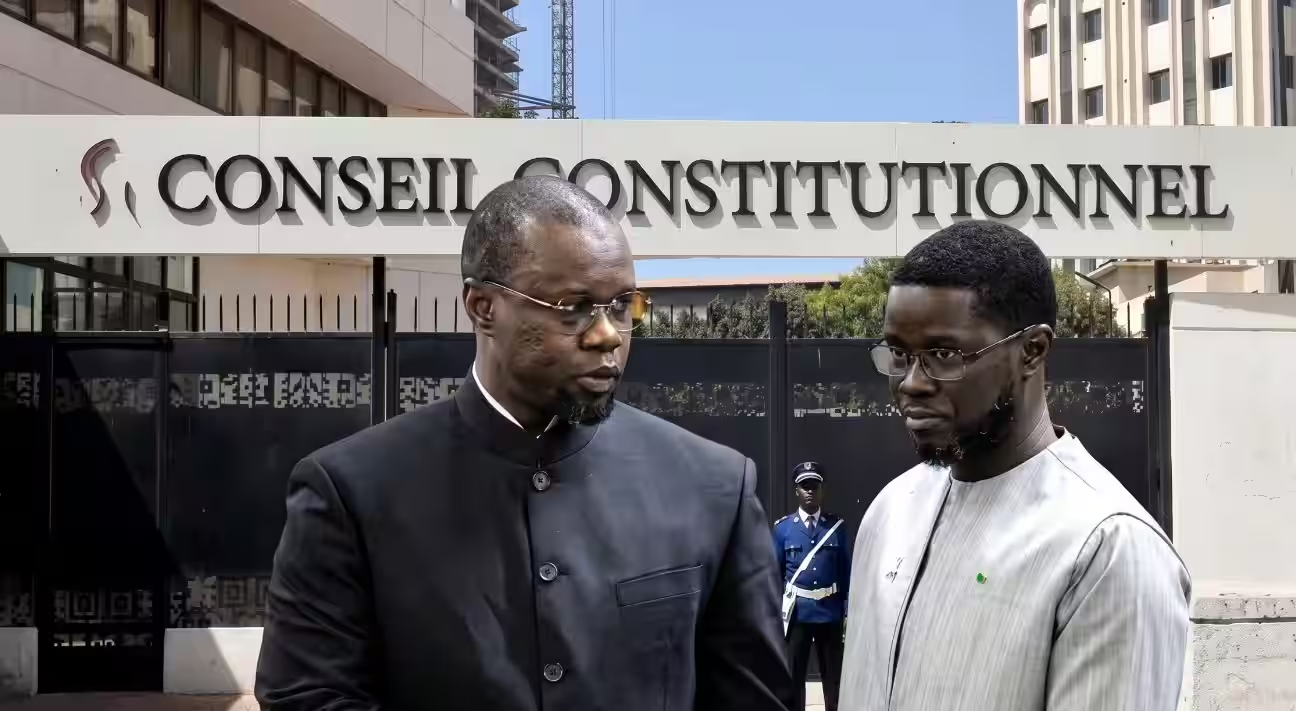
The recent decision by Senegal’s Constitutional Council to reinstate Ousmane Sonko as a member of the National Assembly has ignited intense legal and political discussions across the country. While the ruling was framed in procedural terms—citing the council’s lack of jurisdiction—many legal analysts argue it reflects a subtle but significant shift in the body’s jurisprudence.
The controversy centers on whether the council’s approach remains consistent with its earlier, more assertive role in shaping Senegal’s institutional landscape. Observers note a stark contrast between its recent restrictive stance and the more expansive interpretation it adopted during key moments, such as the February 2024 political transition.
Beyond electoral disputes: a deeper constitutional clash
The June 17, 2026 decision has exposed a divide in how Senegal’s highest constitutional authority interprets its mandate. Critics argue that the ruling prioritizes narrow legal technicalities over broader institutional stability—a departure from the council’s previous willingness to intervene in matters of governance.
Legal scholars highlight two distinct phases in the council’s recent history: one where it acted as an active regulator of institutional balance, and another where its decisions appear confined to procedural formalities. This shift raises questions about the council’s evolving role in safeguarding constitutional principles.
What the critics are saying
- Inconsistency in jurisprudence: Some analysts describe the ruling as a retreat from the council’s earlier boldness, warning that such inconsistency could undermine public trust in constitutional institutions.
- Procedural over substance: The focus on the judge’s alleged lack of jurisdiction, rather than the merits of Sonko’s case, has led to accusations that the decision sidestepped substantive constitutional issues.
- Broader implications: The ruling’s ripple effects extend beyond Sonko’s political future, casting doubt on the council’s ability to serve as a neutral arbiter in future institutional disputes.
The debate underscores the delicate balance between judicial restraint and active constitutional guardianship—a tension that lies at the heart of Senegal’s legal and political discourse.