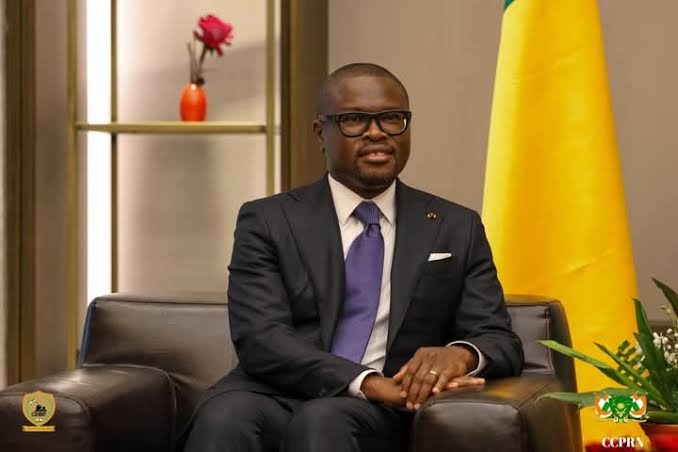
Ekoué Djro Glokpor has officially assumed leadership of the Togo National Directorate of the BCEAO, following his appointment during the second ordinary session of the National Credit Council held in Lomé on June 18, 2026. The ceremony unfolded against a backdrop of mixed signals in the financial sector, characterized by rapid advances in banking digitalization, a decline in business lending, and a heavy concentration of credit toward large corporations.

From Dakar to Lomé: a seasoned central banker returns
Glokpor’s appointment marks his return to Togo after years of service at the BCEAO headquarters in Dakar, where he held key roles as Director of Accounting, Director General of Organization and Information Systems, and Advisor to the Governor. He succeeds Akuwa Dogbe Azoma in the national directorate, a position that places him at the forefront of financial policy implementation in the country.
Addressing the National Credit Council, Glokpor expressed his commitment to the role: “Accepting this responsibility is both an honor and a profound challenge. I am fully aware of the weight of the task ahead.” His remarks were met with approval from Badanam Patoki, Togo’s Minister of Economy and Strategic Monitoring, who chaired the session in place of the absent Finance Minister, Essowè Georges Barcola.
Credit allocation imbalances highlight structural challenges
The session reviewed economic and monetary conditions as of March 2026, revealing stark disparities. While digital banking usage surged to 32.2%, average interest rates dipped to 7.5%, and bank and microfinance savings grew, business lending contracted by 15%. Credit institutions shifted focus toward regional financial markets, while microfinance institutions expanded their portfolios by 30%.
Sectoral credit distribution remains skewed: 70% of new financing flows to a small group of large enterprises, with agriculture receiving just 1.5% and housing 1.1%. Minister Patoki called on banks to leverage risk-sharing mechanisms such as the MIFA, FAGACE, and FSA to broaden access to capital for underserved sectors.
The gross rate of banking portfolio deterioration reached 13.4%, far exceeding the 2027 target of 5%. The Council urged affected banks to strengthen their recovery strategies to curb further losses.
Digital payments push gains momentum
In response to the growing demand for financial inclusion, the Council adopted an action plan to accelerate the digitalization of payments nationwide. While specific timelines and allocated resources were not disclosed, the initiative aims to modernize Togo’s financial infrastructure and expand access to digital services.
As national director, Glokpor will serve as the BCEAO’s primary liaison with Togo’s public authorities, the Ministry of Economy and Finance, and commercial banks operating in the country. The West African Economic and Monetary Union (UEMOA), of which Togo is a member, shares a common currency—the CFA franc—issued by the BCEAO, headquartered in Dakar.