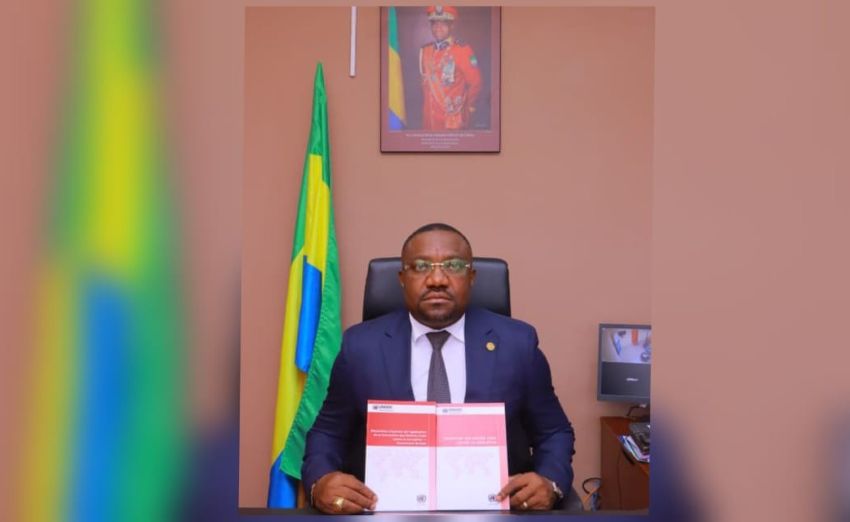
Gabon’s global transparency test: a critical week for governance
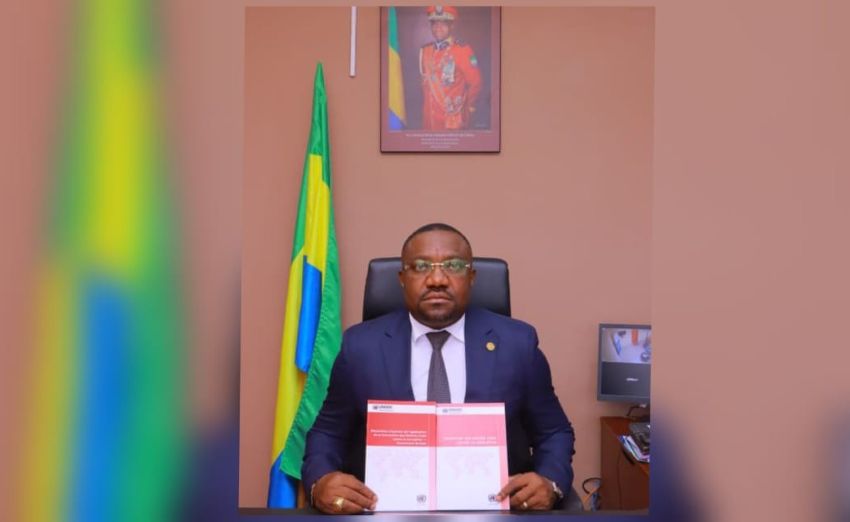
Libreville, June 19, 2026 — Late June in Libreville will host more than just a routine UN technical mission. The Gabonese capital is preparing to welcome one of the world’s most rigorous assessments of public governance, financial transparency, and anti-corruption efforts.
From June 29 to July 1, 2026, a team of experts from the United Nations Office on Drugs and Crime will conduct an in-depth review of Gabon’s systems for preventing corruption, detecting illicit financial flows, and recovering assets linked to economic crime.
Beyond protocol lies a far more critical question: in an era where a nation’s credibility hinges on the integrity of its institutions and the transparency of its economy, this evaluation is nothing short of a test of international trust.
Governance under the microscope
This mission is part of the second cycle of the United Nations Convention Against Corruption’s peer review mechanism, the global standard for combating corrupt practices. Gabon officially launched this process in October 2025 by submitting its self-assessment to reviewing States—Chad and Libya—and UNODC experts. Now, the Libreville evaluation will put those claims to the test.
The examination will focus on two core pillars of the Convention. First, it will assess preventive measures aimed at minimizing corruption risks in public administration. Second, it will evaluate asset recovery systems, a cornerstone of international cooperation in this field.
Experts will scrutinize mechanisms such as asset declarations, public procurement procedures, ethical standards for civil servants, budgetary control systems, and national frameworks for combating money laundering. Key institutions—including the National Commission to Combat Corruption and Illicit Enrichment, the National Financial Investigation Agency, economic and financial administrations, courts, security services, and regulatory bodies—will be directly engaged in this process.
The global fight against illicit assets
The heart of this evaluation lies in the chapter on asset recovery—a domain where public fund embezzlement, transnational corruption, and sophisticated money-laundering networks thrive. These illicit flows traverse multiple jurisdictions, often hidden behind complex international structures that are difficult to trace.
For Gabon, the stakes are twofold. First, the country must prove that its national systems meet international standards. Second, it must demonstrate that its institutions possess the technical and legal tools needed to safeguard public resources—an essential criterion for international financial partners, rating agencies, donors, and investors who increasingly prioritize governance performance.
Building credibility through transparency
The significance of this exercise extends far beyond the technical conclusions that will emerge. In a world where transparency and public accountability are non-negotiable, states that voluntarily submit to independent scrutiny signal a commitment to progress over complacency.
Gabon is embracing this approach. The Libreville mission is not merely an administrative formality; it is an opportunity to identify weaknesses, strengthen existing mechanisms, and deepen collaboration with international partners. More than an evaluation, this process is a statement of intent—a declaration that the fight against corruption is no longer just political rhetoric, but a tangible pillar of state modernization.
For Gabon, the goal is not only to be assessed, but to convince. The upcoming review in Libreville is more than an obligation—it is a rare chance to prove that governance reform is not just possible, but already underway.
Related posts
Real Madrid vs RB Leipzig: Champions League clash triggers fierce reactions and reshapes group dynamics
Aftermath of sharp defeats and rising tensions The upcoming Real Madrid vs RB Leipzig showdown in...
Lille’s Ligue 1 upset against Brest sparks intense post-match reactions and reshapes title race
The shock 0-1 defeat suffered by Lille against Brest in the 7th matchday of Ligue 1...
Moussa Kaka’s disappearance in Niger: one month on, outrage grows and questions mount
More than a month has passed since Moussa Kaka, a towering figure in Niger’s journalism and...