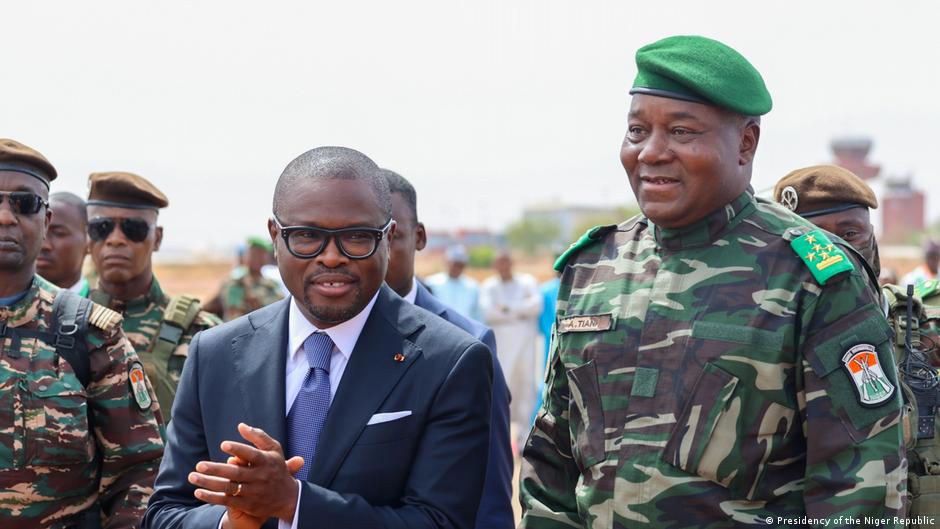
The newly elected President of Bénin, Romuald Wadagni, took office on May 24 and immediately set out on a regional tour that included stops in Nigeria, Niger, Mali, Burkina Faso, Togo, Côte d’Ivoire, and Sénégal. This diplomatic initiative marks a decisive shift in Bénin’s foreign policy, moving away from the strained relations that characterized the tenure of his predecessor, Patrice Talon, particularly with the Alliance of Sahel States (AES).
A fresh diplomatic vision for West Africa
This strategic pivot reflects a broader trend in West Africa, where nations are recalibrating their foreign policies in the wake of recent political upheavals. The Alliance of Sahel States, formed in 2023 by Niger, Mali, and Burkina Faso, has reshaped regional dynamics, prompting neighboring countries like Bénin to rethink their diplomatic approach.
The new administration in Cotonou is prioritizing engagement over confrontation, focusing on security cooperation and economic collaboration. This pragmatic shift aims to restore stability and foster mutual growth across the subregion, especially in areas facing shared challenges such as terrorism and economic instability.
Can this diplomatic reset succeed?
The success of this new diplomatic strategy remains uncertain, but early signals suggest cautious optimism. President Wadagni’s willingness to engage directly with the Alliance of Sahel States demonstrates a departure from previous isolationist tendencies, potentially paving the way for stronger regional partnerships.
Key voices on the new Bénin-AES relationship
The evolving diplomatic landscape was the focal point of a recent discussion featuring prominent analysts and journalists:
- Paul Amoussou, Editor-in-Chief of La Nation, a leading national newspaper in Bénin.
- David Dosseh, Spokesperson for Togo Debout, a civil society movement in Togo.
- Ousmane Ndiaye, Independent journalist and political commentator.