Senegal reconsiders IMF dependence for debt management
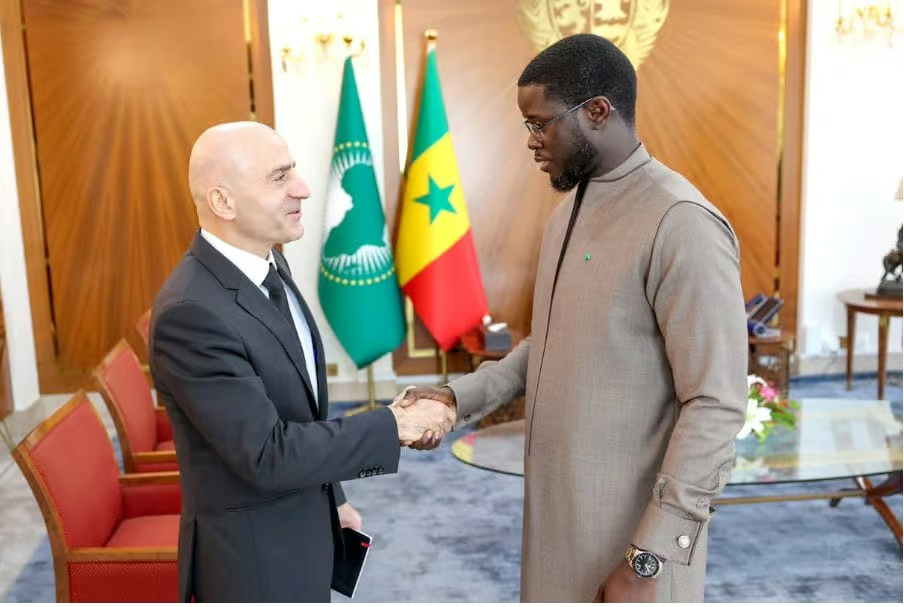 President Bassirou Diomaye Faye meets with Edward Gemayel, IMF mission chief for Senegal, in Dakar on August 28, 2025 © DR
With Senegal’s debt burden once again dominating economic discussions, policymakers in Dakar are actively exploring alternative financing solutions that extend beyond traditional International Monetary Fund programs. This strategic shift comes as the country faces significant budgetary constraints while seeking avenues to stimulate economic growth without compromising fiscal stability.
In response to these challenges, economists and government officials have convened to examine innovative approaches to debt restructuring and funding mechanisms. The primary focus remains on maintaining financial maneuverability while reassuring regional partners, investors, and international markets about Senegal’s economic resilience.
As a member of the West African Economic and Monetary Union (UEMOA), Senegal operates within a shared monetary framework where debt sustainability and fiscal discipline are closely monitored across the subregion. This coordinated approach aligns with guidelines from regional bodies including the Economic Community of West African States (ECOWAS), the African Union, and the African Development Bank.
exploring innovative debt financing solutions
The emerging strategy prioritizes diversifying funding sources to reduce reliance on conventional multilateral institutions. Key alternatives under consideration include:
- Enhanced regional market utilization: Leveraging the UEMOA regional capital market more effectively to secure financing at potentially lower costs
- Domestic savings mobilization: Strengthening mechanisms to channel local savings into productive investments
- Themed bond issuances: Developing specialized debt instruments that align with national development priorities
- Concessional financing expansion: Increasing access to low-interest loans and grants from development partners
The ultimate goal is to minimize debt servicing costs that currently strain public expenditure while avoiding abrupt adjustments that could negatively impact households and businesses. Experts emphasize the importance of carefully balancing fiscal consolidation with growth-supportive measures.
balancing revenue enhancement with economic vitality
Financial analysts highlight the need for a multi-pronged approach that combines:
- Gradual tax base expansion without stifling economic activity
- Transparent public financial management to build investor confidence
- Strategic prioritization of public investments
This comprehensive strategy aims to free up resources currently consumed by debt service payments, which in several African nations have significantly reduced governments’ capacity to fund critical sectors like infrastructure, education, and healthcare. The Senegalese case has drawn regional attention as it exemplifies a broader challenge facing African economies seeking to achieve liquidity without over-reliance on multilateral assistance programs.
The ongoing reassessment of debt management approaches reflects a growing consensus among policymakers about the need for more sustainable and flexible financing solutions that can adapt to Senegal’s evolving economic landscape.