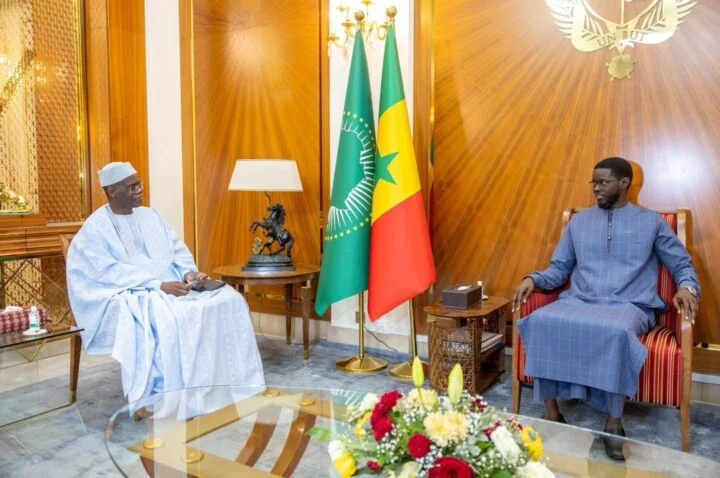
Following the swearing-in of President Bassirou Diomaye Faye, Senegal’s political landscape continues to evolve with the formation of a new government led by Prime Minister Ahmadou Al-Aminou Lo. While the PASTEF-Les Patriotes party, led by Ousmane Sonko, has opted out of the executive, several ministers within the cabinet maintain close ties to Sonko’s inner circle, sparking political discussions across the country.
Key appointments with PASTEF connections
Despite the party’s withdrawal, the new administration includes figures whose names resonate strongly with Ousmane Sonko’s political movement. Among them are Yankhoba Diémé, who has been appointed Minister of Armed Forces, Cheikh Tidiane Dièye, now overseeing Hydraulics and Sanitation, and Ibrahim Sy, who takes charge of Health and Public Hygiene. Rounding out the group are Marie Angélique Mame Selbe Diouf at the Ministry of Family and Social Solidarity, and Déthié Fall, leading the Infrastructure portfolio.
These appointments reflect a blend of political alliances forged during the 2024 presidential campaign, which united Sonko and Bassirou Diomaye Faye’s supporters under a shared vision for Senegal’s future. While some ministers are widely recognized as part of the PASTEF movement, others, including Cheikh Diba, Cheikh Niang, and Boubacar Camara, are seen as technocrats or independent figures with no direct partisan ties.
Political implications of the new cabinet
The inclusion of these personalities—despite PASTEF’s absence—raises questions about the new government’s alignment and the internal dynamics at play within the ruling coalition. As Senegal navigates its post-election transition, the balance of power between technocratic governance and political representation remains a focal point for observers and citizens alike.