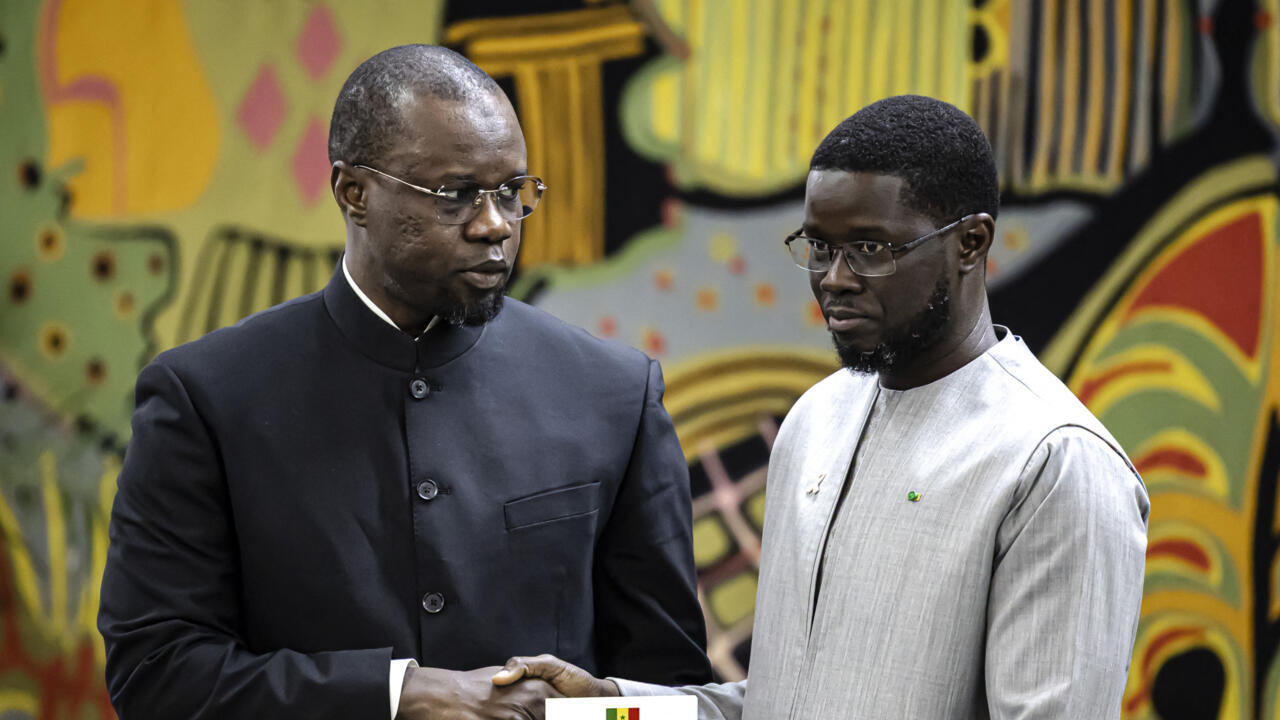
Bassirou Diomaye Faye and Ousmane Sonko’s alliance lasted barely two years. After dismissing his former Prime Minister from office, the President of Senegal now finds himself in uncharted political territory. Sonko, now Speaker of the National Assembly, has been re-elected with overwhelming support to lead the Pastef party— Senegal’s dominant force in Parliament yet absent from the government. How did this fracture occur? Will the cohabitation between the Head of State and the Assembly President remain viable? More importantly, could these tensions overshadow the pressing needs of the Senegalese people?
Today’s panel of experts:
- Abdoulaye Tine, Senior Advisor and Spokesperson for the Presidency of the Republic.
- Amadou Ba, Former Minister of Culture, Member of Parliament, and National Secretary in charge of Communication for the Pastef party.
- Babacar Ndiaye, Political Analyst and Research Director at the Wathi think tank.
From partnership to confrontation: what led to the split?
The political partnership between President Bassirou Diomaye Faye and former Prime Minister Ousmane Sonko was widely seen as a cornerstone of Senegal’s recent democratic transition. Their collaboration, rooted in shared reformist ambitions, aimed to reshape the country’s governance and economic direction. However, their alliance collapsed after only two years, raising critical questions about the sustainability of Senegal’s new political model.
The dismissal of Ousmane Sonko from the Prime Minister’s post marked a decisive break. This move, followed by his election as Speaker of the National Assembly and re-election as leader of the Pastef party, has intensified the power struggle. The party, though holding a majority in Parliament, remains excluded from the government, creating a complex cohabitation scenario.
Can cohabitation work in Senegal’s evolving political climate?
Cohabitation—where the President and the Assembly Speaker, often from opposing political forces, must work together—is not new in Senegal. However, the current context is unprecedented. The President’s decision to remove his former ally from the government has sparked intense debate about the future of collaboration between the executive and legislative branches. Will this division strengthen or weaken the country’s democratic institutions?
Analysts point to the risk of prolonged instability if political tensions escalate. The absence of the Pastef party in the government could hinder policy implementation, particularly on key issues such as economic reform, social justice, and regional security. Meanwhile, the Speaker’s continued influence over the party and Parliament adds another layer of complexity to the power dynamics.
What does this mean for the Senegalese people?
The political rift comes at a critical time for Senegal. The country faces pressing challenges, including economic recovery, youth unemployment, and regional instability in the Sahel. With public trust in institutions already fragile, the current tensions risk diverting attention from urgent national priorities.
Senegalese citizens are now questioning the long-term impact of this political divide. Will the government and opposition find common ground to address the nation’s challenges? Or will the standoff deepen divisions and undermine progress?
The answers to these questions will shape Senegal’s political and economic trajectory in the coming months. As the nation navigates this uncertain period, the ability of its leaders to prioritize the collective good over personal and partisan interests will be crucial.