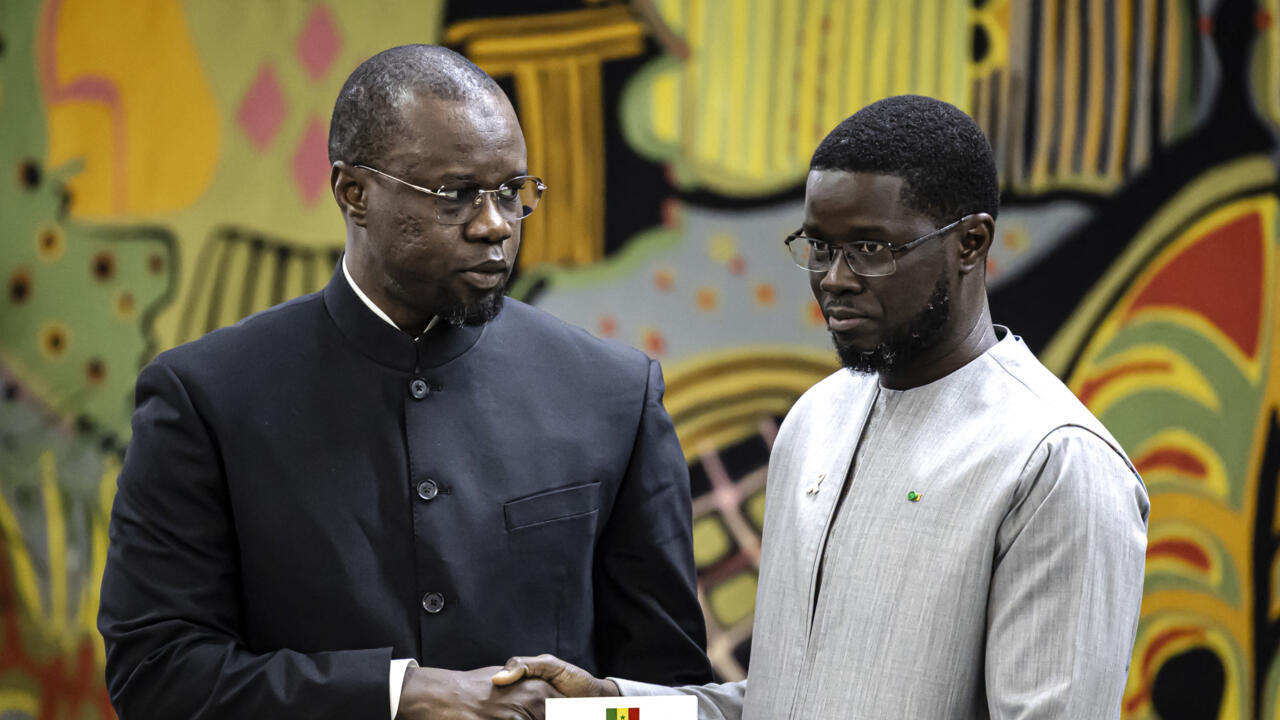
Bassirou Diomaye Faye and Ousmane Sonko’s alliance lasted barely two years. The President of Senegal has now removed his former Prime Minister from office, marking a decisive break in their partnership. Sonko, who now presides over the National Assembly, remains the influential leader of the Pastef party—dominant in Parliament but excluded from the government. How did this political fracture occur, and what does it mean for the future of governance in Dakar? Could this escalating tension overshadow the pressing needs of the Senegalese people?
Key voices in the debate
- Abdoulaye Tine, Senior Advisor and Spokesperson for the Presidency of the Republic.
- Amadou Ba, Former Minister of Culture, Member of Parliament, and National Secretary for Communication of the Pastef.
- Babacar Ndiaye, Political Analyst and Director of Research at the Wathi think tank.
Understanding the break
President Bassirou Diomaye Faye’s decision to dismiss Ousmane Sonko from the Prime Minister’s role has reshaped Senegal’s political landscape. Sonko, now Speaker of the National Assembly, continues to lead the Pastef party—a force in Parliament but notably absent from the executive branch. This shift raises critical questions: What were the decisive factors behind this separation? Will the two leaders manage to coexist despite their differences, or will their rivalry undermine the nation’s priorities?
Consequences for governance and public trust
The political rift between the President and the Assembly leader introduces new uncertainties. With Pastef holding a majority in Parliament but not in government, the stage is set for potential legislative-executive friction. Citizens across Senegal may find their immediate concerns—economic stability, social services, and national unity—taking a backseat to the unfolding power dynamics in Dakar.