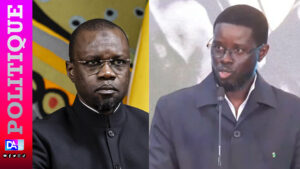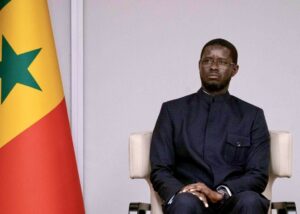
In a striking departure from their usual reserved dynamic, President Bassirou Diomaye Faye has issued a public reprimand to his Prime Minister and Pastef party leader, Ousmane Sonko. The president’s message, delivered in Wolof with the proverb « Fii, saa fitnë dotufi nanee ñeex »—roughly translating to « Here, discord finds no room »—signals a decisive shift in tone for a duo long portrayed as inseparable. This public intervention follows mounting signs of internal friction within the ruling coalition that can no longer be ignored.
Breaking the silence: a presidential reset
Since assuming office together in April 2024, President Diomaye Faye and Prime Minister Sonko have cultivated an image of unbreakable partnership, forged through legal battles and a resounding electoral victory. The president embodies the office, while Sonko represents the movement’s political force. This bicameral leadership model worked as long as the party maintained a unified reform agenda.
The president’s public statement disrupts this delicate balance. By addressing the issue directly—and in Wolof, the language of Senegal’s grassroots—he signals that internal tensions will no longer be allowed to undermine governance. The use of a proverbial phrase elevates the warning beyond a personal rebuke, transforming it into an institutional reminder for the entire Pastef apparatus.
Pastef faces power’s growing pains
The movement founded by Ousmane Sonko is navigating a critical phase. With a commanding majority in the National Assembly following November 2024’s snap elections, Pastef now confronts the contradictions of governance. Promised accountability to voters, tough budgetary choices amid strained finances, and administrative appointments have fueled internal rivalries the party struggles to contain.
Recent weeks have seen several high-profile cadres make uncoordinated public statements, revealing deep divisions over economic strategy, judicial policy, and the pace of institutional reforms. The question of who sets the government’s doctrine—presidency or prime minister’s office—has now spilled into public debate. It is this undercurrent of unrest that President Diomaye Faye aims to quell.
The stakes: governance and national credibility
Beyond party politics, the president’s warning carries strategic weight. Senegal is in talks with the International Monetary Fund (IMF) for a new cooperation framework, amid rising public debt and scrutiny over figures from the previous administration. International investors and regional partners are closely watching the cohesion of the executive duo. Any visible rift at the top fuels perceptions of heightened political risk.
The president’s statement also serves to reposition executive authority. By asserting that he embodies the continuity of the state, Diomaye Faye reclaims a leadership role no longer willing to be reduced to mere protocol. The Wolof word Fii—« here »—evokes a space: the republic’s power, where partisan logic must yield to national interest. Observers in Dakar’s political circles have not missed this semantic shift.
The true impact of this warning on Pastef’s internal dynamics remains to be seen. Ousmane Sonko retains significant grassroots support, with popularity among urban youth that still outshines the president’s in some circles. The next moves will depend on whether the two leaders can turn this recalibration into lasting role clarity—or if tensions simmer beneath the surface of the presidential camp.