The Democratic Republic of the Congo (DRC) has grappled with a severe and unrelenting hunger crisis for over two and a half decades. Today, 26.5 million people in the country face stark food insecurity, struggling daily to secure even the most basic nutritional needs. The DRC currently holds the third-highest global hunger index ranking, trailing only behind Somalia and South Sudan—two nations that receive far greater international attention.
Decades of conflict fuel widespread food insecurity
The root cause of this crisis extends beyond environmental or economic factors. Since the First Congo War in 1996, the country has endured a prolonged armed conflict along its eastern border. Unlike the acute famines driven by extreme weather in Somalia and South Sudan, the DRC’s hunger crisis stems from entrenched violence—making it harder to capture global headlines but no less devastating. Last year, escalating clashes led the rebel group M23 to seize control of Goma, a critical commercial hub that had sustained regional trade networks. This takeover displaced 7.8 million Congolese, exacerbating food shortages, disrupting sanitation systems, and intensifying humanitarian challenges in the region.
Humanitarian response meets overwhelming need
In response, the United Nations Food and Agriculture Organization (FAO) and the World Food Programme (WFP) have launched emergency interventions to address the immediate hunger crisis. With a $10 million allocation from the DRC Humanitarian Fund, these agencies have delivered critical food assistance and cash-based aid to approximately 1.3 million people. Yet, this effort—though vital—pales in comparison to the $214 million funding gap required to support every Congolese affected by the crisis.
Long-term solutions to rebuild food security
Beyond emergency relief, the FAO and WFP are prioritizing sustainable strategies to strengthen local resilience. Malnutrition remains a dire threat, with over 4.18 million children under five suffering from acute malnutrition. To combat this, the WFP has introduced nutrition-focused cooking programs in dozens of villages, teaching families to prepare balanced meals using locally sourced ingredients. This initiative not only improves child nutrition but also fosters self-reliance by reducing dependence on external aid.
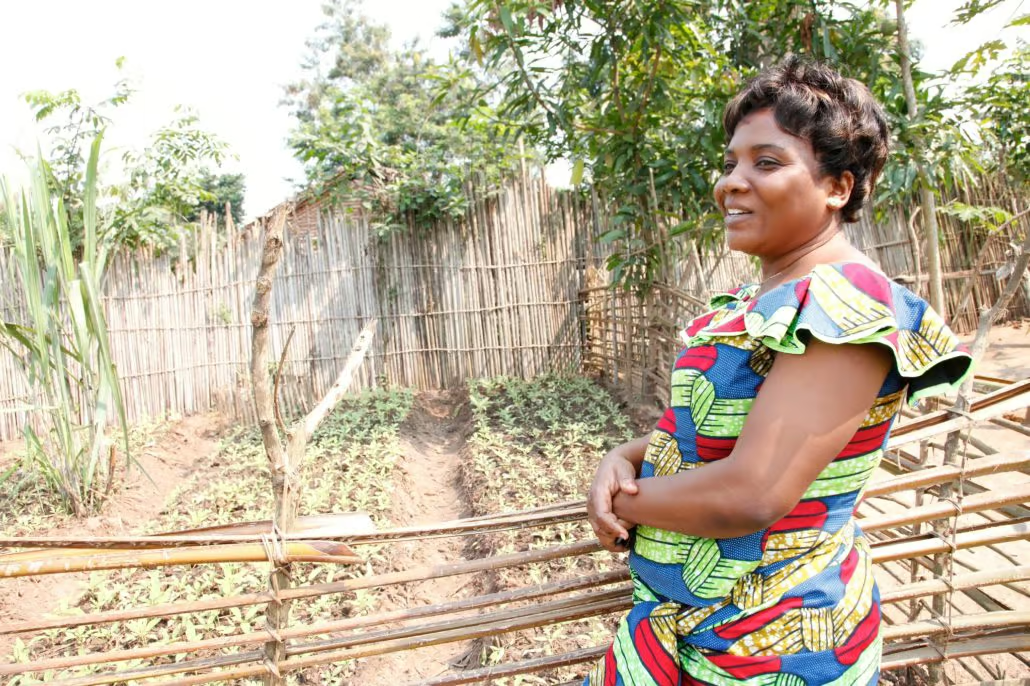
Meanwhile, the FAO is working to revitalize the agricultural sector by providing seeds, tools, and livelihood support to help families restore food production. These measures aim to reduce reliance on humanitarian aid, yet the FAO still faces a critical shortfall of $163 million to scale up its agricultural assistance before the next planting season—without which, food insecurity will deepen.
Funding shortages hinder progress toward lasting relief
The hunger crisis in the DRC—already one of the world’s most severe—has worsened since the M23’s takeover of Goma. While the FAO and WFP’s dual strategy—combining emergency aid with long-term agricultural support—offers a glimmer of hope, their efforts are severely constrained by a $214 million funding deficit. Ending chronic hunger in the DRC will demand sustained international donations and commitment to both urgent relief and sustainable recovery. Only through collective action can the global community turn today’s humanitarian emergency into a foundation for food security tomorrow.