Spanish Foreign Minister José Manuel Albares has leveled an unprecedented accusation against the opposition Partido Popular (PP), labeling it an “anti-Moroccan” force amid escalating political tensions. The clash goes beyond routine government-opposition disputes, as Albares argues the PP is transforming bilateral relations—particularly with Morocco—into a tool for internal political gain.
The minister contends that the PP has become an “obstacle” to Spain’s foreign policy objectives, citing recent statements from current and former party leaders as evidence of this shift. Yet beneath the political posturing lies a deeper strategic reality: since 2022, Spain and Morocco have built an unparalleled partnership spanning migration control, economic ties, security cooperation, and even co-hosting the 2030 FIFA World Cup. By December 2025, the two nations deepened this alliance with 14 new cooperation agreements and a joint declaration to strengthen political dialogue.
The Western Sahara dilemma: a key test for Feijóo
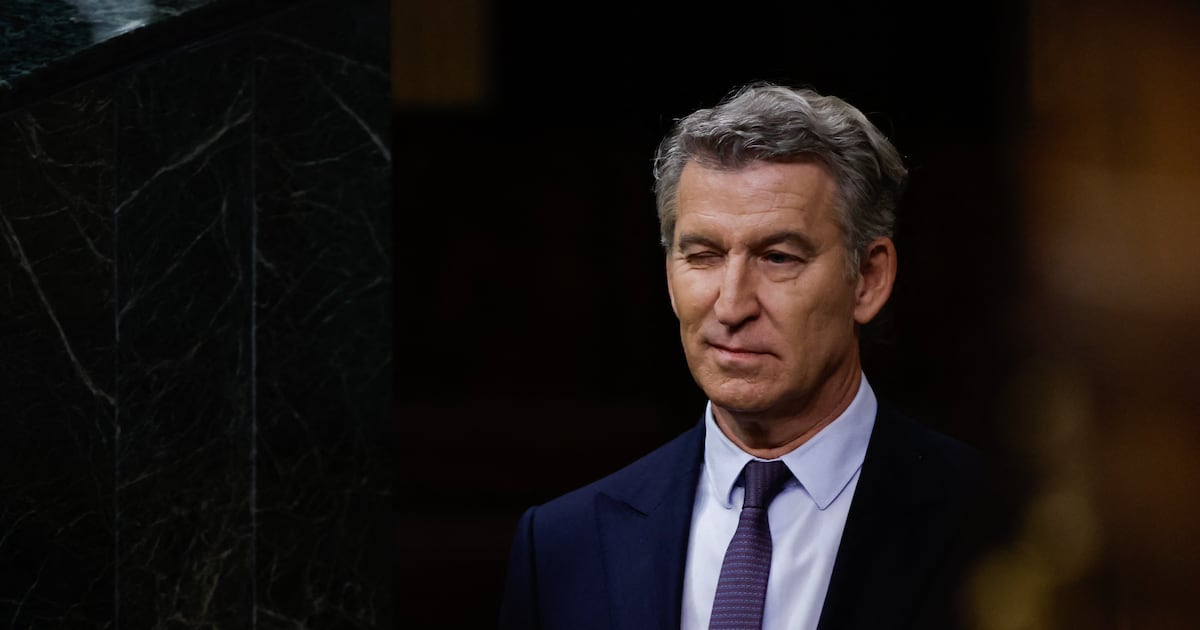
The PP’s stance on Western Sahara remains its most glaring contradiction. When Prime Minister Pedro Sánchez endorsed Morocco’s autonomy plan in March 2022 as the “most serious, credible, and realistic” solution, the PP condemned the move as a break from decades of bipartisan consensus. Opposition leader Alberto Núñez Feijóo criticized the decision for bypassing consultation with the main opposition party, despite his own party’s history of avoiding explicit opposition to Rabat’s proposal during Mariano Rajoy’s tenure.
The PP’s position has never been monolithic. While some within the party advocate for a strong strategic relationship with Morocco, others align with separatist views. This divide became glaring in July 2025 when a self-proclaimed Polisario representative attended the PP’s national congress, sparking controversy and fueling Moroccan doubts about Feijóo’s potential government.
By February 2026, Albares accused the PP of “double-speak”, claiming party emissaries privately supported Morocco’s Sahara stance while publicly criticizing it. For Feijóo, inheriting power could mean confronting a harsh reality: undoing Spain’s current position on Western Sahara would require more than revising a diplomatic statement—it would reopen one of Madrid and Rabat’s most sensitive disputes.
A shifting international landscape
Should the PP win the next election, it would do so in a vastly different global context. Morocco’s autonomy initiative has gained broader international support, and Spain’s Sahara policy is now embedded in a much larger bilateral framework. Reverting to pre-2022 policies wouldn’t just mean changing a phrase in an official statement—it would risk destabilizing a relationship carefully cultivated over years of cooperation.
Yet the PP has yet to clarify whether a Feijóo-led government would maintain Spain’s current stance or revert to its previous approach. The ambiguity persists, leaving Morocco—and Spain’s other partners—questioning the party’s true intentions.
Vox’s influence and the rise of ‘national priority’
The Sahara dispute isn’t the only source of tension. Over the past year, immigration and welfare access have become key battlegrounds, with the PP under pressure from the far-right Vox party. In April 2026, the concept of “national priority”—long tied to European far-right movements and championed by Vox—burst into Spain’s political debate. The PP faced internal divisions as some members warned of legal and political risks in adopting a term historically linked to extremism.
While party spokesperson Jaime de los Santos insisted that “all legally residing immigrants have the same rights as Spanish-born citizens,” others in the PP framed the debate around “residential anchoring” or “priority within limits.” Yet the damage was done: Vox had successfully pushed its agenda into the mainstream, forcing the PP to respond.
The pragmatism trap: can Feijóo reconcile words and action?
The PP’s greatest challenge is a paradox: as an opposition party, it can criticize Sánchez’s Morocco policy to gain votes, but as a potential government, it would inherit a relationship too vital to disrupt. Cooperation with Morocco isn’t just ideological—it’s rooted in geography, trade, security, and shared interests. The most likely outcome isn’t a rupture but a contradiction between campaign rhetoric and governance reality.
Albares’ allegations of covert PP diplomacy in Morocco suggest the party may already be more pragmatic in private than its public stance implies. If Feijóo takes office, he’ll face a critical test: either translate opposition criticism into policy—risking a new era of uncertainty with Rabat—or acknowledge that Morocco requires a pragmatic approach the PP has yet to embrace openly.
The choice could define the early foreign policy legacy of any Feijóo government—and determine whether Spain’s Morocco strategy remains a pillar of stability or becomes a casualty of political posturing.