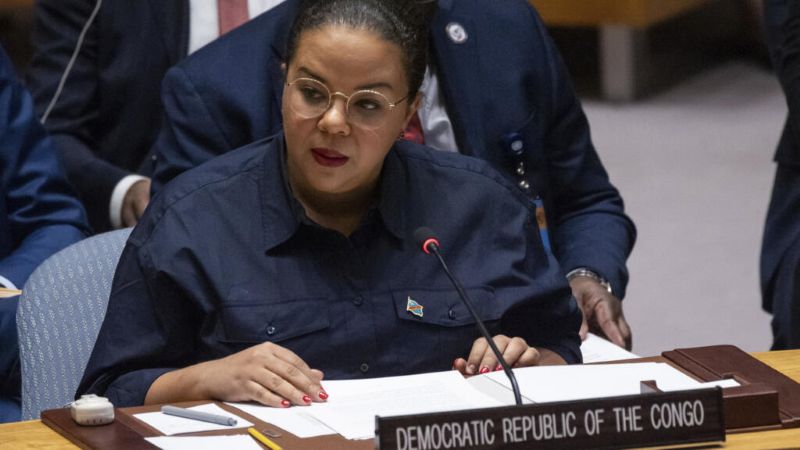
Natural wealth should bolster a nation’s sovereignty—never its instability. This principle guided the Democratic Republic of Congo’s bold diplomatic stance at the United Nations this week, as Kinshasa redefined its role in the global energy transition.
On July 14, 2026, Foreign Minister Thérèse Kayikwamba Wagner delivered a sharp rebuke to the international community during a high-level UN session on critical minerals. Her message was clear: the DRC will no longer accept being a mere exporter of raw materials. Instead, Kinshasa is demanding recognition as a key industrial hub for minerals essential to electric batteries, digital technologies, and renewable energy systems.
The DRC’s vision: from exporter to industrial leader
In her address to UN member states, the Congolese foreign minister argued that the global energy transition cannot be called ‘just’ as long as resource-rich nations export raw minerals without retaining the added value generated by processing them. ‘The real question isn’t where the minerals come from—it’s where the wealth they create ends up,’ she declared, calling for urgent investment in infrastructure, clean energy, research, and modernized artisanal mining.
The DRC’s ambition is rooted in a strategic shift: moving beyond extraction to become a continental center for industrial transformation. This vision hinges on international partnerships that prioritize technology transfer, capacity building, and fair distribution of profits across global supply chains.
Rwanda in the crosshairs over illegal mineral exploitation
The minister’s speech took a decisive turn when she addressed the security crisis in eastern DRC. Citing UN expert reports, she highlighted the case of Rubaya, whose coltan mines supply nearly 15% of global demand. According to experts, over 1,400 tons of coltan were smuggled into Rwanda after the M23 rebel group—backed by Kigali—seized control of the area. This illicit trade generates approximately $800,000 monthly for the armed faction.
Kayikwamba Wagner condemned the lack of UN sanctions against Rwanda’s Defence Forces, framing it as evidence of a broken system unable to curb the financing of conflicts through illegal resource exploitation. ‘Natural resources must be linked to peace, security, and sustainable development—not to war and instability,’ she asserted.
A call for systemic change in global mineral governance
During the DRC’s presidency of the UN Security Council, the foreign minister unveiled a proposal for a unified international framework linking natural resource governance to conflict prevention, peacebuilding, and sustainable growth. She urged all stakeholders—producers, traders, processors, financial institutions, industrialists, and consumer nations—to enforce traceability standards that expose fraud, smuggling, and arms financing without penalizing legitimate artisanal miners.
Beyond economic stakes, Kinshasa’s intervention seeks to reposition the debate on critical minerals. No longer content with defending its resources, the DRC is pushing for a complete overhaul of global governance in the energy transition—one that finally rewards producer nations with the economic dividends of their wealth.
By taking this stand at the UN, Congolese diplomacy aims to intensify pressure on Rwanda over illegal resource exploitation in eastern DRC while placing mineral governance at the heart of discussions on international peace, security, and sustainable development.