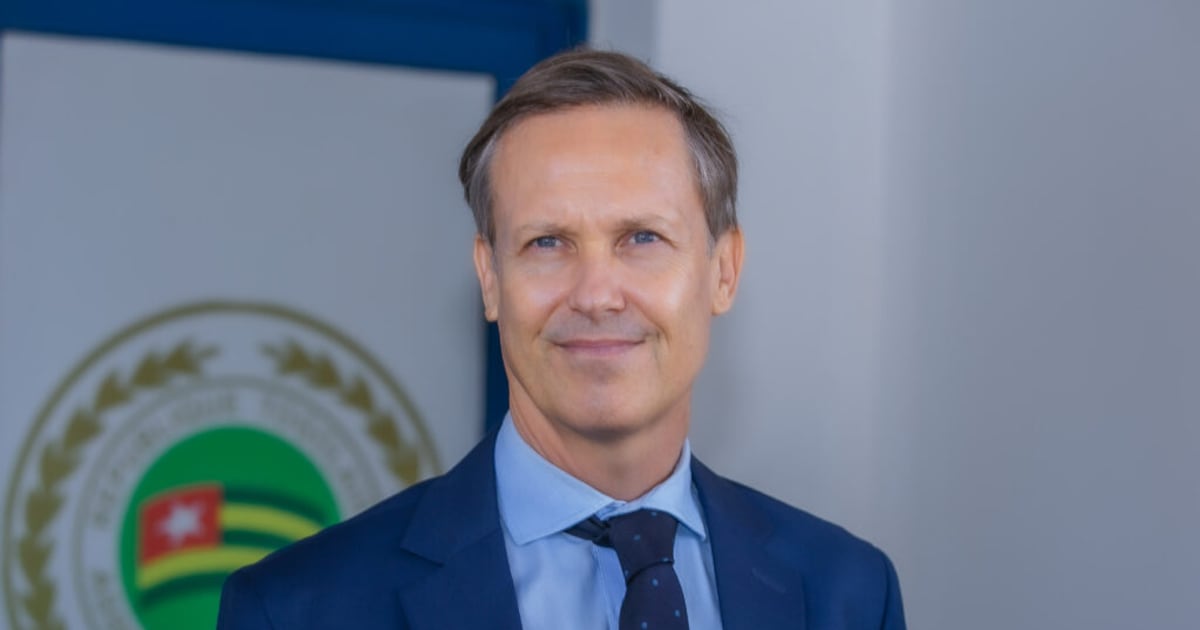
The European Union (EU) has reaffirmed its dedication to deepening its partnership with Togo amidst a global landscape defined by significant geopolitical friction. During the Europe Day celebrations held in Lomé on May 9, Gwilym Ceri Jones, the Head of the EU Delegation to Togo, highlighted the importance of European achievements while addressing the security and diplomatic challenges currently facing the international community.
In a world marked by rising armed conflicts and global economic instability, the European diplomat emphasized that the EU intends to remain a steadfast and reliable ally for African nations, with a specific focus on Togo. He noted that this cooperation is built on a foundation of respect for international law and mutual trust.
Tangible results of EU-Togo cooperation
The partnership has already yielded significant socio-economic benefits. According to recent data, more than 1.3 million Togolese citizens are now reached by European-funded electrification programs. Furthermore, waste collection and processing systems have been established for over 2.5 million people. Another major infrastructure project currently in progress is the rehabilitation of the RN2 highway, which links Lomé and Aného to the Benin border.
Gwilym Ceri Jones also indicated that the EU is prepared to facilitate an 18% increase in Togo’s total electricity production, primarily through the expansion of renewable energy sources.
Togo as a regional mediator and security pillar
Beyond infrastructure and energy, the EU representative praised Togo for its humanitarian efforts, specifically the hosting of 60,000 refugees in the northern part of the country. He also recognized the diplomatic weight of Lomé, citing its role as a mediator in the Sahel and the Great Lakes regions, and commended the commitment of the Togolese defense and security forces in their fight against the threat of terrorism.
By positioning itself as a “solid and reliable” partner, the EU is clearly distinguishing its approach from that of other influential powers in the region. This strategic alignment comes at a critical moment: as neighboring countries in the Sahel experience heightened instability and growing tension with Western nations, Brussels is solidifying its alliance with Togo, which serves as both a diplomatic bridge and a security shield.
The investment in development projects serves a dual purpose. Providing electricity to 1.3 million people and waste management to 2.5 million are more than just humanitarian gestures; they are essential tools for maintaining social peace in areas where a lack of basic services could lead to civil unrest. Similarly, the upgrade of the RN2 corridor is vital for keeping economic channels open between Togo and Benin, benefiting both local economies and European trade interests.
Ultimately, the security dimension remains the cornerstone of this relationship. By supporting Togo’s management of 60,000 refugees and its mediation efforts, the EU is effectively backing a strategy that allows Togo to absorb regional pressures. This positions Togo as a crucial barrier preventing the spread of instability from the Sahel toward the Gulf of Guinea. Through this deep cooperation, Brussels is establishing Togo as a central pivot for its policy of containment and regional stability on the African continent.