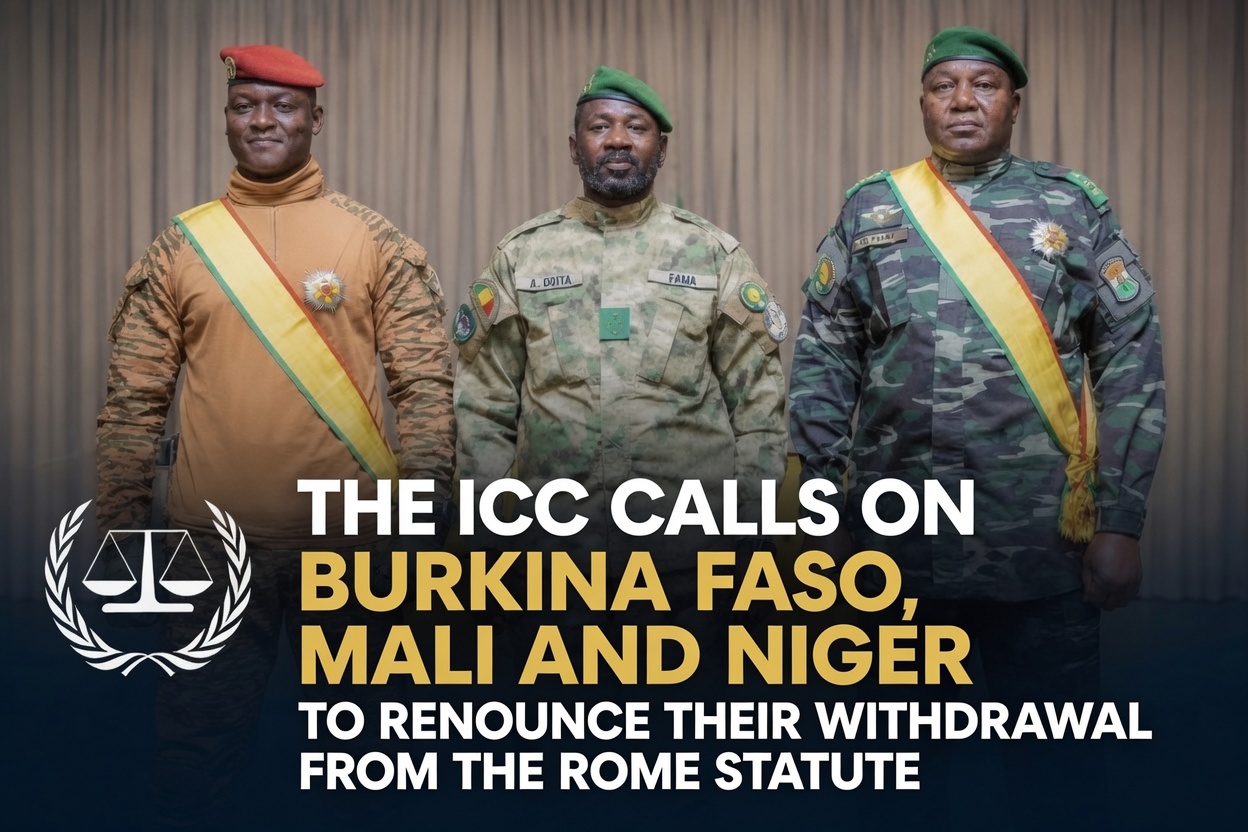
The International Criminal Court (ICC) has issued a direct appeal to Burkina Faso, Mali, and Niger, urging them to reconsider their announced withdrawal from the Rome Statute, the foundational treaty establishing the global judicial body. This significant intervention by the ICC unfolds amidst a period of considerable political and diplomatic realignment within the Alliance of Sahel States (AES) and broader African politics.
The ICC maintains that the continued adherence of these three nations to the Rome Statute is crucial for upholding the ongoing battle against impunity. The international tribunal reiterates its mandate: to prosecute individuals accused of war crimes, crimes against humanity, genocide, and, under specific circumstances, crimes of aggression, particularly when domestic legal systems prove incapable of effective action.
The decision by Burkina Faso, Mali, and Niger to withdraw has sparked considerable concern across the international community. Many observers suggest that such a move risks undermining global judicial cooperation frameworks and could severely hinder investigations into grave atrocities perpetrated within a region already deeply scarred by armed conflicts and widespread violence against civilian populations in West Africa.
Conversely, the governments of the three Sahelian countries advocate for a policy rooted in national sovereignty. They assert that their respective judicial systems are primarily responsible for adjudicating cases within their borders, frequently criticizing what they view as an international justice system that can be selective or swayed by political agendas.
This discourse extends beyond mere legal technicalities, illuminating the enduring tension between the fundamental principle of state sovereignty and the imperative to ensure international justice can prosecute the most heinous crimes when national remedies prove inadequate.
The ICC’s plea therefore underscores the profound significance of the choices currently facing Burkina Faso, Mali, and Niger. Their ultimate resolution will undoubtedly impact not only their engagements with international bodies but also regional judicial cooperation, the safeguarding of victims, and the global perception of their commitment to combating impunity.