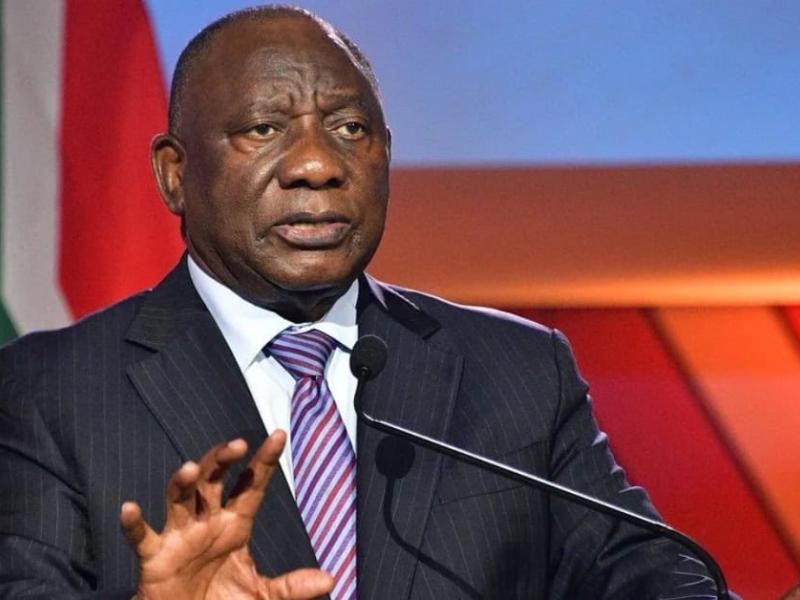
au solidarity mission to Kinshasa: ramaphosa addresses drc ebola crisis
- Politique
Today, July 2nd, South African President Cyril Ramaphosa arrived in Kinshasa, the vibrant capital of the Democratic Republic of Congo, for a crucial official solidarity visit. He undertakes this mission in his distinguished role as the African Union’s Champion for Pandemic Preparedness, Prevention, and Response (PPPR). This significant high-level engagement occurs as the DRC grapples with the 17th resurgence of an Ebola epidemic, highlighting an urgent need for concerted action.
Prior to his arrival, it was confirmed that President Ramaphosa, accompanied by South African Deputy Minister of International Relations and Cooperation, Thandi Moraka, would meet with his Congolese counterpart, President Félix-Antoine Tshisekedi. Their discussions aim to underscore the African Union’s collective backing for the government and people of the Democratic Republic of Congo as they confront the ongoing Ebola outbreak.
A primary objective of this visit is to fortify the coordination of the continental response to this pressing health emergency. This mission is set to provide high-level political guidance, essential for bolstering a harmonized continental strategy against the Ebola epidemic. Furthermore, it seeks to solidify regional collaboration, enhance cross-border preparedness, and secure vital political, technical, and financial commitments from African Union member states and their international partners.
The African Union emphasizes that these concerted efforts are critical not only for containing the current epidemic but also for sustainably strengthening Africa’s public health systems and enhancing the continent’s overall resilience against future health crises.
As the African Union Champion for Pandemic Preparedness, Prevention, and Response, President Ramaphosa’s mandate includes providing political leadership and oversight for the Ebola response, alongside fostering solidarity with affected nations and frontline responders.
To date, African Union member states have collectively pledged over 100 million dollars to the African Epidemic Fund. Globally, financial commitments dedicated to combating Ebola have now surpassed 910 million US dollars. Notably, South Africa itself has announced a significant contribution of 13.5 million US dollars to these critical efforts.
On May 17th, just two days following the official declaration of the epidemic in the DRC, the World Health Organization (WHO) escalated the Ebola outbreak, caused by the Bundibugyo strain which subsequently spread to Uganda, to a Public Health Emergency of International Concern (PHEIC).
Experts from the WHO indicate that the epidemic has seen geographical expansion, suggesting its true scale might be underestimated. The crisis is further compounded by several factors: high population mobility, the inherent fragility of health systems, inadequate health infrastructure, challenges in accessing conflict-affected regions, and the critical absence of a specific vaccine or treatment for this particular strain of the virus.
Despite this concerning backdrop, authorities in the Democratic Republic of Congo maintain a reassuring stance, dismissing any alarmist narratives. They highlight the robust efforts undertaken in collaboration with both national and international partners to successfully contain the epidemic. Furthermore, they draw upon the nation’s extensive experience in managing health crises, noting that the DRC has effectively confronted and controlled sixteen prior Ebola outbreaks through significant response operations.
Related posts
Benin’s AIIB funding pipeline sparks debate on future economic impact
Benin’s AIIB funding pipeline sparks debate on future economic impact The announcement of a $730 million...
Cameroon’s anglophone regions under lockdown: a decade of unrest and the fallout on october 1st
Cameroon’s anglophone regions under lockdown: a decade of unrest and the fallout on october 1st The...
Benin’s €500 million bond: what the landmark deal means for the region’s future
Cotonou — The fallout from Benin’s latest foray into international capital markets is still being digested,...