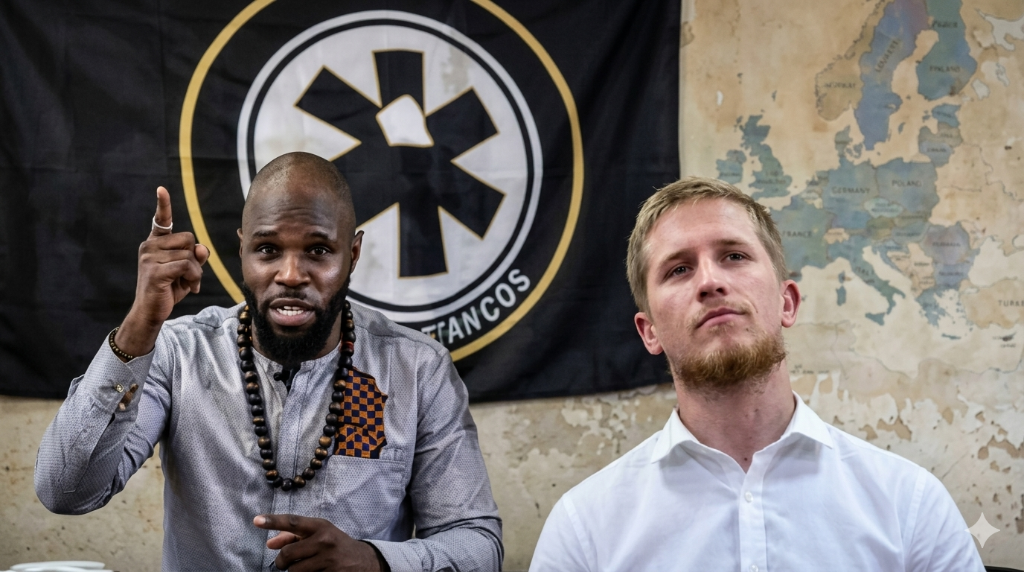
He often portrays himself as the “commander” of Black liberation and a champion of African sovereignty against neo-colonial influence. However, beneath the aggressive speeches and calculated social media appearances, Kemi Seba appears to be caught in a web of inconsistencies that threaten to undermine the very movement he claims to lead. Recent events, including his detention in South Africa and his ties to radical Afrikaner right-wing figures, suggest a deeply problematic partnership.
The disconnect in modern pan-Africanism
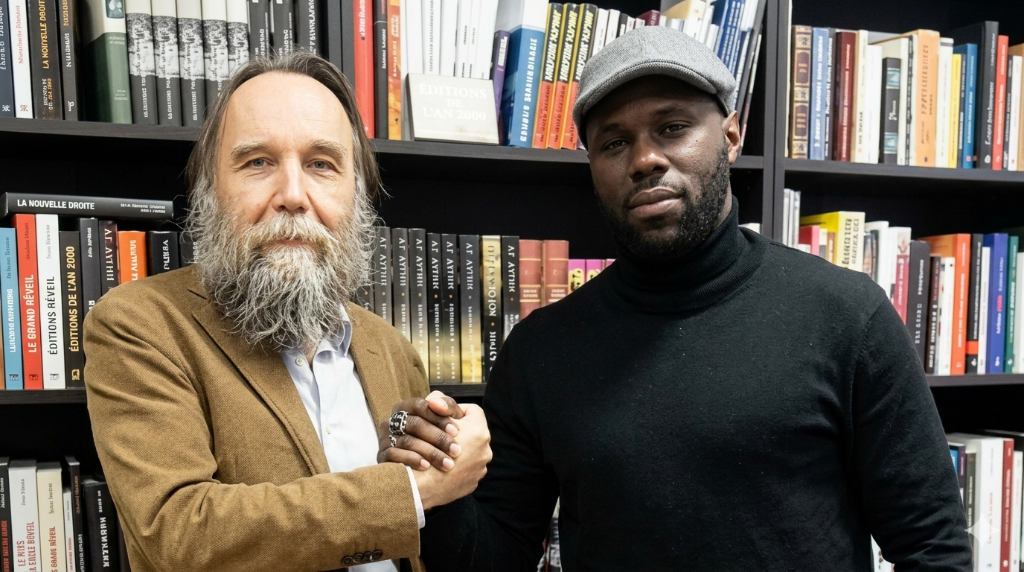
For years, Stellio Capo Chichi—widely known as Kemi Seba—has attacked foreign interference, advocating for an Africa entirely independent of its former colonial powers. Yet, it is difficult to reconcile this demand for autonomy with his public association with individuals like Dries van der Merwe, an open sympathizer of the Apartheid era and a leader in white separatist circles.
While some justify this alliance as a strategic “enemy of my enemy” maneuver, it arguably insults the legacy of anti-colonial resistance. By partnering with those who historically advocated for the marginalization of Black populations, Seba isn’t just practicing “Realpolitik”; he is eroding the dignity he claims to uphold.
Financial scandals and foreign influence
Legal proceedings in Benin regarding money laundering have cast a harsh light on the murky financing behind the activist’s operations. There is a glaring disparity between his sovereignist rhetoric and the existence of questionable international financial channels. The central question now is how a movement preaching African self-sufficiency can be entangled in such non-transparent global funding mechanisms.
There is a profound irony in seeing a man who labels the CFA franc a tool of enslavement now facing scrutiny for financial crimes. If these laundering allegations are proven, they would indicate that the “revolutionary” is merely another participant in the global systems he denounces, utilizing international networks for personal gain.
A drift into political opportunism
The situation in South Africa exposes a troubling reality: Kemi Seba seems willing to collaborate with any faction capable of disrupting the status quo, regardless of historical or moral implications. His cooperation with groups that still cling to the ideals of Afrikaner supremacy suggests that his primary goal may be media-driven chaos rather than a genuine pursuit of justice.
“Pan-Africanism cannot serve as a cover for unnatural alliances. A people’s liberation is not achieved by shaking hands with former oppressors for the sake of political expediency.”
The falling mask
Currently facing arrest warrants and extradition requests, the activist’s reputation for integrity is rapidly dissolving. By seeking the backing of those nostalgic for racial segregation to bolster his own profile, Kemi Seba has crossed a line. For many critics, he is no longer a legitimate voice for the continent, but a figure seeking refuge, trapped by his own ideological betrayals.
Ultimately, history may show that Kemi Seba’s most significant adversary was not the West or the financial systems he criticized, but the fundamental contradictions within his own choices.