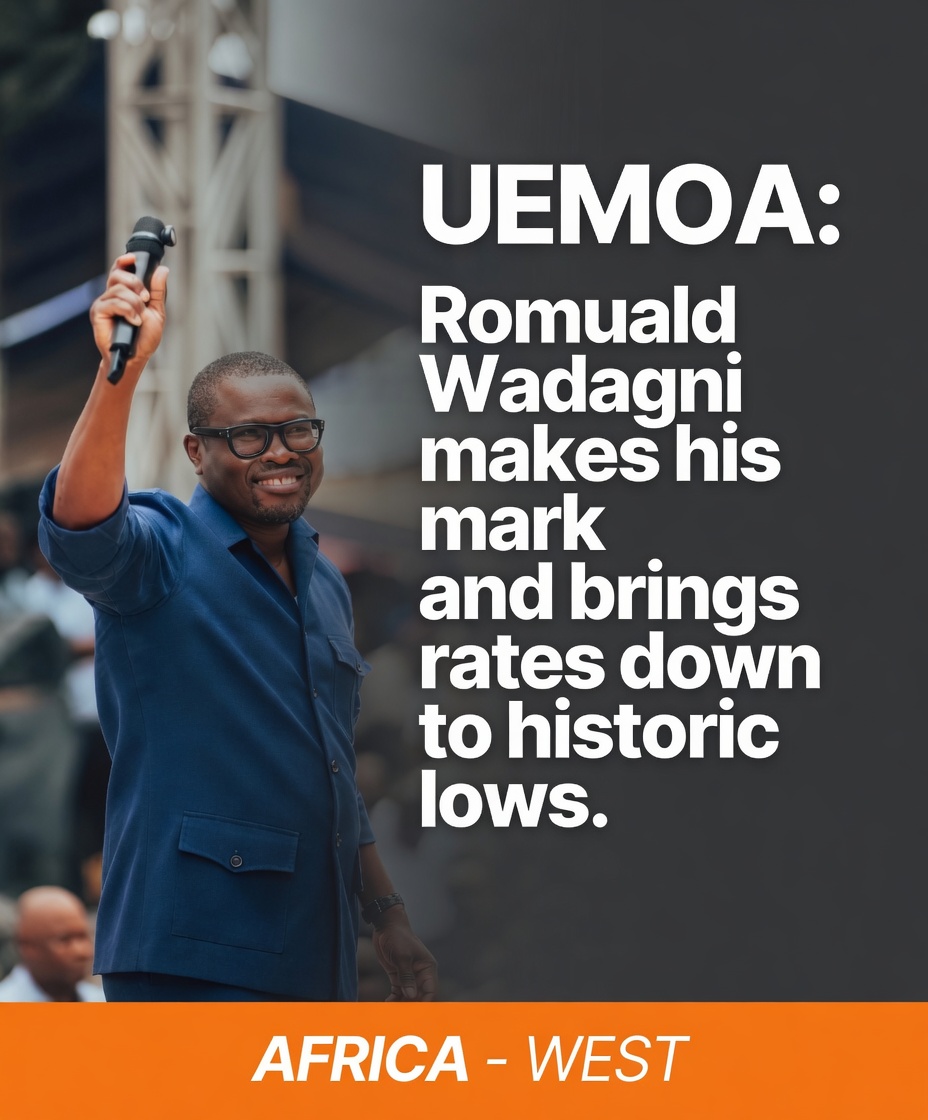
The inauguration of Romuald Wadagni as the nation’s head of state represents a significant milestone for the financial landscape in Cotonou. Investors, both domestic and international, are closely monitoring the initial indicators of a presidency characterized by technical proficiency, seeking a balance between sustained structural reform and industrial growth.
Benin has reached a pivotal moment in its political history, and trading floors have reacted swiftly. The rare occurrence of a former Minister of Economy and Finance assuming the presidency provides the market with a vital asset: high levels of predictability.
A confidence premium in the bond markets
Following the announcement of the election results, yields on Beninese sovereign bonds in the secondary market demonstrated remarkable stability, with some rates even experiencing a marginal decline. Financial analysts describe this phenomenon as a "competence premium." Having been the architect of Benin’s success on the Eurobond market and a pioneer of Sustainable Development Goal (SDG) bonds, Romuald Wadagni enjoys substantial credibility with international lenders and credit rating agencies such as Moody’s and S&P.
Optimism at the BRVM for Beninese equities
A sense of confidence is evident at the Regional Securities Exchange (BRVM). Banking institutions operating within Benin are anticipating an acceleration of major infrastructure projects and a significant expansion of Public-Private Partnerships (PPPs). Furthermore, investors are hopeful that this new political era will encourage the listing of major national companies, thereby increasing the depth of the local capital market.
Industrialization and FDI: the Glo-Djigbé objective
The financial sector is not merely observing fiscal data; it is focused on the real economy. The continued strategy of local value addition within the Glo-Djigbé Industrial Zone (GDIZ) remains a central priority. Wadagni’s presidency is viewed as a guarantee that the flow of Foreign Direct Investment (FDI) will remain uninterrupted. On the contrary, the new leader’s profile provides multinational corporations with reassurances regarding legal security and macroeconomic consistency.
Expert perspective
"Markets have an inherent dislike for uncertainty. With the election of Romuald Wadagni, Benin is signaling a commitment to disciplined management and a long-term vision. The primary challenge will now be to convert this financial trust into widespread prosperity while keeping debt ratios within sustainable boundaries," explains a senior fund management analyst.
Key indicators to monitor (Q2 2026)
- Sovereign Rating: A potential shift in outlook from "Stable" to "Positive" by international agencies.
- Treasury Bond Yields: Upcoming issuances on the UMOA market will serve as a definitive test of investor sentiment.
- GDIZ Investments: The total volume of capital directed toward the manufacturing sector during the first 100 days of the term.
As Benin begins this new chapter, "Wadagni-nomics" appears to have already gained the favor of financial hubs. The focus now shifts to confirming this momentum through the initial budgetary decisions of the five-year mandate.