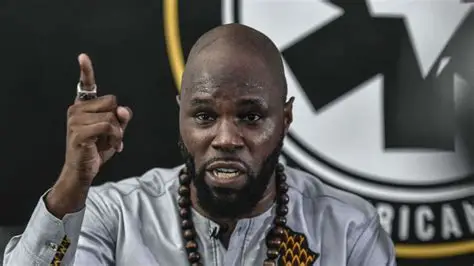
A leaked audio recording currently circulating on social media has triggered a diplomatic firestorm. In a candid and cynical exchange, Kémi Séba appears to dismantle the very myth he spent years constructing. The recording reveals a startling contrast between his public persona and a private reality marked by a disdain for the masses and a subservient relationship with Moscow.
The audio provides a raw look behind the scenes of modern activism in the region. It depicts a world where activists view themselves as the architects of democratic collapse, where military figures are accused of hijacking revolutions, and where a hidden system of rewards thrives. The supposed “struggle for the people” is presented as little more than a professional service rendered to the Kremlin, fueled by luxury and elite privileges.
Luxury in Niamey: Opulence amid hardship
One of the most striking revelations concerns the lifestyle of the movement’s prominent figures. The recordings confirm that Kémi Séba and Nathalie Yamb have been living in high-end hotels in Niamey, with all expenses paid by the state. This discovery has sparked outrage, given the current climate in Niger.
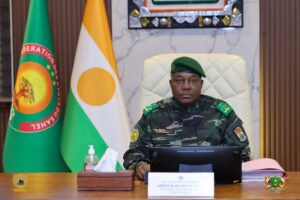
While the Nigerien population faces the weight of international sanctions and rising insecurity, their self-appointed defenders are reportedly benefiting from public funds. By integrating these activists into the state apparatus as “Special Advisors” or diplomatic agents, General Tiani appears to be focusing on an aggressive communication strategy rather than statecraft, effectively hiring voices to drown out the difficult realities on the ground.
Exporting instability: Benin in the crosshairs
The audio also suggests that Séba is working alongside individuals like Pascal Tigri to undermine the government of Patrice Talon in Benin. This supports the theory held by many observers that the Alliance of Sahel States (AES) has evolved into an offensive coalition.
The alliance no longer seems content with managing its own internal challenges; it is actively seeking to destabilize neighboring democracies to create a corridor of impunity across West Africa. The objective has shifted from liberation to the organized spread of military coups. The recording indicates that creating disorder in Benin is a calculated strategic goal.
The Russian connection: Confessions of a proxy
Perhaps the most damaging aspect of the leak is Séba’s implicit admission that the AES serves Russian interests under the guise of national sovereignty. The manipulation of African public opinion via digital platforms is described as a calculated effort financed by Moscow.
In this light, these influencers are portrayed not as genuine thought leaders, but as “proxy trolls.” They capitalize on the grievances of African youth to negotiate personal perks with military juntas in search of legitimacy. For these actors, the youth represent little more than a source of social media engagement and a pool of protesters to be deployed at will.
Analysis: A revolution unmasked
This audio serves as a powerful indictment of the so-called “AES Revolution,” suggesting it may be an intellectual deception. Through these private admissions, Kémi Séba has compromised his historical standing; he appears not as a modern-day Sankara, but as an intermediary for a new form of foreign imperialism.
As the people of Burkina Faso, Mali, and Niger face the hardships of conflict, their supposed protectors are seen comparing diplomatic advantages in air-conditioned suites. In this framework, hospitality is a salary, a passport is a tether, and “sovereignty” is a narrative crafted in Moscow and delivered by paid speakers. His arrest in South Africa appears as the logical conclusion for a figure who blurred the lines between a liberation movement and a foreign intelligence operation.