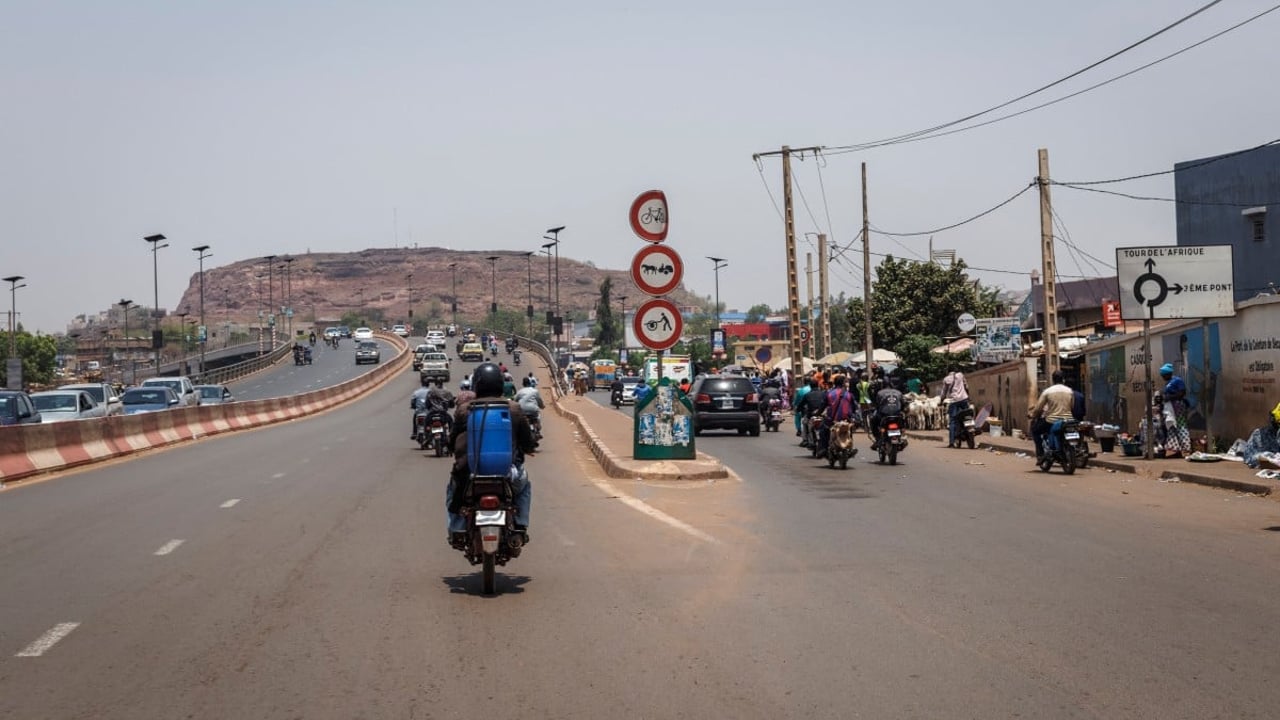
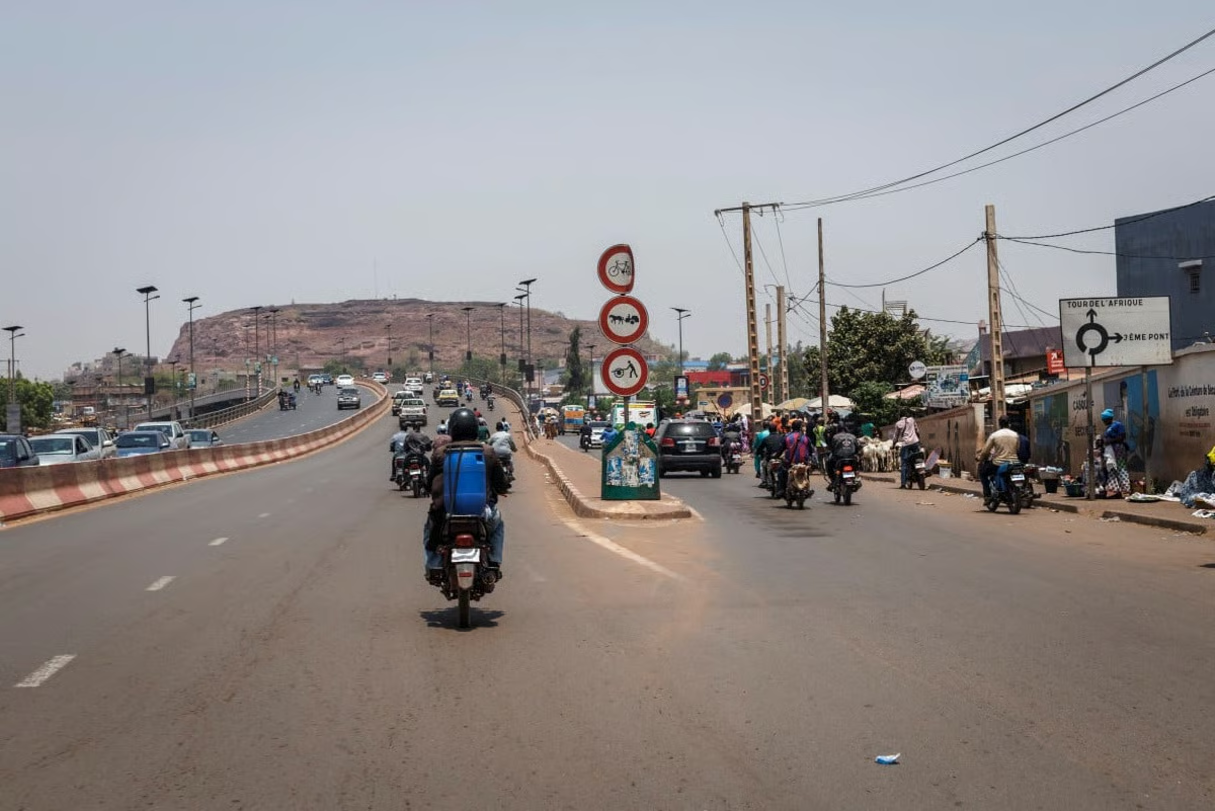
Over a dozen road transport companies have halted their operations to and from Bamako, as jihadist groups enforce a blockade around the capital, torching vehicles along key routes.
The Mali is facing escalating instability following coordinated attacks on April 25-26 by militants from the Group for the Support of Islam and Muslims (JNIM), an Al-Qaeda affiliate, alongside the predominantly Tuareg National Movement for the Liberation of Azawad (MNLA). These assaults targeted strategic positions held by the ruling junta.
Since April 30, jihadists have maintained a road blockade around Bamako, disrupting critical supply lines to the landlocked nation, which relies heavily on road imports. “We’ve temporarily suspended services to protect passengers and minimize losses,” stated a transport agency manager, who revealed that six buses were destroyed in Saturday clashes near Ségou.
While over ten companies have officially announced halts, others have quietly ceased operations “due to fear of government retaliation if they refuse to operate,” the manager explained under anonymity. Though major transport arteries to the capital are now void of large vehicles, smaller minibuses continue entering via alternative paths.
Fuel, power, and water shortages grip Bamako
Residents of Bamako are grappling with severe shortages as the blockade bites. Long queues formed at gas stations on Monday, with diesel nearly unavailable for weeks, according to local reports. Authorities claim over 700 fuel tankers recently arrived via the route from Côte d’Ivoire, but jihadists have burned multiple supply convoys and passenger buses in recent days.
Electricity supply has also plummeted. “We went 72 hours without power. Service briefly resumed on the fourth day for just three hours before failing again,” shared a Bamako resident. Énergie du Mali (EDM) attributed disruptions to “an incident,” though an anonymous EDM official later confirmed sabotage by “terrorists” targeting the grid.
The power cuts have triggered water supply disruptions across several communes, announced the Malian Water Management Corporation on Sunday.