Wagner’s ruthless empire: mining, violence and millions in Central Africa
Behind the fragile stability in the Central African Republic lies a shadowy network of exploitation, violence, and staggering wealth accumulation. The Russian mercenary group Wagner has not only carved out a dominant presence in the country’s resource-rich regions but has also reshaped the dynamics of power, security, and local economies through a brutal business model that prioritizes profit over human lives.
From security contractors to resource predators
Initially deployed as ostensible security providers in the wake of political instability, the mercenaries of Wagner have systematically expanded their operations beyond mere protection services. Today, they operate as de facto economic enforcers, controlling key mining sites, especially in gold and diamond-rich zones. Their involvement has triggered a wave of violence, coercion, and systemic abuses that have left local communities in fear and despair.
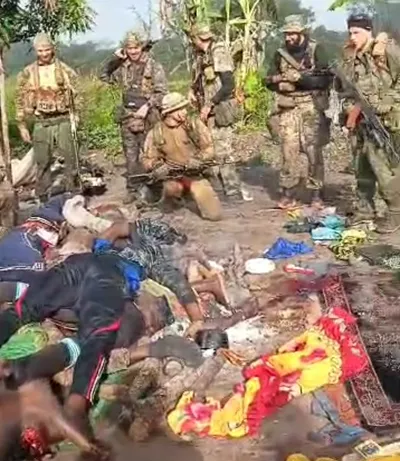
The group’s business strategy hinges on securing exclusive access to lucrative mineral deposits. In exchange for their so-called protection, mining operators—both foreign and domestic—are compelled to pay exorbitant fees. Those who resist face severe consequences: intimidation, forced displacement, or worse. Reports from affected areas describe a climate of terror where dissent is met with brutal reprisals, including targeted killings and public displays of violence meant to instill fear.
The human cost of Wagner’s operations
The consequences of Wagner’s presence extend far beyond the economic sphere. Human rights organizations and local witnesses have documented a litany of atrocities linked to the group’s activities. Villages near mining concessions have become hotspots for violence, with civilians caught in the crossfire of turf wars between armed factions and the mercenaries. Women and children are particularly vulnerable, facing threats of sexual violence and forced labor in the mines.
The mercenaries’ tactics are not limited to physical intimidation. They have also leveraged local and international networks to launder revenue from illicit mining activities. By funneling profits through opaque financial channels, Wagner has built a self-sustaining system that funds further expansion while evading accountability. The sheer scale of these operations suggests a level of sophistication that goes beyond mere mercenary work—indicative of a larger, orchestrated strategy to consolidate power and wealth.
A shadow over Central Africa’s future
The presence of Wagner in the Central African Republic raises serious questions about the country’s sovereignty and the long-term implications for its people. While the group presents itself as a stabilizing force, its actions paint a different picture: one of systemic exploitation, where local institutions are undermined, and human rights are treated as collateral damage. The international community’s response has been tepid at best, with many observers warning that the mercenaries’ influence is deepening instability rather than resolving it.
Local leaders and civil society groups are increasingly speaking out against Wagner’s encroachment. They argue that the group’s activities are not only eroding the rule of law but also fueling cycles of violence that threaten to destabilize the entire region. Without decisive action, the Central African Republic risks becoming a permanent battleground for profit-driven mercenaries, where the lives of ordinary citizens are secondary to the ambitions of shadowy operators.