
Coupe du monde 2026: Algérie-Autriche, pourquoi le “match de la honte” ne devrait pas avoir lieu

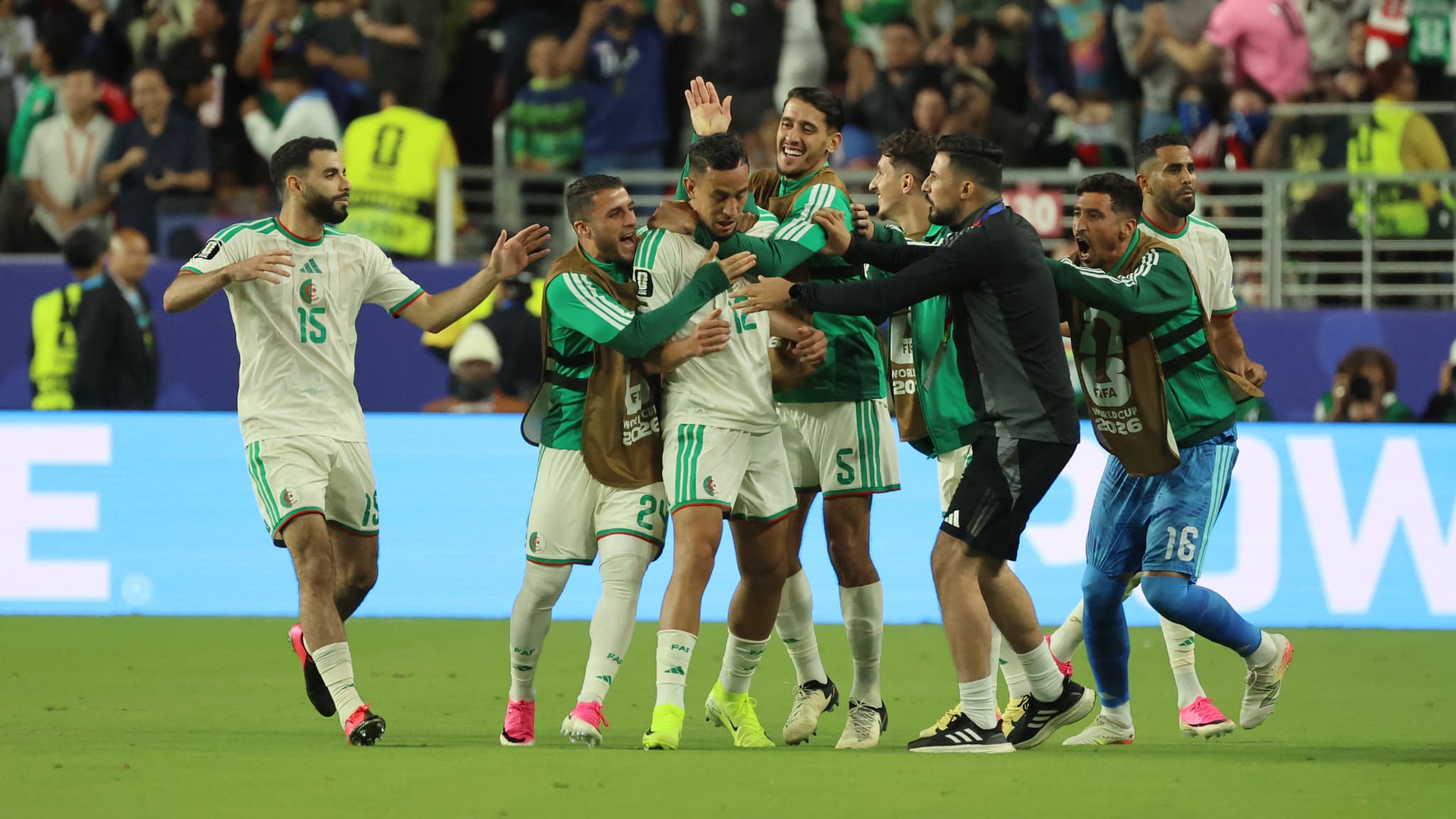
A striking historical parallel emerges 44 years after the infamous “disgrace match” in Gijón during the 1982 World Cup. Algeria and Austria find themselves once more facing a fixture laden with strategic calculations for advancing in the competition. Back in 1982, the final group stage encounters were not played concurrently. This allowed Austria and West Germany to enter their match knowing that a narrow 1-0 victory for the Germans would see both nations progress, effectively eliminating Algeria. The game famously concluded with that exact score, marked by a palpable lack of engagement for much of the ninety minutes.
Fast forward four decades, and the contemporary scenario presents a distinct challenge. With the expanded 2026 World Cup featuring 48 teams and the qualification of the eight best third-placed teams from twelve groups, the mathematical permutations are both intricate and, in a way, straightforward. The upcoming Austria vs. Algeria encounter is poised to be the final group stage fixture carrying significant implications for determining these crucial third-place rankings.
As it stands, Austria occupies the second position in their group with 3 points and a goal difference of zero. Algeria trails in third place, holding a goal difference of -2.
The qualification threshold is anticipated to be a minimum of 3 points coupled with a neutral or positive goal difference. Both teams could secure this with a draw, but a defeat would eliminate either side. However, a narrow loss for Austria could still lead to qualification under specific circumstances: if Congo fails to win their match and Croatia suffers a defeat against Ghana.
Rangnick: “we’ll assess in the final minutes”
The perplexing question arises: why might either team contemplate a less than optimal result? A unique aspect of the 48-team World Cup knockout bracket suggests that finishing third in this group might paradoxically be more advantageous than finishing second. The second-placed team would face Spain, a formidable tournament favorite, while the third-placed team could potentially encounter a group winner like Switzerland. Nevertheless, given the most recent outcomes in other groups, this strategic calculation appears to be losing its relevance. For Austria, it now seems to be a clear choice between securing second place or facing elimination, as they will enter the pitch with full knowledge of all other group results.
The most straightforward path for both teams lies in a draw, which would see them each accumulate 4 points and secure dual qualification. This exact scenario unfolded earlier in this World Cup during the Paraguay-Australia match, which ended 0-0. Ralf Rangnick, the German coach for Austria, acknowledged this precedent in a press conference. While recognizing the potential for a mutually beneficial draw, he quickly dismissed the notion of playing for such a result from the outset. “We cannot approach this match with the intention of playing for a draw,” he stated. “We are in the same position as Algeria; we will have to assess the situation in the final minutes.”
A similar sentiment was echoed by Algeria’s coach, Vladimir Petkovic. “We must commit everything we have on the field and not dwell on various hypothetical outcomes,” he declared. “We are entering this match with a singular goal: to win.”