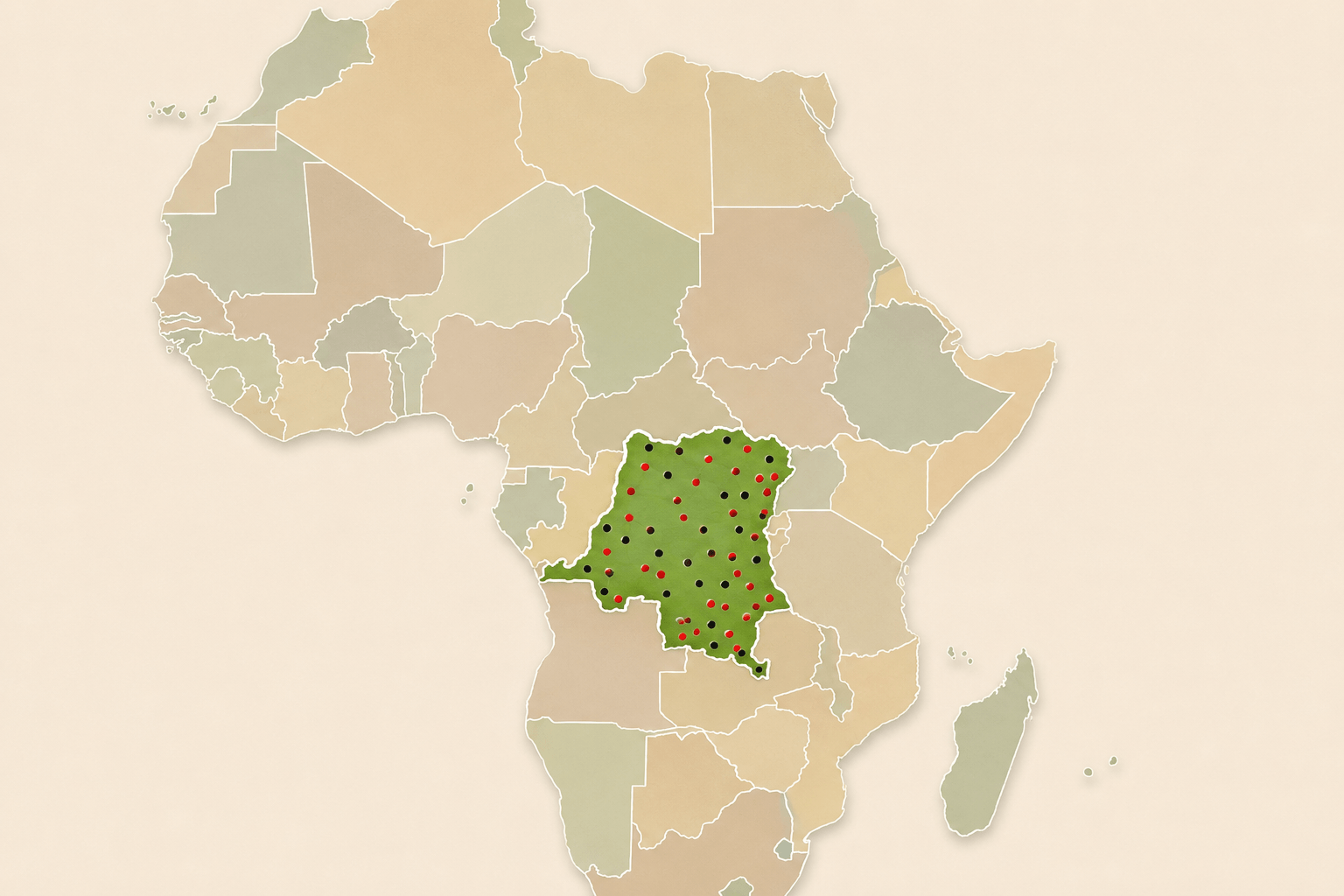
Across Africa, Ebola has claimed over 15,000 lives in the past half-century. The Democratic Republic of Congo experienced its most devastating outbreak between 2018 and 2020, which tragically resulted in nearly 2,300 fatalities from approximately 3,500 reported cases.
The current epidemic, officially declared on May 15, now accounts for 506 deaths and 1,561 confirmed cases within the DR Congo. Meanwhile, in neighboring Uganda, the toll stands at two deaths among 20 confirmed cases, according to a situation report dated July 4.
A clinical trial testing two potential treatments for the Bundibugyo strain, identified as the cause of this outbreak, commenced last week. Additionally, emergency use authorization has been granted for the virus’s inaugural molecular diagnostic test.
High lethality raises concerns
The core of this unfolding crisis, whose true scale remains challenging to ascertain and which could persist for several months, is concentrated in Ituri, a province in northeastern Congo bordering South Sudan and Uganda.
In the mining town of Mongbwalu, believed to be the outbreak’s origin point, a significantly high lethality rate of 50.7% points to ongoing difficulties in providing early care or ensuring patient access to medical services.
The virus has also made its presence felt in the nearby provinces of Nord-Kivu and Sud-Kivu, regions where the anti-government armed group M23 maintains control over provincial capitals and extensive territories, impacting regional stability and `African politics`.
In Nord-Kivu, the mortality rate of 57.4%, substantially exceeding the average, is considered “alarming” by Congolese health officials. Conversely, the province of Sud-Kivu has not reported any confirmed cases since May 26.
Last week, health authorities associated with the M23 group declared the epidemic eradicated within the territories they control. However, independent verification of this claim has not been possible.
Following this declaration, cross-border exchanges between eastern DR Congo and neighboring Rwanda have partially resumed, after several weeks during which border crossings remained closed.
Cross-border movement is a common occurrence in this part of Africa, especially for commerce, influencing the `African economy today`. Many Congolese residents from the region also travel to Rwanda to catch flights from Kigali, a necessity since the M23 group’s closure of Goma airport, scheduled for early 2025. This situation is a key piece of `Africa news English` and `pan-African news`.