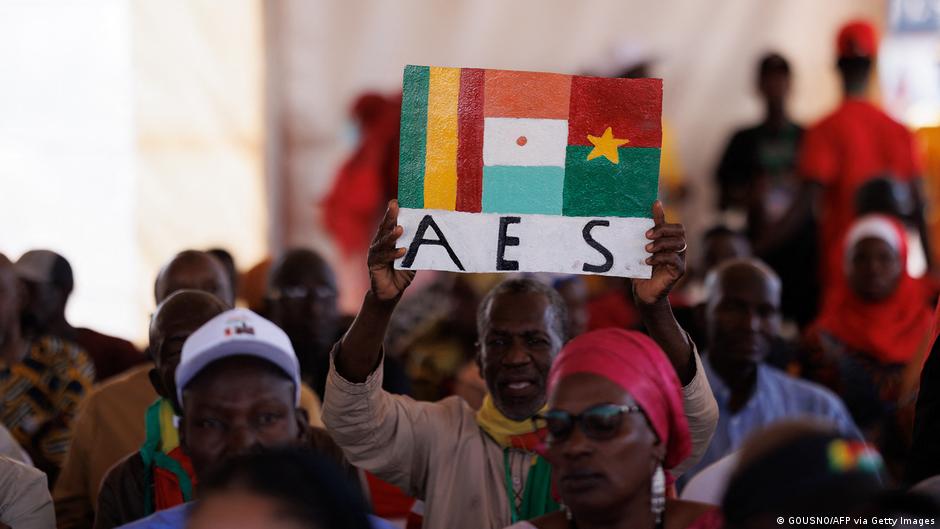
AES passport: tracking progress in West African nations
In the Alliance of Sahel States (AES), a new biometric passport is gradually replacing the former Economic Community of West African States (CEDEAO) document. However, the pace of implementation varies significantly from one country to another within the region.
Niger still issuing CEDEAO passports despite AES launch
The Niger government has officially launched the AES biometric passport and national identity card, with production entrusted to the Libyan company Alitisal Aljadeed. Yet, in practice, the transition remains incomplete. Recent passport applicants in Niger continue to receive the CEDEAO version, as confirmed by multiple testimonies.
A Nigerien living abroad shared his experience: “I recently renewed my passport for a pilgrimage to Mecca. When it arrived, I was surprised to see it was still a CEDEAO passport. I asked why, as I expected an AES passport, but received no explanation.”
This uneven rollout has sparked discussions on social media, where Nigeriens express their frustration over the slow implementation of the new AES documents.
Only in March 2026 did General Abdourahamane Tiani, Niger’s military leader, officially enroll for the new AES biometric national identity card. This milestone marks the beginning of mass production for the AES identity documents, though passport delivery remains inconsistent.
Why the delay in Niger?
The production of AES passports in Niger has been entrusted to a Libyan company, which is facing logistical challenges. Meanwhile, the CEDEAO passport remains valid and in circulation until the new AES documents are fully implemented across the country.
Burkina Faso and Mali adopt AES passports more rapidly
In contrast to Niger, both Burkina Faso and Mali have made significant progress in implementing the new AES biometric passport.
In Burkina Faso, authorities are now delivering both the AES passport and national identity card upon request, marking a clear departure from the former CEDEAO documents. This rapid adoption is presented as a step toward greater regional integration and enhanced border security.
In Mali, the initial rollout faced minor challenges, particularly regarding the recognition of the new AES passport by foreign governments. However, Malian authorities have since addressed these issues, as evidenced by the experience of a Malian living in France:
“Last year, I applied for a passport through the Malian consulate in France. The process was straightforward, just like before. After a few weeks, I received a notification to collect my passport, and it was an AES passport with the appropriate symbols on the cover.”
He then traveled to Mali and back without encountering any problems, confirming that the new AES passport is now fully recognized and accepted both within and outside the country.
Transition period: old CEDEAO passports still valid
During this transition phase, travelers holding valid CEDEAO passports can continue using them until their expiration date. This grace period is explained by Mohamed (name changed for privacy), who obtained his CEDEAO passport in 2024 before the AES launch:
“I travel normally with my current passport, and I will continue doing so until it expires. But when I renew it, I will definitely get the new AES passport, as the CEDEAO version is no longer issued in Mali.”
The new AES biometric passport integrates advanced security features, including an electronic chip and a polycarbonate page compliant with International Civil Aviation Organization (ICAO) standards. These enhancements aim to combat forgery and strengthen the integrity of travel documents across the region.
Following their withdrawal from CEDEAO in 2024, the military authorities in Burkina Faso, Mali, and Niger introduced the new AES identity documents as part of their broader sovereignty strategy. Alongside the passport, they launched the AES biometric national identity card (CNIB-AES) in 2026, with mass production now underway to gradually replace the old identity cards.
The introduction of the AES passport and CNIB-AES symbolizes a definitive break from the former regional structures, emphasizing the countries’ regained independence and their commitment to a new path forward.