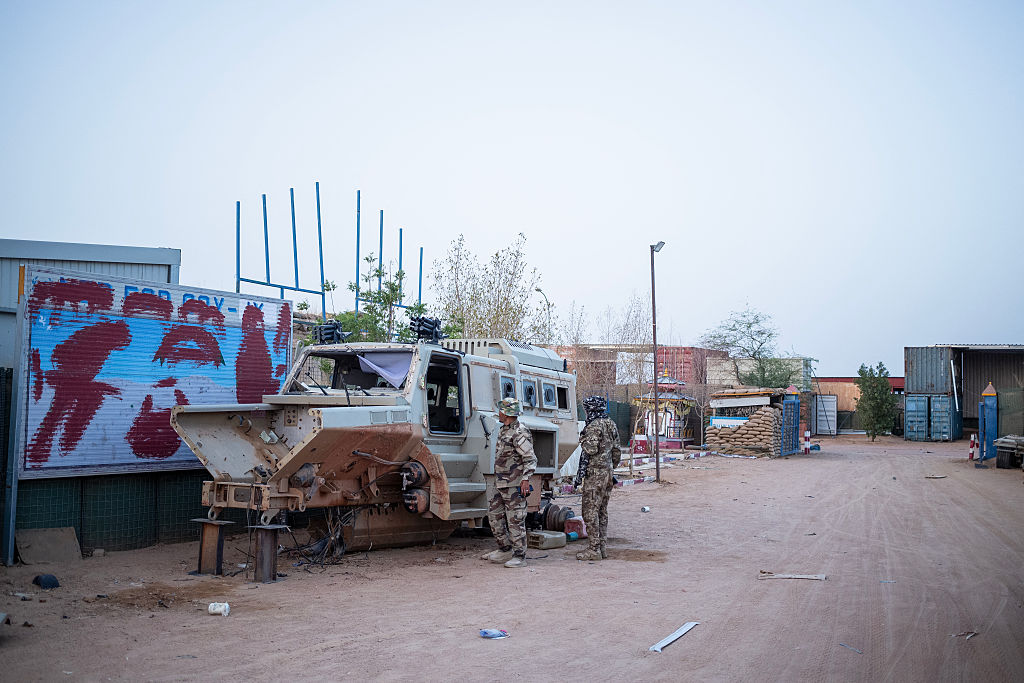
The Russian Africa Corps is strategically repositioning its combatants, withdrawing them from Mali’s northern regions to prioritize the defense of the capital and the ruling junta. This redeployment allows them to provide crucial aerial support and intelligence to Malian soldiers on the ground.
Overall, the contingent appears to be adopting a more secondary role. Their current approach focuses on minimizing direct combat exposure for their personnel while maximizing the impact of their operations, striving to avoid further casualties.
The Africa Corps took over from the infamous Wagner Group mercenaries around mid-2024. This transition followed significant losses suffered by Wagner, with dozens of fighters ambushed by the Azawad Liberation Front (FLA) alongside Malian soldiers near Tin Zaouatine, close to the Algerian border.
As a unit of the Russian Ministry of Defense, the Africa Corps maintains approximately 2,000 personnel in Mali, many of whom are former Wagner mercenaries. This contingent represents a considerable reduction compared to the Wagner force and is roughly half the size of the French Operation Barkhane counter-terrorism force, which the Malian junta expelled from the country in 2022.
The loss of Kidal in northern Mali to the FLA and the Group for the Support of Islam and Muslims (GSIM) in late April seems to have been a pivotal factor in the Africa Corps’ decision to consolidate its presence closer to its primary base in Bamako.
Following this setback, the Africa Corps launched retaliatory airstrikes against Kidal, causing extensive infrastructure damage and forcing residents to flee. These strikes were conducted in support of the Malian army (FAMa), which has emerged as the primary ground force operating in the country’s northern territories.
A clear reliance on aerial assets has become evident in their operations. This recently included the deployment of Russian-made cluster bombs against communities in the Kidal region, a move that contravenes Mali’s commitments under international conventions prohibiting the use of such munitions.
With fewer resources at its disposal, the Africa Corps is strategically avoiding their dispersal into smaller northern communities where units could be vulnerable to attrition.
An examination of recent Africa Corps communications on social media platforms reveals a strategic pivot towards central and southern Mali, with the majority of their operations now concentrated in the vicinity of Bamako.
Subsequent to its withdrawal from Kidal, the Africa Corps intensified its propaganda campaign, publishing over 500 articles across Telegram and other channels in the weeks following the defeat.
Beyond airstrikes, the Africa Corps has also endeavored to circumvent economic blockades imposed by GSIM across Mali. Africa Corps fighters and air support have begun escorting truck convoys entering the landlocked nation from Côte d’Ivoire, Guinea, and Senegal, safeguarding them against GSIM attacks.
Even as the Africa Corps seeks to reduce its battlefield exposure, GSIM has adapted its tactics, employing drones to target Russian fighters at their bases.
Recent GSIM videos circulating on social media depict drone footage showing Russian fighters killed and Russian aircraft damaged by bombs dropped from drones hovering over their base in Sévaré.
Conversely, the Africa Corps has initiated its own armed drone strikes against GSIM positions in recent weeks, including an attack on a GSIM fuel depot in the Timbuktu region.
Mali has allocated nearly one billion dollars for the services of the Wagner Group and Africa Corps since late 2021. During this period, the government and its Russian allies have notably lost control of the North, while GSIM has expanded its reach across the Sahel. This expansion is, in part, attributed to the brutal tactics employed by both Russian forces and the FAMa against civilians in the North.
This strategy, implemented by the Malian state, appears to be ineffective, ultimately jeopardizing the nation’s stability and inadvertently bolstering the power of GSIM by alienating local communities.