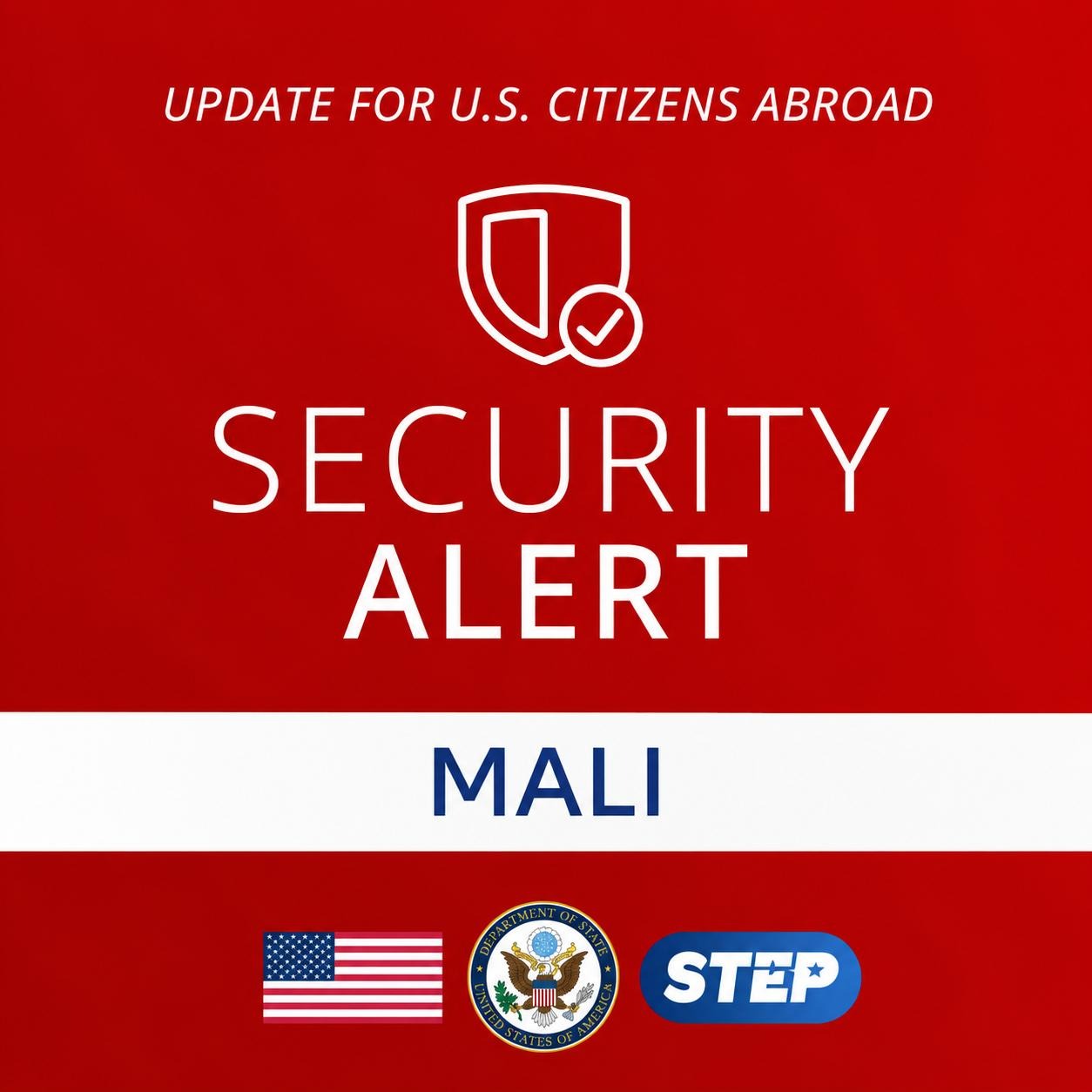
Bamako is on high alert this weekend as the United States Embassy in Mali issued a stringent security advisory restricting non-essential movements for its citizens and nationals. Effective from Saturday, May 30, 2026, the alert urges American expatriates to minimize outdoor activities, avoid crowded areas, and exercise extreme caution in zones frequented by foreigners.
Why this sudden warning?
Diplomatic advisories of this magnitude are never issued without cause. The timing suggests that U.S. intelligence has detected credible threats or operational indicators requiring immediate preventive measures. Whether linked to thwarted attack plots, suspicious movements, or specific intelligence, Washington’s response reflects a principle of maximum precaution. For residents and observers, this announcement casts a shadow over the city, underscoring how fragile the perceived calm has been.
Terrorist groups at the gates of Bamako
The embassy’s alert ties into a broader security crisis gripping Mali. Bamako, once considered relatively insulated, now faces relentless threats from extremist factions. The Group for the Support of Islam and Muslims (JNIM), Al-Qaeda’s Sahel affiliate, has repeatedly demonstrated its ability to strike deep into urban centers and military installations near the capital.
Meanwhile, the northern and central regions of Mali remain trapped in a cycle of violence, fueled by shifting alliances among armed groups like the Permanent Strategic Framework (PSF) and its affiliates. The resurgence of factions such as the Front for the Liberation of Azawad (FLA) has intensified harassment campaigns, leaving Malian security forces stretched thin. The presence of sleeper cells and improvised explosive devices (IEDs) adds another layer of danger that local authorities struggle to contain.
Economic strangulation: A weapon of war
Beyond direct attacks, Mali’s economy is under siege. Armed groups have escalated roadblock operations on key highways, targeting fuel tankers and supply convoys bound for Bamako. These blockades do more than disrupt commerce—they instill fear and sever vital connections between the capital and the rest of the country.
The fuel shortages and blocked food shipments aren’t just economic sabotage; they’re psychological warfare. By choking off essential supplies, insurgents aim to erode public trust in the government’s ability to secure critical infrastructure. For the U.S. Embassy, these vulnerabilities at the city’s periphery heighten the risk of high-impact incidents targeting Bamako’s outskirts.
Diplomatic caution vs. local reassurance
While Malian transitional authorities tout enhanced patrols and stricter checkpoints at urban entry points, Western embassies are taking no chances. This disparity highlights a deeper divide: one rooted in political messaging, the other in data-driven risk assessment. Sophisticated monitoring systems likely detected subtle yet alarming signals that triggered the advisory.
This weekend, Bamako’s security apparatus is bracing for the worst. Military and police units have already scaled up identity checks and vehicle inspections in high-risk districts, leaving little to chance.
A weekend under the cloud of uncertainty
The U.S. Embassy’s alert serves as a stark reminder of Mali’s precarious state. Between the looming specter of JNIM’s asymmetric strikes and the crippling impact of road blockades, Bamako operates under a permanent state of crisis management. As the weekend unfolds, vigilance remains paramount—whether you’re a local resident or an expatriate—until the threat level subsides or escalates further.