Mali
Muslim communities in Bamako, the Malian capital, found themselves compelled to observe Eid al-Adha, locally known as Tabaski, separated from their families this year, due to a jihadist blockade.
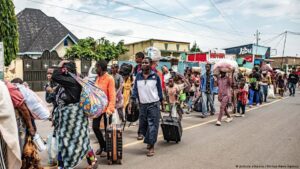
For Alpha Amadou, a 40-year-old originally from Mopti in central Mali, the customary journey home for the significant Tabaski holiday became impossible.
“This marks the first time in three decades since I’ve resided in Bamako that I will be observing Eid here,” he revealed.
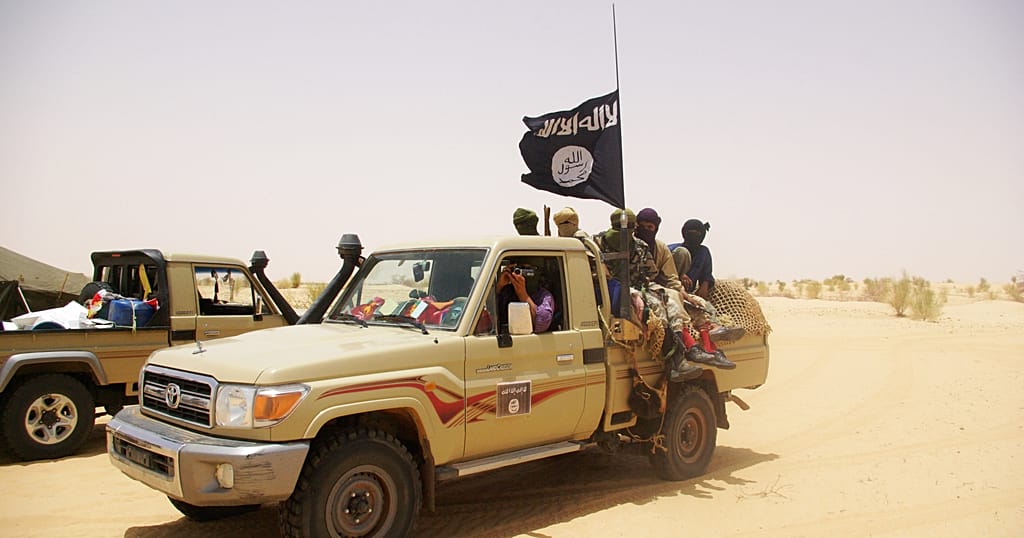
Since late April, militants from Al-Qaeda’s Sahel affiliate have established checkpoints along critical routes leading into Bamako. These actions have included torching numerous buses and commercial trucks, creating a climate of fear.
While the blockade might not be absolute, the stark imagery of charred vehicles has effectively deterred many transport services from operating and discouraged countless individuals from traveling to their ancestral villages.
In Mali, the observance of Eid al-Adha extends far beyond its religious rites; it represents a profound social custom, serving as one of the rare occasions when families, often dispersed for months due to work, can reunite.
The typically vibrant atmosphere at Bamako’s bus terminals, usually bustling with pre-holiday travelers, has given way to an unsettling quiet. Beyond the pervasive insecurity, fuel scarcities have further crippled the transportation sector.
A local travel agency owner, speaking anonymously, lamented the situation: “We not only face a severe diesel shortage to keep our vehicles running, but we’ve also suffered the loss of buses in recent incidents. This represents a significant economic blow.”
An official from another transport firm confirmed the drastic reduction in services: “Ordinarily, we would facilitate the movement of over 50,000 people from Bamako to other regions in the week leading up to Eid al-Adha. This year, we have no journeys scheduled at all.”
For Wara Bagayoko, the tradition involved loading his family car for a trip to Ségou, in central Mali, to celebrate together.
However, this year, he remains in Bamako, as even private vehicles have become targets.
“This will be the first time in three decades that I won’t be celebrating in my village. The route is simply too perilous,” he stated.
Oumar Diarra recounted a similar disruption: “Previously, around twenty of us would travel together by motorcycle to Sikasso, in the south, for the festivities. This year, we are staying in Bamako.”
Despite the widespread disruption, a few minibuses still manage to navigate their way into the city, either by utilizing less-traveled secondary routes or under military escort.
Livestock scarcity impacts Eid sacrifice
The widespread transport disruptions are also severely impeding the livestock trade, a sector crucial for the traditional animal sacrifice central to Eid al-Adha.
Due to the ongoing blockade, herders and traders face significant hurdles in bringing their animals to Bamako, the nation’s primary consumer market for livestock.
Alassane Maiga, a transporter, confirmed that the cost of transporting a single animal, typically ranging from 2,500 to 2,750 CFA francs (around 5 US dollars), has skyrocketed this year, now reaching between 15,000 and 18,000 CFA francs (approximately 26 to 31 US dollars).
Consequently, sacrificial sheep have become both scarce and significantly more expensive, posing a severe financial burden in a country where the monthly minimum wage stands at just 40,000 CFA francs.
Hama Ba, a Bamako merchant, recounted the devastating impact: “Many trucks carrying sheep have been set ablaze by jihadists. Normally, I would have over a thousand animals, but today, I don’t possess a single one.”
A shopper named Iyi, searching for an affordable sheep, highlighted the price surge: “Sheep that we once purchased for 75,000 francs are now selling for 300,000. Previously, there was an abundance of choice, but now, they have virtually vanished from Bamako.”
Power outages and utility challenges
The security crisis is increasingly infiltrating daily life, leading to a noticeable degradation of essential services across the city.
Bamako is currently grappling with prolonged electricity outages and a critical scarcity of potable water, further exacerbating the challenges faced by its residents.