After three years of strained relations that led to a complete border shutdown, Bénin and Niger are on the brink of a historic thaw. The two neighbors have taken decisive steps toward reopening their shared frontier, a move that could restore economic lifelines and strengthen regional stability.
a breakthrough in diplomatic efforts
Over the weekend, high-level delegations from both nations convened in Cotonou for intensive two-day negotiations. The meetings, led by Nigeria’s General Mohamed Toumba, Minister of Interior, Security, and Territorial Administration, yielded significant progress on key issues that had long divided the countries.
The discussions centered on three pillars: security cooperation, trade facilitation, and legal normalization. Both sides agreed to remove transit tariffs, prohibit the consumption of restricted goods, and revise various fees that had stifled cross-border commerce. Most critically, a framework has been established to address lingering legal disputes that have festered since the closure.
General Toumba emphasized the gravity of the moment, stating, “We have locked in security as our top priority. We have also laid the groundwork for economic and legal normalization.” He framed the dialogue as an opportunity to “create value for our economies, security for our people, and hope for our youth.”
from distrust to partnership: the role of Benin’s leadership
Romuald Wadagni, Bénin’s newly elected president, has emerged as the driving force behind this rapprochement. Within a week of assuming office in April, he traveled to Niamey in a bold diplomatic overture. Just three weeks later, both governments are now poised to implement the commitments outlined in their joint communiqué.
The agreement establishes a joint commission tasked with investigating the events that led to the 2023 border closure. It also pledges to dismantle all obstacles to deeper cooperation, particularly in combating terrorism and banditry along their shared border.
Oleshegun Adjadi Bakari, Bénin’s Minister of Industry and Trade, described the outcome as a restoration of trust. “After 48 hours together, we are no longer two delegations—we are one, united by a single goal: to reignite the age-old bond between our peoples,” he declared.
roots of a three-year rift
The deterioration of relations between Bénin and Niger traces back to July 2023, when a military coup in Niamey brought General Abdourahmane Tiani to power. The new regime accused the previous Bénin administration of plotting an intervention, allegedly backed by the ECOWAS regional bloc, to restore constitutional order. Niger also accused Bénin of harboring French troops, claims both Cotonou and Paris have consistently denied.
Tensions escalated further with mutual accusations of supporting armed groups and coup plotters. The fallout was swift: ECOWAS imposed sanctions, including border closures, which deepened the divide. The once-thriving commercial corridor between the two nations became a geopolitical battleground, straining economies on both sides.
economic fallout: a shared burden
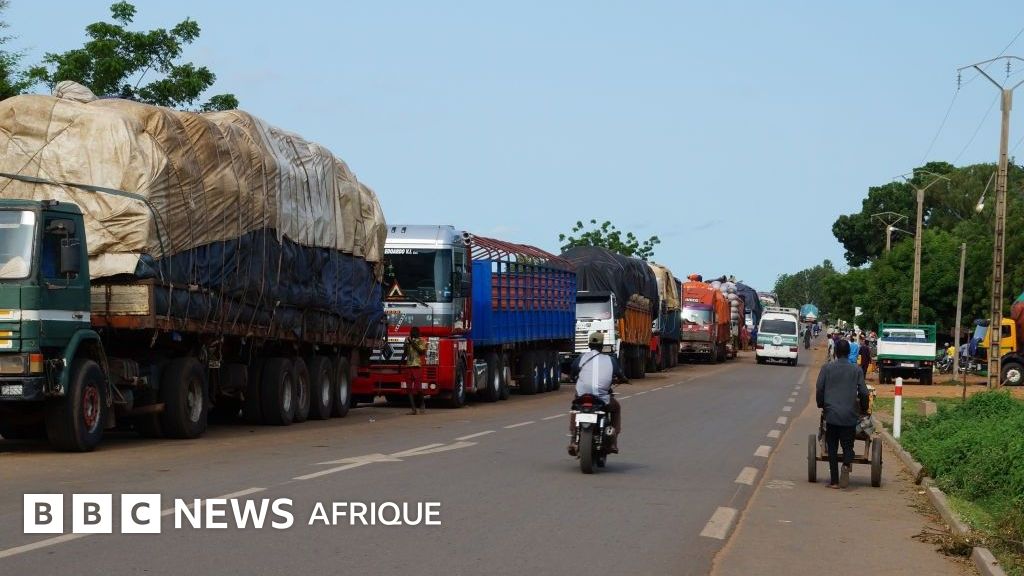
The closure of the border has devastated trade flows, particularly for Niger, a landlocked nation heavily reliant on Cotonou’s port for imports and exports. The disruption has paralyzed supply chains, leaving warehouses empty and drivers stranded. Ibrahim Abou Koura, a Nigerien transporter based in Cotonou, described the crisis as a “human tragedy,” noting that his once-bustling warehouse now stands nearly vacant.
For Niger’s truckers, the detour via Lomé, Togo’s port, has added thousands of kilometers and significant costs. The longer route forces drivers to navigate through conflict zones in Burkina Faso, where jihadist attacks pose constant threats.
The economic toll extends beyond logistics. Cotonou’s port, a vital hub for regional trade, has seen a sharp decline in activity. The suspension of Nigerien oil loading at Seme-Kpodji further compounded the losses. Meanwhile, Niger shifted its trade to Lomé, reducing Bénin’s leverage in the region.
The potential reopening of the border offers a lifeline for both nations. It could revive the Niger-Bénin corridor, once hailed as the safest, most efficient, and cost-effective route for transporters and businesses. Gamatie Mahamadou, Secretary-General of Niger’s truckers’ association, stressed the urgency of restoring this link, calling it “the backbone of our regional trade.”
what’s next?
The agreements reached in Cotonou must now be ratified by the highest authorities in both countries. While the path forward remains uncertain, the momentum is undeniable. With the joint commission set to convene and concrete steps taken to ease tensions, the prospect of a reopened border looms closer than ever.
As General Toumba noted, this breakthrough is about more than just trade—it’s about rebuilding trust, fostering regional stability, and unlocking shared prosperity for millions of people on both sides of the border.