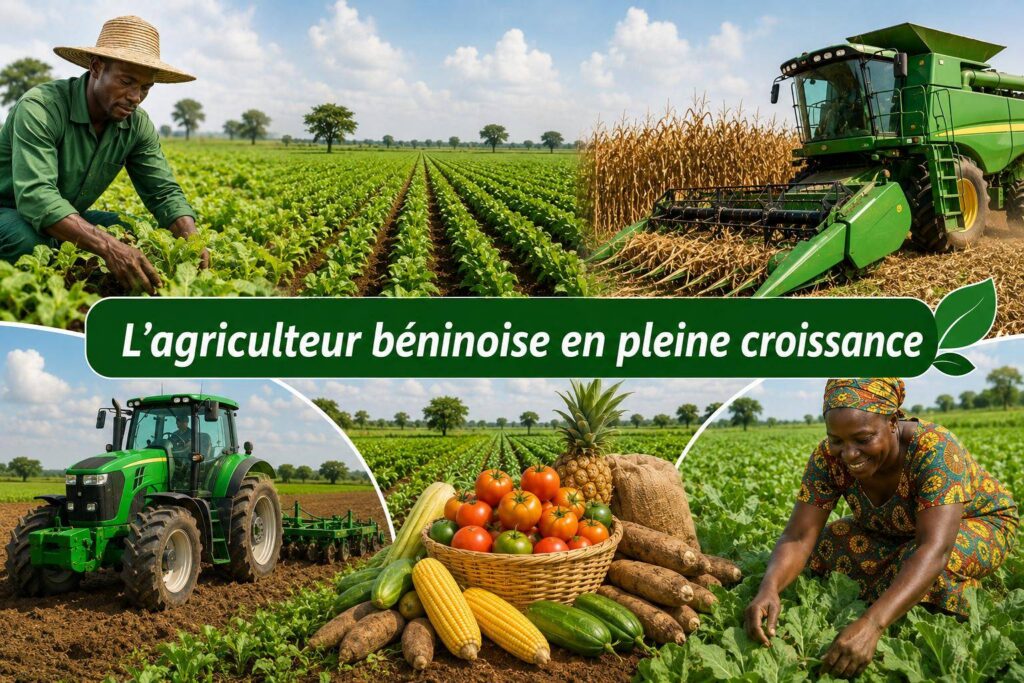
Since 2016, Benin has undergone a profound agricultural transformation under bold government reforms. A strategy combining substantial subsidies, rapid mechanization, and strategic land development has positioned farming as the cornerstone of national growth and a pillar of food security. From cotton to pineapple, maize to soybeans, Benin’s fields are now yielding record harvests, reshaping the country’s economic landscape.
Strategic sectors soar: the numbers behind Benin’s farming success
Within a decade, Benin’s agricultural output has reached unprecedented levels thanks to ambitious government programs. The maize sector, a dietary staple, tells a striking story: production hovered below 1.3 million tonnes in 2016 but skyrocketed to 2.5 million tonnes by 2025. With domestic demand capped at 1 million tonnes, the surplus has not only secured national self-sufficiency but also introduced new challenges in managing cross-border trade to keep local prices stable.
The soy sector exemplifies Benin’s push toward industrialization. Once a minor crop producing just 140,000 tonnes in 2016, soy production surged to 422,000 tonnes by 2022 and hit 606,016 tonnes in the 2024-2025 season—more than quadrupling its initial output. This boom feeds modern processing plants in the Glo-Djigbé Industrial Zone, while a significant portion is exported. Rice production has followed a similar upward curve, rising from 204,000 tonnes before 2016 to 525,000 tonnes in 2022 and reaching 1 million tonnes by 2025.
Cotton—often called ‘white gold’—remains Benin’s agricultural flagship. In 2015, the country harvested a modest 269,000 tonnes. Post-2016, average annual production consistently exceeded 640,000 tonnes, peaking at 766,273 tonnes in 2021. This steady growth has cemented Benin’s status as Africa’s top cotton producer, with a target of 1 million tonnes in sight. Other cash crops are also thriving: pineapple production jumped by 93%, from 244,000 tonnes before 2016 to 470,000 tonnes in 2022, with a projected climb to 600,000 tonnes soon. Cashew nut output doubled, increasing by 105% from 91,000 tonnes to 187,000 tonnes in 2023, accompanied by a 34% yield improvement. The state supports this sector directly by subsidizing certified seedling purchases, covering 500 FCFA of the 600 FCFA total cost.
110 billion FCFA shield: how subsidies shielded Benin’s farmers from global price shocks
These historic gains were made possible by unprecedented state intervention. Facing soaring international fertilizer and chemical input prices that threatened to cripple farm productivity, the government took decisive action. Between the 2022-2023 and 2024-2025 farming seasons, a total of 110 billion FCFA was allocated in direct subsidies. This financial cushion stabilized production costs, prevented yield collapses, and safeguarded Benin from food insecurity threats.
Water mastery and mechanization: ending the era of outdated farming
The second pillar of Benin’s agricultural metamorphosis is infrastructure modernization and production technique upgrades. Historically vulnerable to climate variability, Benin’s farming sector is gaining resilience through hydro-agricultural development. Before 2016, only 6,200 hectares of land were developed—just 2% of national potential. Today, 25,440 hectares across 67 municipalities have been transformed, quadrupling the previous figure. The long-term goal is to develop 50,000 hectares to further strengthen sector resilience and boost farmer incomes.
Mechanization is also accelerating, easing the physical burden on farmers. Tractor use jumped from under 8% before 2016 to over 16% today. More than 400,000 hectares have been mechanically plowed thanks to 5,000 subsidized tractor kits—sold at half price. Training followed, with 6,000 tractor operators and 300 certified mechanics certified. The government aims to raise mechanization to 30% by late 2026, deploying 8,000 active kits.
Restructured financing and sustainable land stewardship
The financing landscape has been overhauled, replacing outdated and inefficient tools. The National Agricultural Development Fund (FNDA) now serves as the engine of agricultural credit, funding over 3,000 projects worth more than 19 billion FCFA. The Municipal Development Support Fund (FADeC-Agriculture) has enabled 330 local investments totaling 68 billion FCFA, with a focus on improving governance to expand impact. Short-term objectives include scaling up these financial instruments to benefit thousands more producers.
Environmental stewardship is now central to the sector’s growth. Before 2016, 80% of Benin’s soils suffered from low fertility. Through sustainable land management practices, over 3 million hectares have been rehabilitated, restoring fertility and preventing degradation. Freshwater systems have also been revitalized: once polluted and underutilized, they now support a 79% surge in fisheries production. High-quality shrimp from Benin are once again entering European markets. Livestock production has kept pace, with meat output rising by 53% and egg production by 43%, moving the country closer to covering 75% of domestic demand.
A market-driven agricultural future
By anchoring development in local strengths and reinforcing strategic supply chains, Benin has restructured its rural economy from the ground up. Market access has improved significantly, and international partnerships are deepening daily. In less than a decade, bold policy choices and unprecedented financial backing have redefined farming—not as a subsistence burden, but as a modern, competitive, and dynamic economic force. The challenge ahead is to sustain this momentum, strengthen oversight, and ensure that the wealth generated reaches farmers across the country.