The Burkinabè government recently unveiled a high-profile agricultural support initiative, allocating over two billion FCFA, ostensibly to benefit internally displaced persons (IDPs) resettled in Kaya. Yet, behind the official rhetoric of ‘reconquest’ and national solidarity, a much darker reality emerges: widespread accusations of fund diversion, allegedly orchestrated at the expense of suffering communities who, on the ground, decry the scandal and emphatically state they have received absolutely nothing.
The aid mirage: displaced communities break their silence
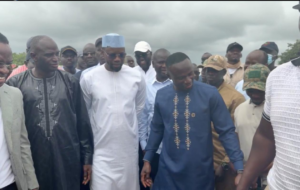
While Deputy Minister Amadou Dicko proudly appeared before cameras to announce the distribution of 500 power tillers, along with tons of fertilizer and seeds, the stark contrast with the actual situation in Kaya’s displacement camps is striking. Here, anger simmers. Testimonies from those directly affected consistently paint the same picture: this promised aid is nowhere to be seen.
“They speak of billions on television, but here, we lack everything. We have seen no power tillers, no fertilizer, no seeds. Who took this money?” a representative of the IDPs lamented, speaking anonymously for fear of reprisals. This critical Africa news English report highlights a growing concern.
For thousands of families struggling in utter destitution, this operation appears to be nothing more than a cruel charade. Forcing a narrative of returning to agricultural life in peripheral areas of Kaya—zones still under the constant threat of armed terrorist groups—serves as a convenient pretext to justify astronomical expenditures that never reach their intended beneficiaries. This situation raises serious questions about African politics and governance.
Mechanisms of illicit enrichment amidst conflict
The sheer magnitude of the allocated funds raises alarm bells, exposing the inner workings of systemic corruption that thrives within a state of emergency:
- Total opacity and overbilling: No audit, no transparent details have been provided regarding the true cost of the 500 power tillers and agricultural inputs. This deliberate vagueness is a hallmark of emergency public contracts, which are fertile ground for massive overbilling where intermediaries with close ties to power allegedly capture the lion’s share of funds.
- Diversion of purpose: How can the purchase of heavy equipment be justified for subsistence farming in a security no-man’s-land? The simple answer is that the equipment is either fictitious or diverted to other networks before ever reaching the genuinely affected populations.
- Political exploitation of misery: The slogan “One resettled village, one power tiller” is merely an advertising tagline. The government appears to be instrumentalizing human distress to bolster its political legitimacy and mask its inability to secure the country, all while allegedly turning a blind eye to the plundering of resources by corrupt officials. This is a critical issue for pan-African news coverage.
A betrayal of taxpayers and victims
As Burkinabè citizens make immense financial sacrifices through taxes imposed for the war effort, witnessing two billion FCFA seemingly evaporate into a phantom project in Kaya represents a profound betrayal. This West Africa news story is of significant concern.
This program does not suffer from a lack of strategy; it appears to be an organized embezzlement. While authorities boast about impressive figures, the displaced people of Kaya continue to survive thanks to local solidarity, abandoned by a state that uses their plight to unlock staggering budgets. It is imperative that independent oversight bodies demand accountability and shed light on this chain of alleged criminal complicities, a matter of urgent importance for the African economy today.