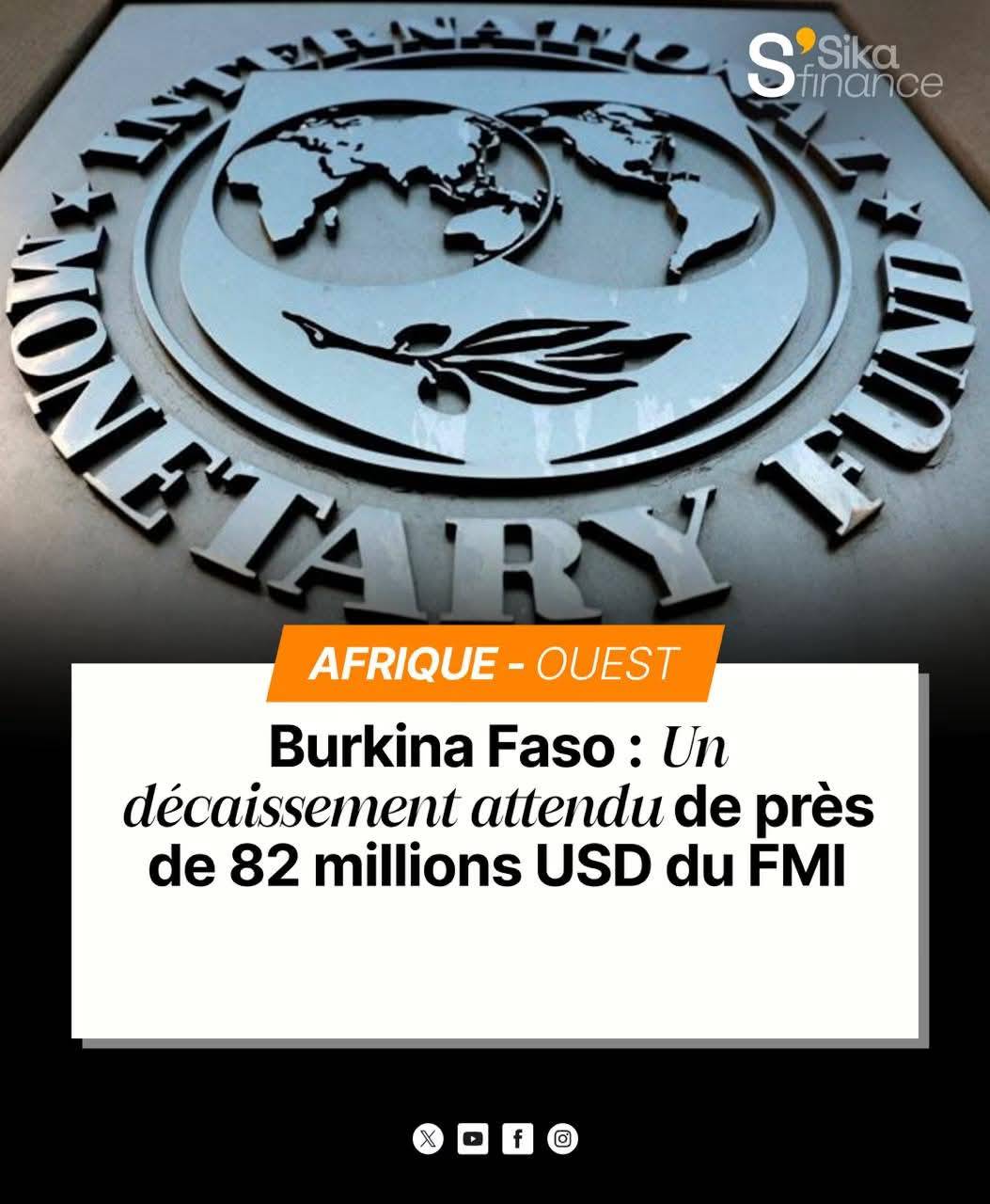
In Ouagadougou, the transitional authorities are walking a tightrope between financial necessity and political posturing. While declaring a definitive break from traditional Western partners, Burkina Faso finds itself at the mercy of an unlikely lifeline: the International Monetary Fund (IMF). Following a technical mission, the global financial institution has provisionally approved a disbursement of nearly $82 million—a move that exposes the harsh realities of governance in a nation grappling with relentless security and economic crises.
From tentative agreement to final validation: the hurdles ahead
The IMF’s announcement marks a critical milestone, but the relief remains conditional. The funds, equivalent to approximately 46.21 billion West African CFA francs, are earmarked for Burkina Faso’s coffers only after the Fund’s Executive Board grants formal approval. This bureaucratic step underscores a universal truth in international finance: no financial lifeline is ever guaranteed until every procedural box is ticked.
This disbursement is tied to the Extended Credit Facility (ECF), a program designed to support countries facing prolonged balance-of-payments challenges. For Burkina Faso, it represents a rare lifeline in an environment where economic instability has become the new normal.
The clash between sovereignty rhetoric and economic survival
The current transitional government has championed an uncompromising stance on sovereignty, severing ties with France and scaling back cooperation with the European Union. Meanwhile, Ouagadougou has pivoted toward new geopolitical alliances, most notably with Russia. Yet, when it comes to balancing the national budget and averting economic collapse, the limits of ideological purity become glaringly apparent.
The IMF, often vilified by African sovereignists as a tool of Western dominance, has once again emerged as a lender of last resort. The irony isn’t lost on observers: the same government that rails against foreign interference now finds itself dependent on an institution it publicly rejects. The financial survival of Burkina Faso appears to hinge on pragmatism, even as its leaders cling to the narrative of absolute autonomy.
How insecurity is strangling Burkina Faso’s economy
The transition government’s decision to seek external financing wasn’t made lightly. At the heart of the crisis lies a decade-long scourge of armed insurgencies, which have seized control of vast swathes of the country. This unrelenting violence has crippled the nation’s economic arteries.
Transport networks are in shambles, rural agricultural zones are inaccessible, and the mining sector—the backbone of Burkina Faso’s economy—has ground to a halt. The fallout is catastrophic: businesses are shutting down or relocating to neighboring countries perceived as safer. Unemployment is surging, stripping the state of critical tax revenues and suffocating local enterprises that once fueled growth.
Reforms imposed: the heavy cost of financial aid
Securing the IMF’s $82 million isn’t a free pass. Ouagadougou has had to accept stringent conditions, a reality that starkly contrasts with its public declarations of self-reliance. The Fund’s demands center on structural reforms designed to restore fiscal balance and long-term viability.
Key priorities include enhancing domestic revenue collection—particularly through more efficient tax systems—and rationalizing public spending. Subsidies on energy and the wage bill of the civil service are prime targets for cuts. The government must now submit to rigorous, periodic audits of its economic performance, a far cry from its pledge to govern without external interference.
The path forward: a fragile balance
The journey toward securing these funds highlights the excruciating choices facing Burkina Faso’s leaders. On one side, there’s the imperative to project an image of unyielding sovereignty; on the other, the desperate need to fund essential public services and sustain a war effort against insurgents. If the IMF’s Executive Board gives the green light, Ouagadougou will gain a much-needed financial reprieve. Yet, this assistance also lays bare an uncomfortable truth: as long as the security crisis persists, Burkina Faso’s economy will remain shackled to international financial institutions it publicly resists. The paradox of sovereignty versus survival continues to define the nation’s struggle for stability.