Why Burkina Faso has broken off diplomatic relations with France
Crédit photo, Reuters
The ruling military junta in Burkina Faso has formally declared an end to its diplomatic relations with France, accusing Paris of engaging in activities detrimental to Burkinabè national interests.
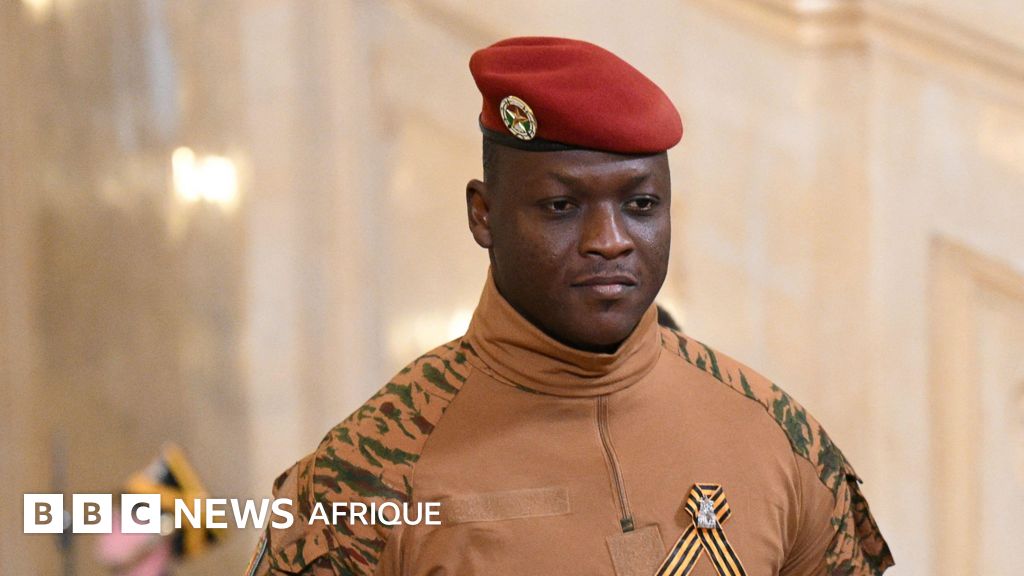
Relations between Ouagadougou and its former colonial power have significantly deteriorated since Captain Ibrahim Traoré seized power in a 2022 coup d’état. Since then, his administration has pursued a political course marked by forging new partnerships and openly challenging Western influence, a notable development in African politics.
In a televised address on Friday, Burkinabè Communication Minister Pingdwendé Gilbert Ouédraogo leveled accusations against France, citing its “unrelenting activism” within the country and condemning what he termed “neocolonial ambitions.”
The French Ministry of Foreign Affairs swiftly condemned the move as “hostile and baseless,” asserting that it underscored an “alarming trajectory” from the Burkinabè authorities.
France additionally urged its nationals residing in Burkina Faso to exercise heightened vigilance.
Burkina Faso, much like its neighbor Mali, has been grappling with a persistent jihadist insurgency for over a decade. For several years, French forces actively participated in counter-insurgency operations across the region before their eventual withdrawal from the country.
Following his ascent to power, Captain Traoré explicitly requested the departure of French soldiers stationed in Burkina Faso, alleging that Paris was pursuing a “hidden agenda.” Ouagadougou has since cultivated closer ties with nations such as Russia and China.
In its official communiqué announcing the diplomatic rupture, the Burkinabè government asserted that the prerequisites for “mutual respect” between the two nations had ceased to exist. Specifically, it accused France of backing “subversive networks” and endeavoring to marginalize Burkina Faso on the international stage.
Nevertheless, authorities clarified that this decision pertains exclusively to the “institutional framework of relations” and does not diminish the “historical, human, cultural, and social bonds” shared between the Burkinabè and French peoples.
The junta had previously pledged a return to constitutional governance by 2024, a deadline that ultimately went unfulfilled. Furthermore, in January 2025, the authorities announced the dissolution of all political parties.
In the same year, Burkina Faso, alongside Mali and Niger – all three nations currently under military rule – formally withdrew from the Economic Community of West African States (ECOWAS) to establish the Alliance of Sahel States. This marks a significant shift in West Africa news and African politics.
France has not maintained an ambassador in Burkina Faso since January 2023. Prior to this, in 2024, Ouagadougou had expelled three French diplomats, accusing them of “subversive activities” – allegations vehemently denied by Paris.