- Sécurité
The United States reiterated its call for stronger protection of children caught in armed conflicts, shining a spotlight on the alarming situation in the Democratic Republic of Congo (DRC). The statement was delivered during the 10,182nd session of the United Nations Security Council, dedicated to the issue of children and armed conflict worldwide.
Speaking on behalf of the U.S. government, Ambassador Jennifer Locetta, alternate representative for special political affairs at the U.S. Mission to the United Nations, reminded that children continue to bear the heaviest cost of wars raging in several parts of the world.
“No child should be deprived of security,” the diplomat said, echoing a message previously delivered by former First Lady Melania Trump during a Security Council meeting last March. On that occasion, she highlighted the devastating impact of international conflicts on children.
DRC among the main concerns
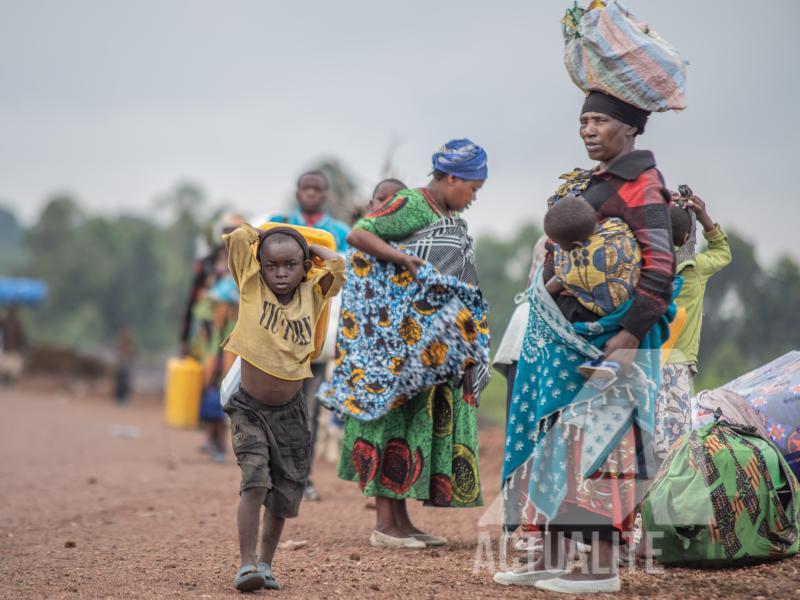
During her remarks, Jennifer Locetta cited the Democratic Republic of Congo as one of the countries where violations of children’s rights remain particularly severe. The United States condemned these abuses, stating that Congolese children continue to be the primary victims of ongoing clashes between armed groups in the eastern part of the country.
“In conflict zones around the world, children face numerous threats. In Sudan, there are reports of children being driven from their homes, separated from their families, and subjected to sexual violence. In the Democratic Republic of Congo, millions of children endure the threat of violence, forced displacement, and conflict-related sexual violence perpetrated by various armed groups. We strongly condemn these acts, and under the Trump presidency, the United States continues to make peace a priority,” she said in her address on Wednesday, June 24, 2026.
Children, the primary victims of conflict
The U.S. ambassador stressed that children are not merely collateral damage of wars but are often directly targeted. She added that conflicts also undermine their access to safe, quality education, fueling a vicious cycle of poverty, instability, and violence that is passed down from generation to generation.
“Too often, conflicts deprive children of reliable and safe education, closing the doors to their future and jeopardizing their prospects. As everyone knows, this results in a cycle of poverty and instability that passes from generation to generation, fueling new conflicts and undermining global stability and economic prosperity. Children everywhere deserve to feel safe, to be educated, and to have a future. By taking steps to protect them, we preserve our collective future and help end persistent conflicts,” she noted in her speech.
Criticism of the UN report
The U.S. diplomat also criticized the latest report of the United Nations Secretary-General on Children and Armed Conflict (CAAC), arguing that it does not help strengthen the protection of children in war zones.
According to Jennifer Locetta, “the latest UN Secretary-General’s report on children and armed conflict (CAAC) does not bring us closer to that goal.” She stated that the document presents “a mistaken view of civilian harm under the laws of war,” arguing that “the deliberate killing of children by the Houthis or other malicious armed groups is a grave violation; the accidental killing of civilians by a state’s armed forces is not.”
For the U.S. representative, this report once again illustrates “how the UN devotes time and resources to initiatives that are incompatible with the interests and sovereignty of member states.”
“This report only reinforces the United States’ decision to withdraw from the Office of the Special Representative for Children in Armed Conflict. It further damages the credibility of that office by wrongly equating the actions of U.S. armed forces with those of Houthi terrorists. The protection of children remains a priority for the United States. We continue to call for concrete measures to prevent children being involved in armed conflict. Publishing politicized and inaccurate reports will not achieve these goals,” she declared in her speech.
A call for international action
Beyond the DRC, the United States also highlighted the situations in Sudan, Ukraine, and Haiti, calling on all parties to conflicts to better protect children from violence, forced displacement, and serious violations of their rights. For Washington, child protection remains a critical issue for fostering long-term peace and stability in regions affected by armed conflict.
The impacts of the conflict on children in the Democratic Republic of Congo are mainly seen through six grave violations: the recruitment and use of children, killing and maiming, rape and other forms of sexual violence against them, attacks on schools and hospitals as well as protected persons associated with them, abduction of children, and denial of humanitarian access.
Although the situation was already worrying, it has further deteriorated with the resurgence of the AFC/M23 rebellion, supported by Rwanda, which currently occupies large swathes of North Kivu and South Kivu provinces, despite diplomatic initiatives led by the United States, Qatar, and the African Union.