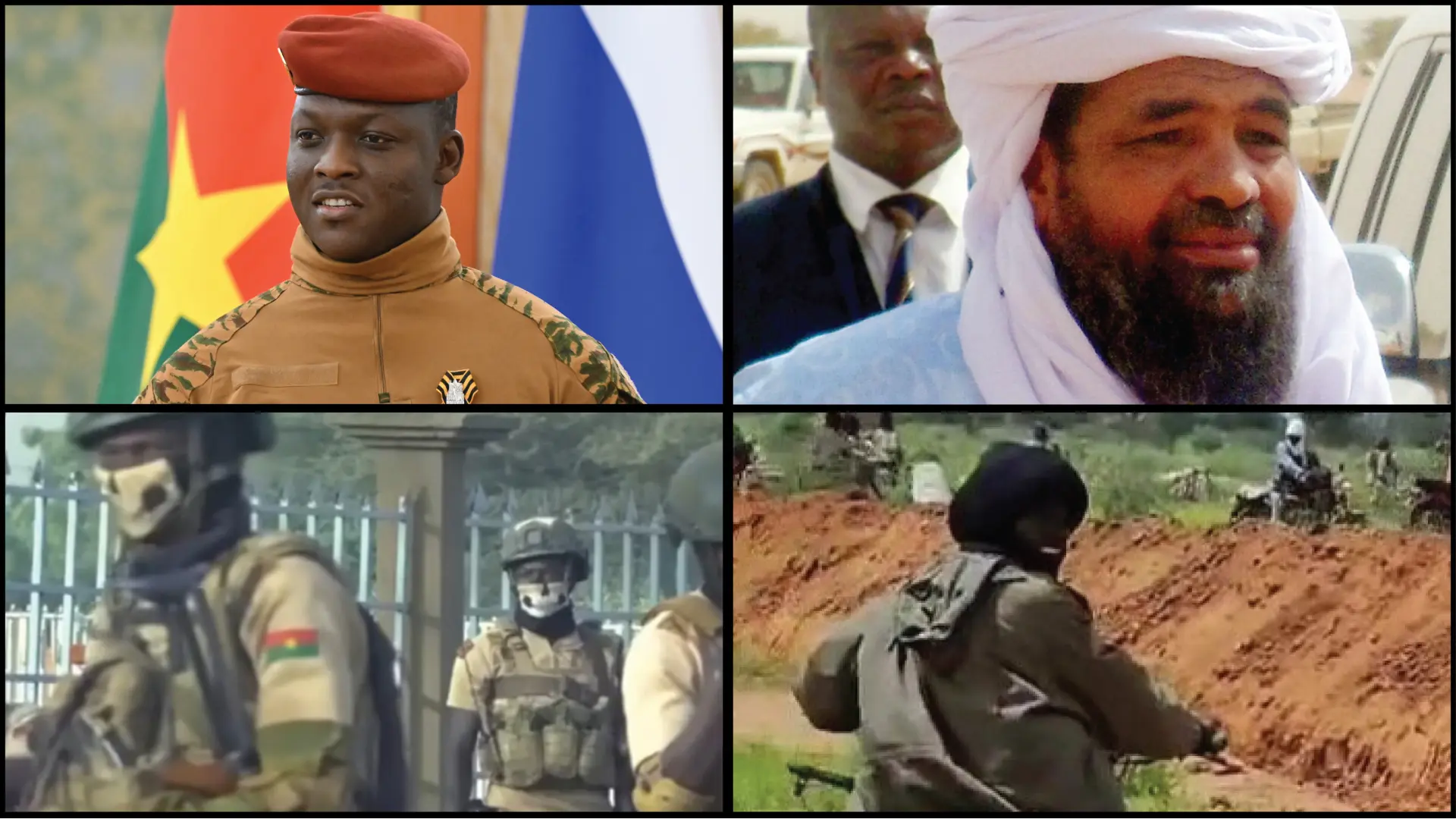
At 36, Captain Ibrahim Traoré holds new captain’s insignia and occupies a presidential palace, not through electoral victory, but by dissolving democratic processes. This move conveniently eliminates the need to mislead an electorate, allowing for direct misrepresentation to gathered journalists.
From the Koulouba palace, he addressed a panel of six journalists, presenting an optimistic two-hour monologue. The captain painted a picture of military success, claiming territory reclamation, burgeoning industrial growth, accumulating gold reserves, expanding infrastructure, and unprecedented freedom for the Burkinabè people. The scene felt almost orchestrated, lacking only a cinematic soundtrack and a waving flag.
A sobering counter-narrative surfaces
However, as Captain Traoré delivered his upbeat address, a comprehensive 351-page report emerged, detailing a grim reality. This document, titled “No One Will Escape,” compiled extensive testimony, satellite imagery, and lists of the deceased, revealing a tragic toll of 1,837 civilian fatalities over two and a half years. The perpetrators included the national army, local VDP militias, and JNIM jihadist groups. While all factions contributed to the violence, the report starkly highlighted that state-affiliated forces engaged in systematic killings, often operating with drone surveillance and explicit directives.
The documented atrocities encompassed war crimes, crimes against humanity, and the ethnic targeting of the Fulani community. Specific incidents included the summary execution of 223 civilians, among them 56 children, in Nondin in February 2024. Furthermore, hundreds perished in Baraboulé in December 2023, and 130 Fulani individuals were massacred near Solenzo in March 2025. The evidence presented included the discovery of mass graves, compelling survivor testimonies, and corroborating satellite imagery.
Despite this damning evidence, the official stance often dismisses such findings as a mere Western conspiracy.
“Recaptured” towns: A facade over massacres
Ironically, Captain Traoré proudly cited the reclamation of towns like Baraboulé and Pétégoli, locations also prominently featured in the comprehensive human rights report. However, this report meticulously detailed “Operation Tchéfari 2” – translated as “The Warriors’ Honey” in Fulfulde, a grimly poetic name for widespread violence – where state forces were documented killing hundreds of civilians across 16 villages. While state media lauded these operations as “successes,” survivors recounted them as brutal slaughterhouses, starkly illustrating a profound divergence in perspective.
Captain Traoré offered an alternative explanation, attributing these killings to terrorists disguised in military uniforms who then film their own actions. This narrative suggests an extraordinary level of operational sophistication: terrorists reportedly donning Burkinabè military attire, deploying military drones, coordinating multiple battalions, and subsequently retreating. Such complex maneuvers seem incongruous with Traoré’s own characterization of these groups as merely individuals “reading the Quran in the bush.”
The unspoken truth: Targeting the Fulani community
Remarkably, throughout a two-hour interview, the term “Fulani” was conspicuously absent. This omission is profoundly significant, akin to discussing World War II without acknowledging the Jewish people – technically feasible, yet morally reprehensible.
The human rights investigation meticulously documented a systematic campaign against the Fulani community, who constitute 8% of Burkina Faso’s population. This group has been collectively accused of terrorism, leading to village-by-village massacres and the displacement of hundreds of thousands. The report even cited Captain Traoré’s own words from February 2023, directed at Fulani leaders: “There will be many dead. And it will be more complicated for your community.” The chief of his presidential guard was reportedly even more explicit, stating: “We will kill them all.”
Despite these documented threats and actions, the official narrative maintains that Burkina Faso faces no “Fulani problem,” only a “problem of Fulani” – a chilling semantic distinction.
“Freedom of expression”: A chilling reality
Captain Traoré controversially asserted that Burkinabè citizens enjoy “much greater freedom” than their European counterparts. This claim takes on a sinister meaning when considering the documented reality: individuals are free to vanish. Journalists have been abducted and forcibly conscripted into militias, independent media outlets have been silenced, and human rights websites blocked. Furthermore, the electoral commission has been dismantled, and the death penalty reinstated, severely curtailing civic liberties.
Compounding this suppression, organized networks of pro-junta trolls, known as the “BIR-C” (Rapid Communication Intervention Battalions), relentlessly disseminate propaganda and deepfakes across social media, aggrandizing the captain. The sophistication of this digital manipulation makes comparisons to regimes like Kim Jong-un’s seem almost rudimentary.
Selective justice: Accountability for some, impunity for others
The human rights organization has urged an investigation into Captain Traoré for command responsibility, naming six generals in connection with the abuses. To date, none have faced trial. The junta’s decision to withdraw from the International Criminal Court further raises concerns, as such a move often signals an avoidance of international scrutiny.
In stark contrast to the impunity for grave atrocities, Captain Traoré has publicly shamed corrupt traffic officers caught accepting minor bribes of 500 CFA francs, framing such incidents as national scandals. Meanwhile, the massacre of hundreds of civilians by the army is dismissed as “terrorist perfidy.” This stark disparity in focus clearly illustrates a skewed set of priorities.
Blaming the West: A convenient shield
Any external critique is swiftly deflected: a European Parliament resolution is labeled interference, advice from the French army chief is dismissed as meddling, NGOs are branded manipulators, and media reports are declared fabrications. The internet, territorial maps, and even the extensive 351-page report based on 450 interviews are all conveniently dismissed as “fake.” In this narrative, only Captain Traoré’s version of events holds truth.
While acknowledging the legitimate grievances of postcolonial exploitation, particularly France’s historical plundering of Africa, this historical reality is being weaponized. It serves as an impenetrable shield against criticism, enabling the massacre of a nation’s own populace. True anti-imperialism does not grant a license for such violence, a tactic reminiscent of authoritarian regimes.
In a recent statement, Captain Traoré encouraged Burkinabè citizens to “have children,” asserting that “the land is rich.” A somber irony emerges from this pronouncement, given the widespread reports of numerous individuals being buried within that very same land.