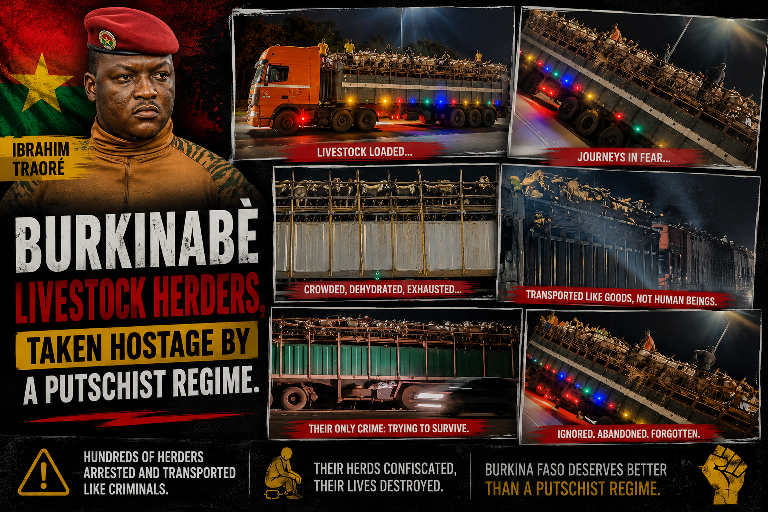
As Burkina Faso’s Muslim community prepares to observe Ramadan—a month marked by heightened spiritual commitment and increased consumption—the nation’s livestock sector finds itself ensnared in an unprecedented predicament. The rigid export restrictions imposed by the transitional authorities, ostensibly to stabilize domestic prices, have created a bottleneck with severe social and economic repercussions for Burkinabè pastoralists and traders.
Administrative rigor overshadows pastoral livelihoods
The blanket ban on livestock exports, enforced by the Mobile Brigade for Economic Control and Fraud Prevention (BMCRF), has left herders grappling with mounting operational costs. Livestock is not a static commodity; it demands constant care, water, and fodder—resources whose prices surge during this dry season. By cutting off access to regional markets, where demand and prices typically peak during the fasting month, the policy inadvertently strangles the very lifeline that sustains pastoral families when they need it most.
Religious conviction versus economic hardship
The current administration, led by Captain Ibrahim Traoré, faces a stark contradiction: its leader is a practicing Muslim, yet the policies enforced appear to disregard the religious and social imperatives of the lunar calendar. While Islam emphasizes equity, solidarity, and the protection of honest livelihoods, the strict enforcement of export bans risks undermining the financial stability of thousands of households for whom livestock serves as a lifetime’s savings, mobilized precisely for Ramadan and Eid celebrations.
Shadow markets and economic suffocation
The surge in illegal export attempts documented by the BMCRF reflects not defiance of state authority but the grim calculus of survival. With domestic markets glutted and prices depressed, many herders are forced to choose between selling at a loss or risking clandestine cross-border trade to safeguard their livelihoods. This policy of uncompromising closure raises a critical question: Can a nation achieve food sovereignty by financially strangling its primary producers? While combating fraud is a core state responsibility, the absence of supportive measures during Ramadan risks eroding trust between rural communities and the central government in Ouagadougou.