Ouagadougou’s pivot to Moscow: promises of partnership vs. enduring challenges
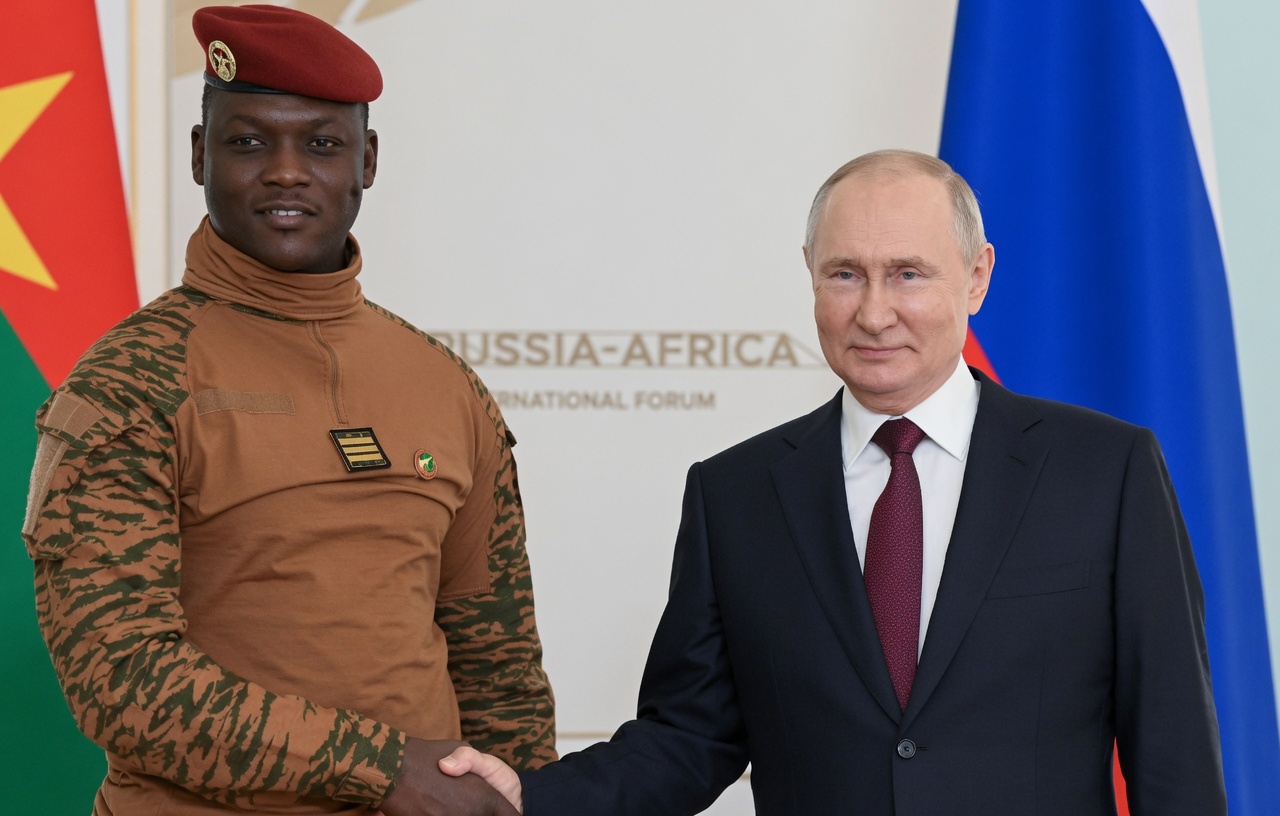
Since deepening ties with Russia, Burkina Faso’s leadership has framed Moscow as a key ally, emphasizing a collaboration built on mutual respect and political neutrality. Official statements repeatedly describe the relationship as a “win-win” partnership, particularly in advancing the country’s sovereignty and security. Yet beneath the rhetoric of strategic autonomy, critical questions remain about the true impact of this reorientation on Burkina Faso’s future.
Sovereignty through diversification: a fragile equation
Ouagadougou has justified its growing alignment with Russia as a move toward regained independence, especially after ruptures with several Western partners. The government argues that by expanding its diplomatic horizons, Burkina Faso has reclaimed control over its foreign policy choices. However, sovereignty is not merely about replacing one dependency with another. A truly autonomous partnership requires the ability to negotiate without yielding to the strategic interests of a single external actor—particularly in sensitive areas such as security and natural resource management.
Security remains a stumbling block
Despite intensified military cooperation with Russia, Burkina Faso continues to face relentless insecurity. Deadly attacks persist across multiple regions, civilian populations bear the brunt of violence, and mass displacements have become commonplace. The human toll and the continued pressure from armed groups raise serious doubts about whether this partnership has fundamentally altered the security landscape. Without measurable improvements on the ground, claims of enhanced protection ring hollow for many Burkinabè.
Economic promises fall short of delivery
While official announcements herald new investment opportunities and economic ventures, tangible benefits for Burkina Faso’s economy remain scarce. Key indicators show persistent strain, while local businesses struggle with disrupted supply chains, reduced activity, and heightened risk. The true test of any economic partnership lies not in lofty declarations, but in concrete outcomes: job creation, infrastructure development, and sustained growth. So far, these milestones have yet to materialize.
Gold for grain: a troubling exchange
The suggestion that Burkina Faso might leverage its gold reserves to secure wheat imports from Russia raises profound concerns about long-term sustainability. As the country’s primary export, gold represents a vital national asset. Using it to address food shortages suggests a troubling dependence—one that implies Burkina Faso lacks the capacity to feed its own people. True sovereignty extends beyond choosing new partners; it demands the ability to ensure food security, process domestic resources, and foster inclusive development. The current trajectory risks deepening economic vulnerabilities rather than strengthening national resilience.
Education and human capital: limited but promising
One of the more promising aspects of the Burkina Faso-Russia partnership lies in educational exchanges. A select number of Burkinabè students now have access to training in Russian institutions, which could help build national expertise in critical fields. Still, the scale remains modest and cannot single-handedly resolve systemic challenges in education and youth employment. Broader reforms are needed to ensure that skill development translates into real economic opportunity.
No strings attached? A closer look at the fine print
The assertion that Russia imposes no conditions on its assistance warrants scrutiny. In international relations, no major power acts without strategic intent. Moscow’s engagement in Africa aligns with its broader geopolitical ambitions: to counter Western influence, secure new markets, and expand its diplomatic footprint amid global isolation. Framing this relationship as purely altruistic overlooks the underlying calculus of power and interest that shapes all state-to-state partnerships.
The danger of over-reliance
Concentrating diplomatic and economic ties around a single partner carries significant risks. A narrow alliance structure can constrain Burkina Faso’s foreign policy options, deter diverse investment, and complicate relations with other global players. In an era of multipolarity, genuine strategic autonomy means engaging with multiple stakeholders—not substituting one bloc for another. A balanced approach is essential to safeguard national interests and maintain flexibility in an unpredictable international environment.
The ultimate measure: impact on citizens
The true benchmark for any international partnership must be its effect on the daily lives of the population. Sovereignty is not measured by diplomatic declarations or alliance symbols, but by tangible improvements in safety, public services, economic opportunity, and youth prospects. On these fronts, the Burkina Faso-Russia partnership has yet to deliver the transformative results its advocates promise. Without sustained progress here, the narrative of a mutually beneficial alliance risks remaining more aspirational than actual.
For now, describing the relationship as a clear-cut “win-win” appears premature. While the partnership has opened new diplomatic avenues, it has not yet proven capable of addressing Burkina Faso’s most pressing challenges. The coming years will determine whether this realignment serves as a catalyst for development—or merely a shift in alliances whose benefits remain largely unfulfilled for the people of Burkina Faso.