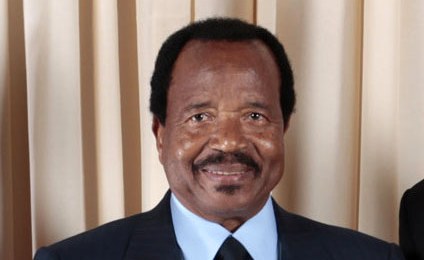
The Council of the Judiciary in Cameroon remained dormant for nearly six years before President Paul Biya’s decree on 2 June 2026. While the move officially revived the institution, the renewal of most members has left lingering doubts about whether it will actually restore the body’s functionality.
For six years, the Council—tasked with overseeing judges’ careers, promotions, disciplinary actions, and safeguarding judicial independence—operated in a state of near-total paralysis. Thousands of pending cases, delayed promotions, and unresolved disciplinary matters piled up, leaving both magistrates and litigants in limbo.
From stagnation to partial revival
The presidential decree, signed on 2 June 2026, renewed the mandates of ten out of fourteen permanent members. Among the changes, Goni Mariam replaced Ali Mamouda, while four new alternate members—Alioum Fadil, Donald Malomba Esembe, Sockeng Roger, and Sali Dairou—joined the council. Despite these adjustments, the decree offers no clarity on when the body will reconvene or how long-standing cases will be addressed.
The Council’s critical role and its collapse
Under the Cameroonian Constitution, the Council of the Judiciary is chaired by the President and serves as the constitutional body responsible for advising on judicial appointments, promotions, transfers, and sanctions. Theoretically, it acts as a safeguard for judicial independence from executive interference. In practice, however, its sessions have been virtually nonexistent since 2020.
Observers note that the last meaningful meetings occurred just before the global health crisis. Since then, the council has operated in a state of suspended animation, with no clear timeline for resuming its duties. The expiration of members’ mandates in 2025 further deepened the legal uncertainty surrounding the institution.
A timeline of institutional failure
- 2020: The last notable sessions took place before gradual inactivity set in.
- 2021–2024: A mounting backlog of cases—unprocessed magistrate integrations, delayed career advancements, unresolved disciplinary proceedings, and unassigned postings—accumulated over years.
- 2025: Members’ mandates expired without immediate renewal, leaving the council in a state of legal ambiguity.
- 2 June 2026: The presidential decree renews some members, yet critical questions remain unanswered about the council’s operational revival.
What the decree omits
The renewal decree addresses membership but remains conspicuously silent on key operational details. There is no indication of when the council will reconvene, how pending cases will be prioritized, or what mechanisms will prevent future paralysis. Without an official announcement of a meeting schedule or working agenda, the decree risks being seen as a symbolic gesture rather than a substantive step toward restoring judicial functionality.
Governance flaws exposed
This episode underscores a broader structural issue: the chronic dependence of Cameroonian institutions on executive will for their mere operation. When a body chaired by the head of state fails to meet for years, it reflects more than administrative oversight—it signals a systemic failure with real consequences. Stalled careers, unprocessed cases, and frustrated litigants are the tangible costs of institutional inaction.
Beyond the decree: the true measure of progress
While President Biya’s decree signals an official acknowledgment that the situation could no longer persist indefinitely, it offers no guarantee of meaningful change. Magistrates, litigants, and independent observers are not awaiting a presidential act—they are demanding action. They expect actual sessions, the review of frozen promotions, the resolution of disciplinary matters, and above all, a council that fulfills its constitutional mandate: to serve as a living, functional institution dedicated to delivering justice.
The real test will not be found in the Official Gazette but in the date of the council’s next meeting.