Economy and Finance
China supplies 30% of Chad’s imports while UAE absorbs 26% of exports
Two global powers shape Chad’s trade landscape, but in entirely different roles.
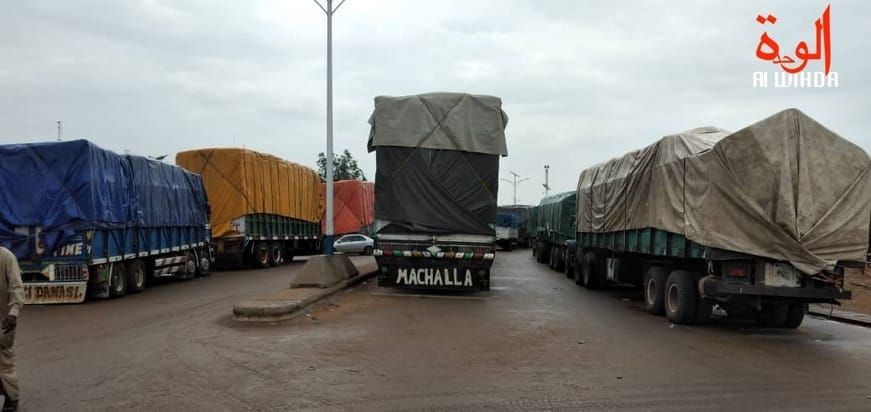
China has cemented its position as Chad’s top supplier, accounting for 30.7% of all imports in 2025. The Asian giant delivered goods worth 306.5 billion CFA francs, a figure more than three times higher than Cameroon—the second-largest supplier—at 108.4 billion CFA francs. Libya follows with 85.8 billion CFA francs (8.6%).
The nature of Chinese exports to Chad underscores the depth of this commercial relationship. Manufactured goods, industrial equipment, and everyday consumer products dominate the flow, reinforcing a classic North-South dynamic where Chad absorbs Asia’s industrial output in exchange for its raw materials. Over the past two decades, Beijing has replicated this model across Africa with remarkable success.
UAE emerges as Chad’s top export destination
However, the export landscape tells a contrasting story. The United Arab Emirates (UAE) stands as Chad’s leading buyer, purchasing 26.2% of its exports—equivalent to 333.3 billion CFA francs in 2025. Malaysia (297.8 billion CFA francs, 23.4%) and Germany (279.9 billion CFA francs, 22%) trail closely behind.
For the UAE, Chad’s role is not that of a final consumer but rather a critical transit point. Dubai and Abu Dhabi serve as global commercial hubs where Chad’s crude oil is often refined, blended, or repackaged before being redirected to other markets. While this arrangement benefits the Emirates financially and remains acceptable for Chad, it also means that N’Djamena rarely tracks the ultimate destination of its own resources.
Trade concentration raises concerns
- 30.7% of imports come from China—a regional record
- 26.2% of exports are absorbed by the UAE
- 98.9% of exports are concentrated among the top 10 buyers
France, despite its historical ties to Chad, ranks sixth among suppliers with just 5.1% of imports (50.9 billion CFA francs). The United States holds the fifth spot at 5.3% (53.0 billion CFA francs), highlighting a gradual shift in Chad’s trade partnerships toward Asia, the Middle East, and emerging economies—at the expense of traditional Western powers.
The import landscape further diversifies with India (4.3%), Togo (3.6%), Brazil (2.9%), and Turkey (2.3%) playing smaller yet notable roles. While these figures suggest a broadening of supply sources, China remains the overwhelmingly dominant partner.
A call for strategic diversification
The trade dynamics reveal a stark reality: Chad exports to a handful of highly concentrated destinations while relying on a similarly skewed supplier base, albeit with greater diversity. The top ten export markets account for a staggering 98.9% of Chad’s total exports, leaving the country vulnerable to external shocks. Addressing this imbalance through a deliberate policy of commercial diversification—both for imports and exports—could mitigate these risks and foster greater economic resilience.