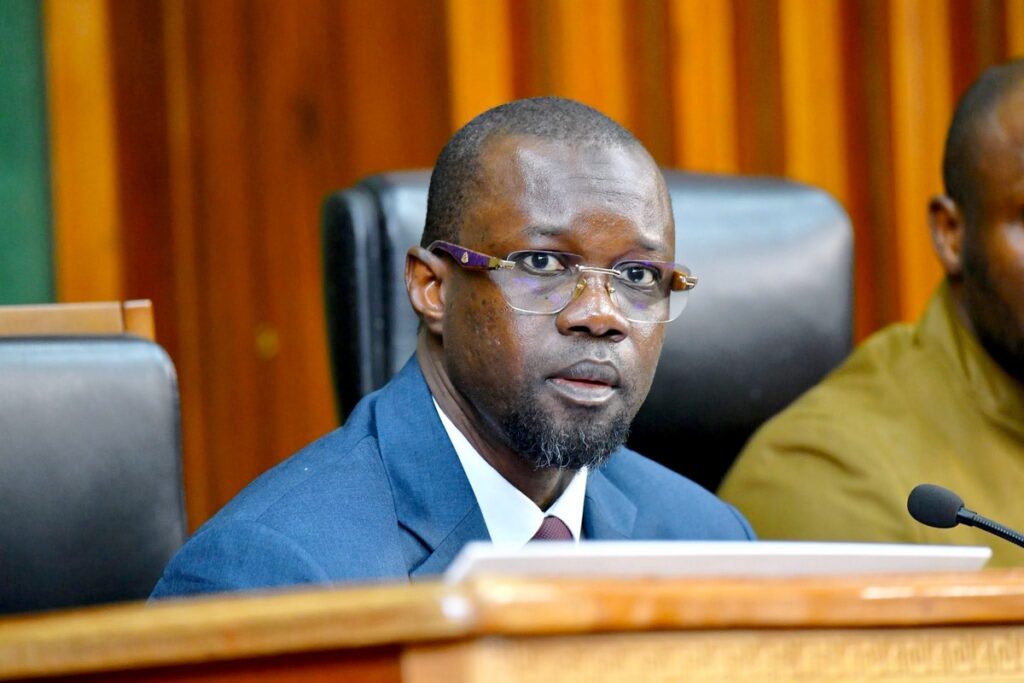
The election of Bassirou Diomaye Faye in March 2024 marked a turning point in Senegal’s political history, with over 54% of the vote in the first round. This victory, achieved after a contested postponement and the release of the elected president from prison, was widely interpreted as a triumph of citizen power. Yet two years into his term, the question remains: has this moment truly reshaped Senegal’s democratic landscape, or does the threat of democratic fatigue loom larger than ever?
what is citizen power in Senegal?
Citizen power in Senegal is not merely about casting a ballot or protesting in the streets. It is a dynamic interplay between institutional frameworks and cultural traditions—a fusion of modern democratic principles and Senegalese ethical values. This concept draws on both contemporary political philosophy (from Pierre Rosanvallon’s counter-democracy to Cynthia Fleury’s politics of care) and Senegal’s rich pre-colonial heritage, including Wolof virtues such as jom (honor and dignity), kersa (piety and humility), and the deliberative tradition of the penc (village assemblies under the baobab tree).
This dual foundation challenges the idea that democracy must be imported wholesale from the West. Instead, Senegal’s citizen power emerges from a dialogue between global democratic ideals and local ethical and institutional practices. The challenge today is to institutionalize this power in a way that prevents it from becoming an empty promise.
the roots of citizen power: from ancient greece to the baobab tree
The notion of citizenship has evolved over centuries. In ancient Greece, it was defined by active participation in political life—Aristotle’s politès was one who engaged in deliberation and justice. However, it was an exclusive model, excluding women, foreigners, and slaves. Rome later transformed citizenship into a legal status, detached from direct participation, which influenced modern liberal democracy.
In Senegal, pre-colonial societies developed their own forms of political belonging. The Wolof kingdoms, for example, had institutions like the jambur (assembly of free notables), which could depose a king deemed unworthy. The penc, or village assembly under the baobab tree, was a space for deliberation where decisions were made through consensus and prolonged discussion. These traditions emphasize community over confrontation, time over efficiency, and inclusion over speed.
Wolof ethics, such as jom (honor and refusal to compromise), kersa (humility and respect), and ngor (integrity and fidelity to one’s word), provide a cultural framework for civic engagement. These virtues are not relics of the past but living principles that can inform contemporary democratic practices.
the contradictions of modern democracy in Senegal
Senegal’s democratic journey has been marked by contradictions. The 2001 Constitution guarantees fundamental rights and a semi-presidential system, yet it lacks mechanisms for direct citizen participation. The Council of State, for instance, can only be accessed by political authorities, leaving ordinary citizens without a direct path to constitutional justice. The National Dialogues of 2024 and 2025 recommended a direct citizen appeal to the Constitutional Council, but this reform was not included in the final draft laws, raising concerns about the gap between promise and institutionalization.
Moreover, the decentralization reforms, while ambitious, have struggled to take root. Local governments often operate as administrative bodies rather than spaces for citizen deliberation. Yet, initiatives like participatory budgets and citizen audits—inspired by global models such as Porto Alegre’s—could revitalize local democracy if adapted to Senegal’s cultural context.
refounding citizen power: seven proposals for a more inclusive democracy
To bridge the gap between the promise of citizen power and its institutional reality, seven key reforms could be implemented:
- Direct citizen appeal to the Constitutional Council: Allow citizens or groups to directly challenge laws they believe violate constitutional rights, as recommended by the 2025 National Dialogue.
- Legal recognition of traditional deliberative spaces: Formalize the role of penc, youth and women’s assemblies (mbootaay), and neighborhood councils in local decision-making processes.
- Civic education rooted in Wolof virtues: Integrate ethical principles like jom, kersa, and ngor into school curricula to cultivate a culture of civic responsibility.
- Strengthening oversight institutions: Ensure the independence of bodies like the Court of Auditors and the National Office for the Fight Against Fraud and Corruption (OFNAC) and provide citizens with direct access to report abuses.
- Institutionalizing inclusive national dialogues: Establish clear procedures for citizen participation, transparency in decision-making, and public accountability for abandoned recommendations.
- A politics of democratic care: Address the emotional and symbolic dimensions of citizenship by recognizing historical injustices and fostering reconciliation, drawing on the Wolof concept of jubbanti.
- Revitalizing decentralization through participatory tools: Mandate participatory budgets and citizen audits in local governments to transform citizens from passive subjects into active co-managers of public affairs.
the future of citizen power in Senegal: a call to collective action
The moment for reform is now. The 2024 election and the National Dialogues signal a willingness to rethink democracy in Senegal. But this opportunity risks slipping away if institutional changes are not matched by a revival of civic culture. The challenge is not just to reform laws but to nurture the virtues that make democracy possible: jom to speak truth to power, kersa to temper anger with respect, ngor to hold leaders accountable, and masla to seek justice without rupturing community bonds.
Senegal’s citizen power can only thrive if it is both rigorous in its institutions and rich in its ethical foundations. This is a task for all: leaders, citizens, and intellectuals alike. The question is not whether Senegal can achieve this but whether it will seize the moment before the promise of change fades into cynicism.