The government of Côte d’Ivoire is charting a new course for its environmental policy by developing a comprehensive national strategy for carbon taxation. Led by the Ministry of Economy, Finance, and Budget, this initiative seeks to significantly lower greenhouse gas emissions while accelerating the country’s shift toward a sustainable economic model.
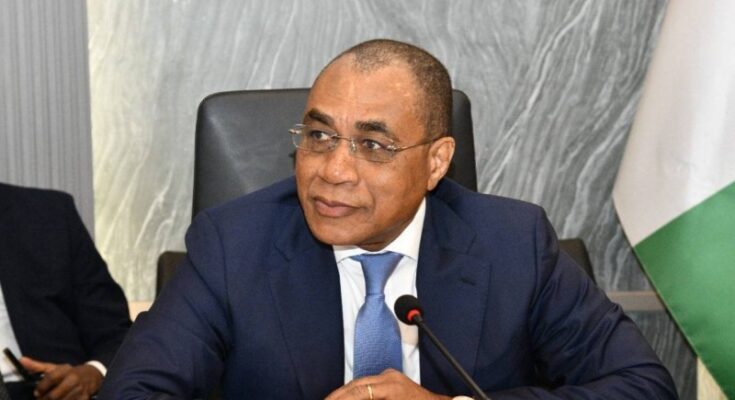
Minister Adama Coulibaly is at the forefront of this proactive stance against the dual challenges of climate change and economic stability. Data shows that the robust economic expansion seen since the post-pandemic recovery has unfortunately led to a rise in carbon intensity, moving from 0.15 to 0.18 tonnes per thousand dollars of GDP between 1990 and 2024. This increase is largely attributed to industrial growth, heavy reliance on fossil fuels in transport, and specific agricultural methods.
Protecting the pillars of the Ivorian economy
National leaders are increasingly concerned about the direct threats posed by global warming. Rising temperatures and unpredictable rainfall patterns are already straining vital sectors, particularly agriculture, which remains a cornerstone of employment and the national wealth in Côte d’Ivoire.
To meet these challenges, the new strategy aligns with international climate pledges. Under its updated Nationally Determined Contribution (CDN 3.0), the country aims to cut emissions by 33.07% through its own efforts, potentially reaching a 74% reduction by 2035 with external support. This reform also forms a vital part of the agreements with the International Monetary Fund (IMF) under the Resilience and Sustainability Facility (RSF).
Transitioning from revenue collection to environmental incentive
While Côte d’Ivoire already has several environmental levies—such as taxes on petroleum products and mining royalties—their primary function has been to generate public revenue rather than drive ecological change. The new carbon tax aims to change this by creating real incentives for businesses and individuals to adopt cleaner practices.
The proposed tax will focus on fossil fuels, though butane gas will be exempt to protect household energy needs. Projections indicate that an initial rate of $8 per tonne of CO₂ could cut emissions by 0.2 million tonnes, while a higher rate of $50 per tonne could lead to a reduction of 1.2 million tonnes.
Supporting households through revenue recycling
Recognizing that the tax could initially raise fuel costs and impact growth, the government has planned a robust “revenue recycling” mechanism. The funds collected will be used to:
- Achieve universal access to electricity across the country.
- Subsidize gas or solar stoves to reduce the use of charcoal.
- Provide direct financial assistance to the most vulnerable households.
- Fund green job creation and professional retraining programs.
- Offer tax breaks and infrastructure support for low-emission vehicles.
A phased implementation through 2035
The rollout of this carbon strategy will occur in three distinct stages:
- 2026-2027: Establishing the necessary legal, technical, and institutional foundations.
- 2028-2029: Official launch of the carbon tax at an initial modest rate.
- 2030-2035: Gradual scaling of the mechanism, followed by regular assessments and adjustments.
Through this structured approach, Côte d’Ivoire aims to balance its economic ambitions with social equity and environmental preservation, contributing its part to the global climate effort.