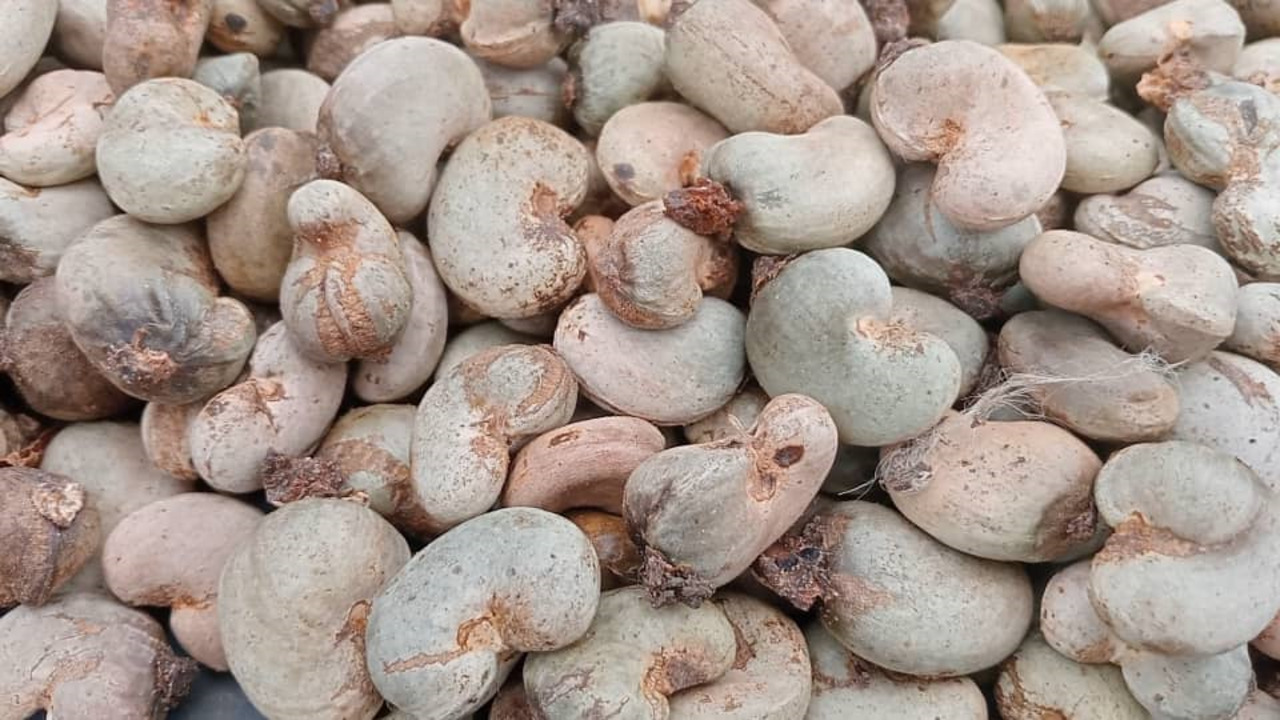
The anacarde harvest season is in full swing across Côte d’Ivoire, with the Cotton and Anacarde Council forecasting over 1.3 million tonnes this year. While this represents a steady output compared to previous years, the figure is expected to drop by 200,000 tonnes from the 2025 harvest. Not all regions are facing the same challenges, however. In the northeastern zone of Bounkani, farmers are grappling with a particularly poor yield, a direct consequence of erratic rainfall patterns.
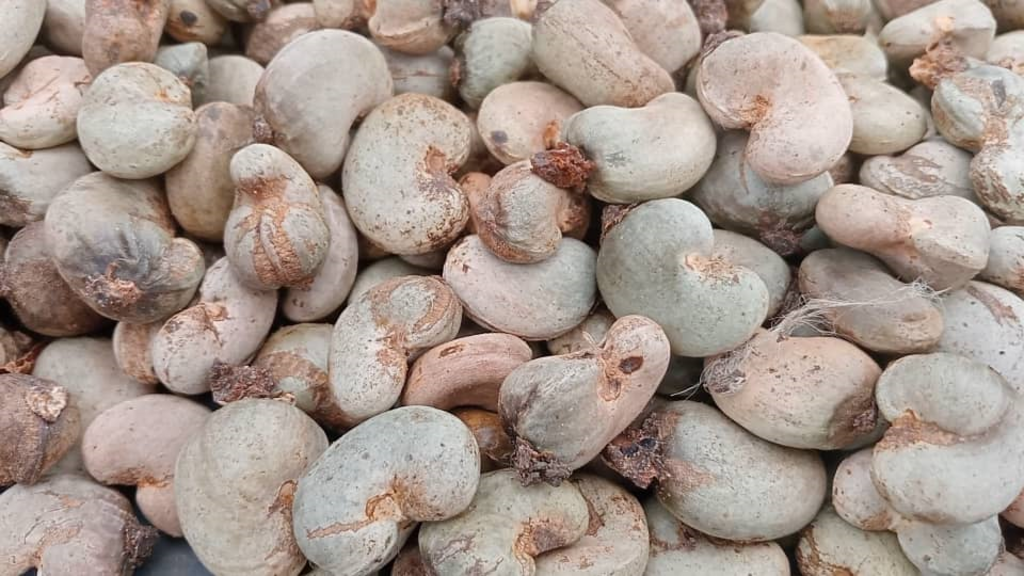
Returning from Bouna in the Bounkani region, I spoke with local farmers whose livelihoods depend on anacarde production. Kouamé Ouattara, who manages a 3-hectare cashew orchard, described the challenges he’s facing. “Three years ago, I could harvest up to 500 kg per hectare. This season, I barely managed to gather two sacks from my entire 3-hectare plot,” he explained. Ouattara attributes the decline to shifting rainfall patterns. “Typically, heavy rains between November and December help the cashew trees blossom. But this year, the rains stopped in October. With no rain from October through February, the trees couldn’t flower properly. Once flowering fails, you have to wait until the next season—so this year’s harvest was a total loss.”
Local beekeepers, who often place hives within cashew plantations, are also feeling the impact. Koffi Ouattara, president of the Koflangué beekeepers’ association, shared his concerns. “We’re seeing a drastic drop in honey production. Last year, we harvested 100 liters. This year, we’ve managed only 30 liters. It’s a significant loss for our community,” he said.
Addressing farming practices to improve yields
Beyond climate-related issues, experts point to suboptimal farming practices as a contributing factor. Dr. Sibirina Soro, a researcher at the University of Daloa and coordinator of the national cashew research project, highlighted the importance of proper orchard density. “Many plantations resemble dense forests because initial planting densities weren’t respected. The recommended density is 100 trees per hectare. Rehabilitating these orchards is essential to restoring productivity,” he noted. Soro also emphasized the need for better pest management, particularly given that Ivorian cashew farmers avoid chemical treatments, leaving their crops more vulnerable to losses.
The challenges facing the Bounkani region underscore the broader vulnerabilities of Côte d’Ivoire’s anacarde sector. While the country remains a leading global producer, climate variability and farming practices demand urgent attention to sustain this critical industry.