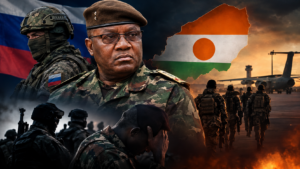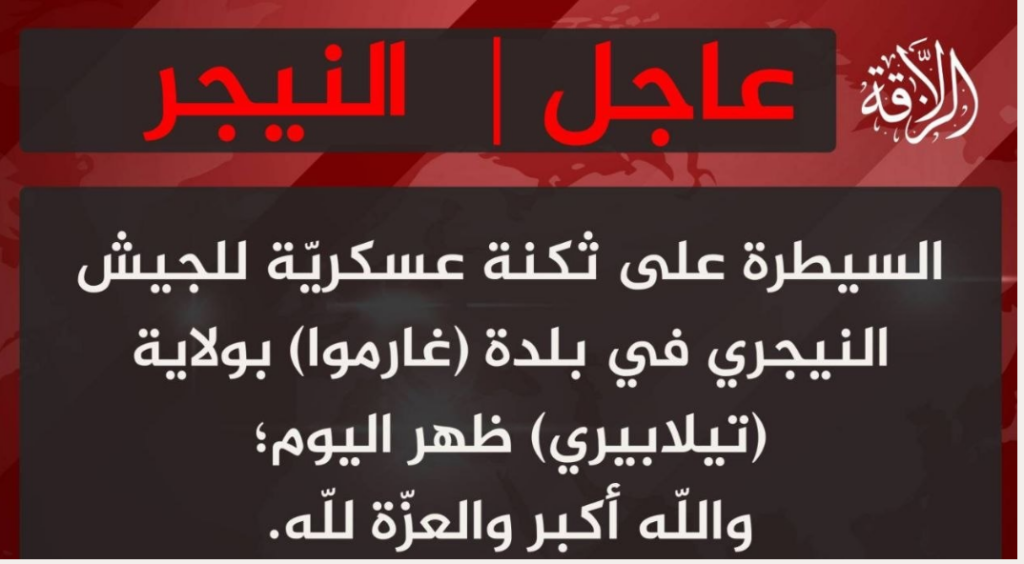
A brutal assault, widely attributed to the Group to Support Islam and Muslims (JNIM), targeted a Nigerien military engineering unit in Garbougna, Tillabéri region, on Thursday, May 14, 2026. This tragic event, a significant piece of West Africa news, has resulted in a devastating provisional toll: at least 67 lives lost, a mix of military personnel and civilians. The unit had been strategically positioned in this vital border zone, engaged in crucial public infrastructure development efforts, reflecting the broader challenges in African economy today.
The Garbougna ambush: a coordinated and overwhelming assault
Just after 5 AM on that fateful Thursday, chaos descended upon Garbougna, a community nestled within the volatile “three borders” zone. Under the cover of predawn darkness and achieving complete tactical surprise, scores of heavily armed assailants, arriving on motorcycles and in pickup trucks, launched a fierce attack on the encampment of the Nigerien Armed Forces (FAN) military engineering unit.
Intelligence services have identified the attackers as elements of JNIM, an Al-Qaeda affiliate, executing a meticulously coordinated offensive. Heavy weaponry fire and multiple explosions swiftly overwhelmed the initial defensive positions. Despite a courageous and determined resistance from the Nigerien soldiers on site, the sheer numerical advantage of the terrorists and the abruptness of their strike enabled them to overrun the location, transforming the area into a brutal battlefield. This incident underscores the complex African politics in the region.
A tragic human toll: soldiers and civilians caught in the crossfire
The provisional death toll, which continues to send shockwaves through the populace, stands at a minimum of 67 victims. The profound tragedy of this assault is further amplified by the diverse nature of those lost. Among the deceased are numerous military engineers, alongside a substantial number of Nigerien civilians. This grim Panafrica News highlights the indiscriminate nature of such violence.
On the ground, observations confirm that the civilians killed were predominantly local laborers, equipment operators, and villagers who routinely collaborated with the army on communal development projects.
The wounded, many in critical condition, were airlifted and transported by land to regional hospitals and facilities in Niamey. Search operations are still underway in the surrounding bush to locate any individuals who might be missing.
Sabotaging progress: the strategy of terror
The targeted military unit was not engaged in a typical combat mission. Its deployment in Garbougna focused on civil engineering endeavors, specifically the completion of a crucial strategic bridge. This infrastructure project was intended to open up the region, streamline the movement of goods and people, and revitalize the local economy, which has been severely hampered by persistent insecurity. This is a key aspect of pan-African news often overlooked.
By specifically attacking the military engineers, JNIM delivers an unambiguous and cynical message: to obstruct, by any means necessary, the reassertion of state authority and the stabilization of the Tillabéri region. For these armed groups, disrupting communication routes and demolishing essential development infrastructure is a well-established tactic designed to keep local populations entrapped in a cycle of terror and dependence.
The three borders zone under intense pressure
This latest tragedy serves as a stark reminder of the extreme fragility of the security situation across the “three borders” zone, encompassing Niger, Mali, and Burkina Faso. Despite escalating joint military operations and the enhanced capabilities of the Nigerien army, terrorist groups maintain a formidable asymmetric threat. They exploit the porous borders with Mali, launching deadly raids before retreating across the demarcation line. This persistent instability is a major focus of Africa news English.
In Niamey, emotions run high, and condemnations pour in from all quarters. Military authorities have vowed that this sacrifice will not go unpunished and that national reconstruction efforts will press on, honoring the memory of those who fell, both with tools and arms in their hands.
The Garbougna attack represents a grim turning point in Niger’s fight against terrorism. By intertwining economic reconstruction with their sovereign mission, the military engineers embodied the promise of normalcy for the people of Tillabéri. This heavy toll of 67 shattered lives cruelly underscores that the conflict waged by Niger and its partners in the Alliance of Sahel States (AES) is fought not only on military fronts but also through efforts to open up isolated areas and foster socio-economic development. The resilience of the Nigerien people will, once again, face severe challenges in the days ahead, a critical point in African politics and the African economy today.