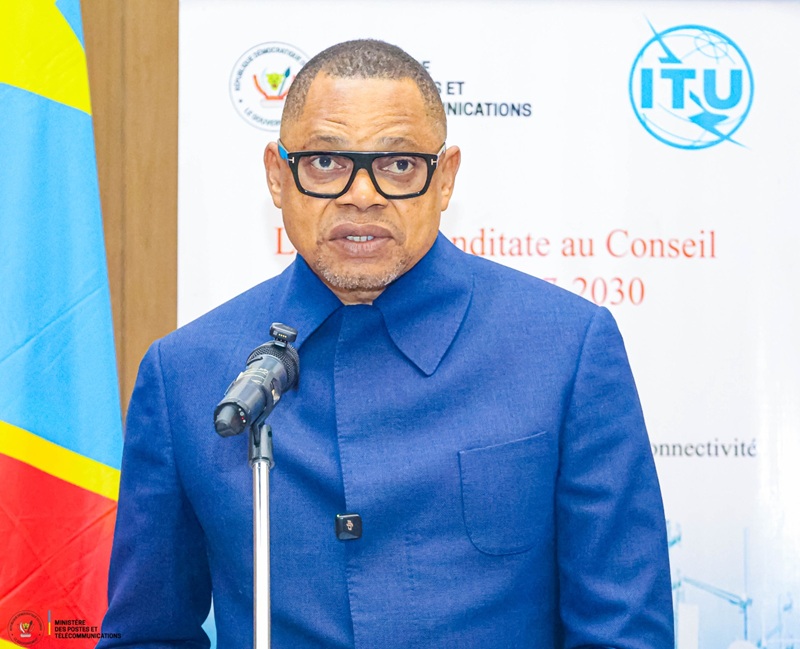
The Democratic Republic of Congo (DRC) is making a strategic push to secure a seat on the International Telecommunication Union (ITU) Council, aiming to shape global telecommunications policies for the 2027-2030 term. Minister of Posts and Telecommunications, José Mpanda Kabangu, hosted a high-level diplomatic gathering in Kinshasa to rally international support for the country’s candidacy ahead of the November 2026 Plenipotentiary Conference in Doha, Qatar.
a strategic move for digital sovereignty
Speaking at the Hilton Hotel in Kinshasa, Minister Mpanda emphasized that the DRC’s bid represents more than just national ambition—it’s a call for African solidarity in an era of rapid digital transformation. “Our ITU Council candidacy reflects our commitment to elevating the DRC to international connectivity standards while amplifying Africa’s voice in global telecommunications governance,” he stated, addressing ambassadors and telecom officials from across the continent.
The minister highlighted the DRC’s unique position as host to the African Telecommunications Union (ATU) headquarters, arguing that this makes it the natural choice to represent African interests in the ITU’s highest decision-making body. “With 13 African seats available, our country brings unmatched experience in telecom infrastructure development, digital inclusion, and human capacity building—resources critical for the continent’s digital future,” Mpanda noted.
diplomatic outreach and regional support
During the event, Mpanda directly appealed to diplomats to lobby their respective governments for support. He urged them to engage their foreign affairs ministries, telecom regulators, and relevant agencies to champion the DRC’s bid. The strategy appears designed to leverage the country’s strategic minerals—essential for semiconductors and AI infrastructure—as a key argument for inclusion in global tech governance.
Christian Katende, Chair of the DRC’s Post and Telecommunications Regulatory Authority (ARPTC), reinforced this vision by outlining four core commitments the DRC would bring to the ITU Council:
- Amplifying Africa’s voice in international telecom policy debates
- Driving investments in networks, satellites, data centers, and public digital infrastructure
- Championing balanced digital governance that balances innovation, security, and citizen protection
- Strengthening African regulators through knowledge sharing and capacity-building initiatives
“By supporting the DRC’s candidacy, you’re not just choosing a country that participates in digital transformation—you’re backing an Africa that helps design its future,” Katende told attendees, adding that the DRC’s mineral wealth—critical for global tech supply chains—positions it as a legitimate leader in shaping the rules of the digital revolution.
a united front for digital africa
Noëlla Ayeganagato, Deputy Minister of Foreign Affairs, underscored the government’s full backing of the initiative. She called on potential voting states to translate their diplomatic support into concrete action, emphasizing the ITU’s role in achieving sustainable development goals. “This bid is about more than the DRC—it’s about positioning Africa as a proactive participant in global digital governance,” she stated.
The DRC’s formal candidacy submission is scheduled for November 2026 in Doha, where member states will vote on the next Council composition. With over 110 million citizens and 74 million mobile subscriptions, the country presents itself as a major digital market with the potential to drive regional connectivity and innovation.