The Democratic Republic of the Congo (DRC) has uncovered a staggering irregularity within its national police force following a comprehensive government audit. The investigation revealed that 63,817 officers—nearly 40% of the 157,886 officers on record—are either fictitious or inactive, leaving the force critically understaffed.
This shocking disparity has drastically reduced the operational police-to-citizen ratio, leaving communities vulnerable to rising crime waves, particularly in the capital, Kinshasa. Authorities have responded by launching a nationwide verification campaign, beginning with biometric card issuance and physical verification of officers. The initiative aims to purge the system of false identities, eliminate payroll fraud, and streamline personnel management across all 26 provinces.
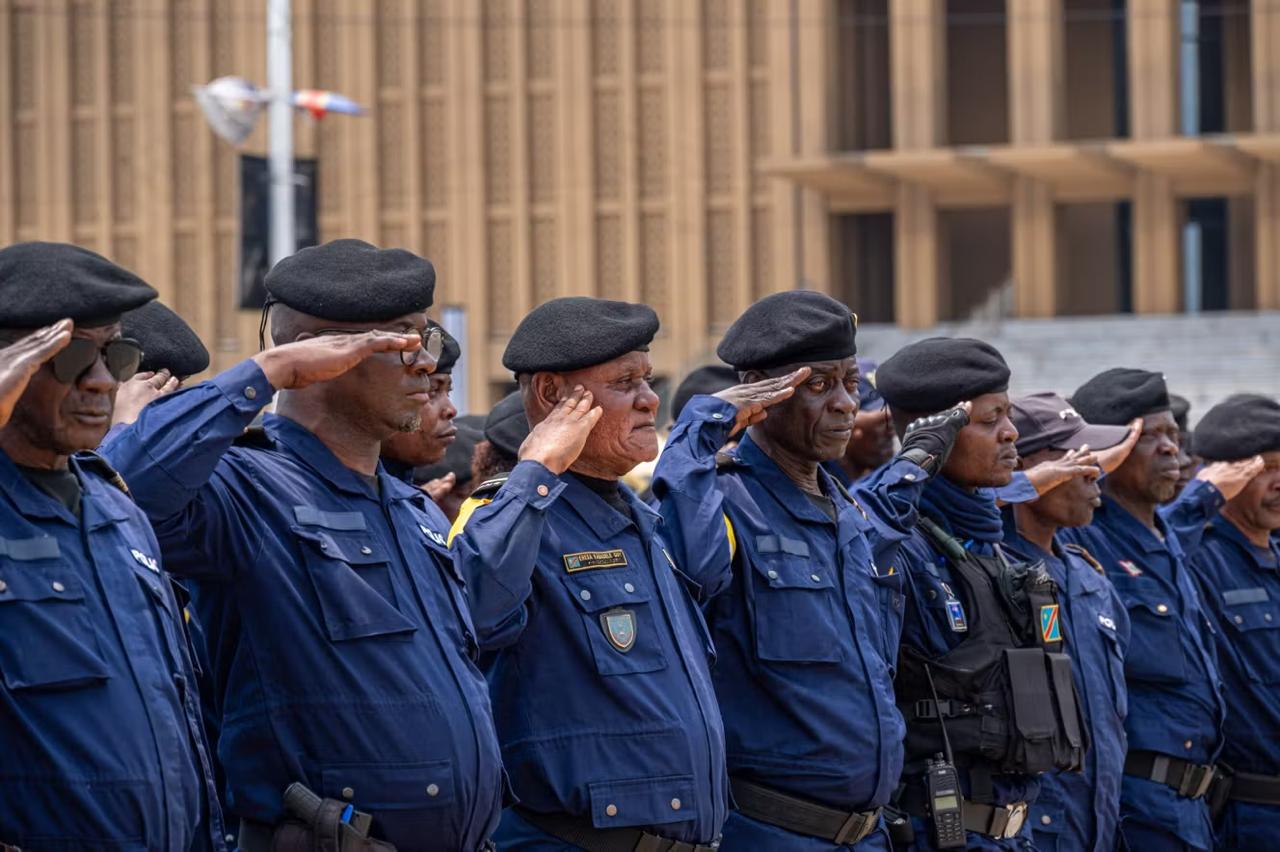
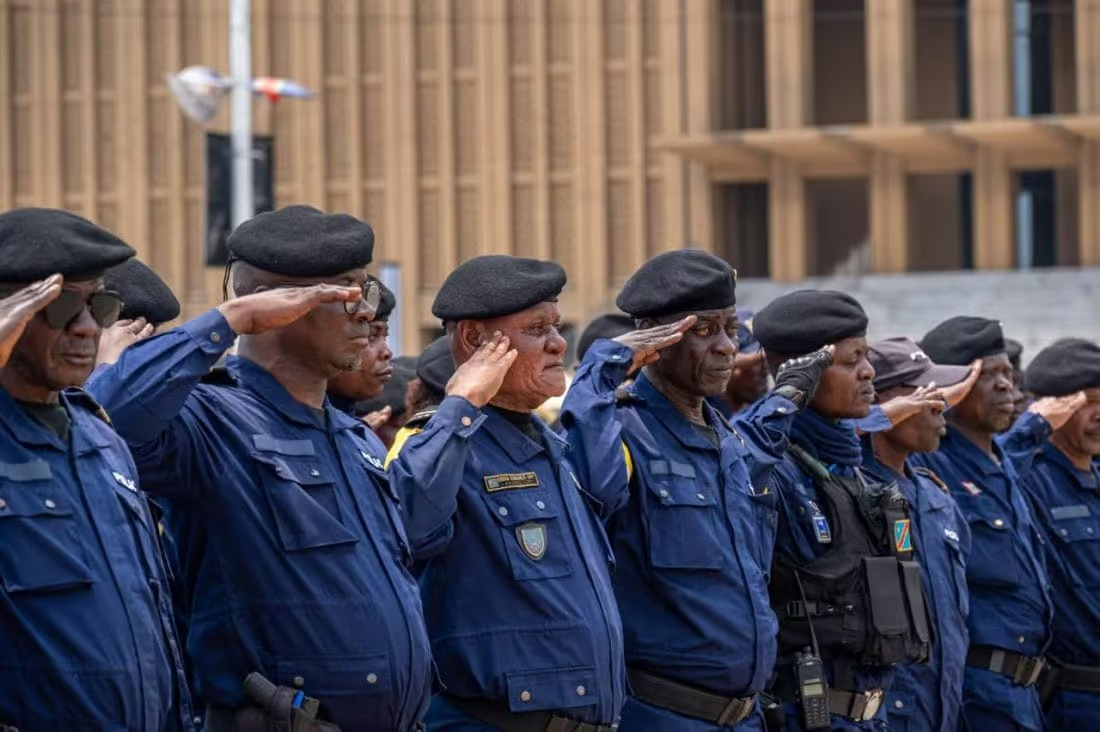 Congolese police officers during a parade in Kinshasa on February 24, 2025. © HARDY BOPE / AFP
A costly drain on public funds
The audit’s findings expose a financial hemorrhage, with irregular payroll costs draining between $99.8 million and $233 million annually from national coffers. This revelation underscores the urgency of the government’s ongoing security sector reform, a $2.55 billion initiative running through 2030. The plan includes recruiting and training 90,000 new officers, restructuring security institutions, and fostering stronger ties between law enforcement and local communities.
Security reform amid escalating threats
The crackdown on fictitious officers coincides with mounting public alarm over surging violent crime in Kinshasa. Residents report a spike in armed robberies, kidnappings, and assaults, forcing President Félix Tshisekedi to demand accelerated reforms and a tougher stance against criminal networks. The biometric verification drive represents a critical first step toward restoring public trust in the police force and ensuring that every taxpayer-funded salary supports an active, accountable officer.