- Breaking
- Politics
escalation of Sudan war spills into Chad’s border regions
Three years into Sudan’s brutal conflict, its flames have now reached Chad’s doorstep. Border strikes, military tensions, and communal clashes: N’Djamena is caught in the crossfire.
The war pitting Sudan’s army under General Abdel Fattah al-Burhan against the Rapid Support Forces (RSF) led by Mohamed Hamdan Dagolo, aka Hemedti, has raged since April 2023. Though Chad has publicly maintained neutrality, it has quietly backed the RSF—creating a dangerous contradiction at home.
N’Djamena’s support for the RSF, funded by the United Arab Emirates, has drawn sharp criticism. The irony? The RSF battles Zaghawa communities in Darfur, yet the Zaghawa are a cornerstone of Chad’s state apparatus. Weapons shipments have reportedly passed through towns like Amdjarass and Adré, a gamble that is now backfiring.
Tiné at the heart of turmoil
Two towns share the name Tiné—one in Sudan, one in Chad. Home to the same Zaghawa populations, these twin border towns serve as a critical crossing for civilians fleeing Darfur’s horrors. On February 21, 2026, the RSF seized the Sudanese side, triggering clashes with Toroboro fighters—Chadian and Sudanese militias allied with General al-Burhan—and unapproved Chadian troops. The city was retaken swiftly, prompting Chad to close the border in response. Yet fighting persisted, cementing the conflict’s grip on this transborder region.
The powder keg exploded on March 21, when a deadly drone strike hit Tiné, Chad, killing nearly two dozen civilians. N’Djamena denies involvement, but accusations fly. Opposition leader Ousmane Dillo, exiled in Sudan, released an audio message via private networks, directly blaming Mahamat Déby and calling for his ouster. He accuses the president of endangering the Zaghawa community. Across the border, Sudan’s Darfur governor, Minni Arkou Minawi, declared « the war with Chad has already begun », signaling a dangerous regional escalation.
Maximum alert as crisis deepens
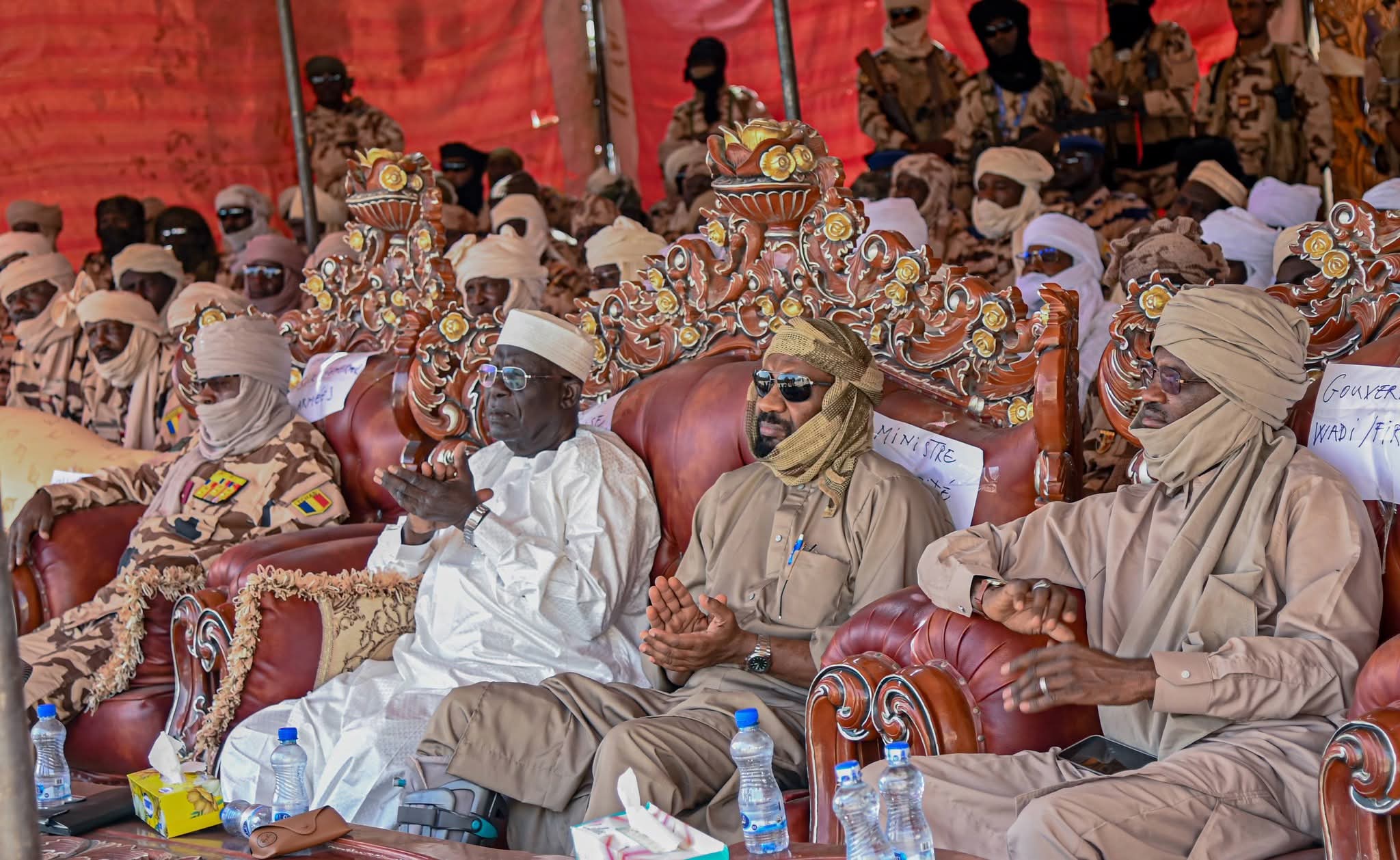
Chad’s government remains defiant. Government spokesman Gassim Chérif Mahamat reaffirmed Chad’s neutrality while vowing a “proportionate” response to attacks. President Mahamat Déby ordered the military to go on maximum alert. A March 22 security summit in Tiné brought together top military brass to fortify the border and prevent destabilization. « This is Chad’s Tiné, not Sudan’s. Let the Sudanese army, Toroboros, and RSF fight it out in their own country. They must not bring their war here to kill our people », declared General Ali Ahmat Akhabach, Minister of Security.
N’Djamena then banned civilians from crossing the border, trapping women and children fleeing Sudan’s war from reaching safety in Chad’s refugee camps. A move framed as preventing Zaghawa rebellion, but critics warn it does little for security. As Sudan conflict analyst Cameron Hudson noted, « Chad’s military buildup at the Sudanese border amid rising tensions risks dragging Chad deeper into the war, rather than keeping it out. Déby’s show of strength may be a grave strategic misstep. »
Community tensions fueled by regional war
The conflict’s ripple effects extend beyond the Zaghawa. Security sources report the RSF has been recruiting young men from the Tama community, a transborder group in Chad’s Wadi Fira and Ouaddaï regions and Sudan’s west. Though non-Arab, the Tama were integrated into janjawid militias—Hemedti’s forerunners—during the 2003 Darfur war, fighting other ethnic groups, including the Zaghawa. This rekindling of old wounds stirs deep societal fractures and stokes inter-community fears in Chad.
What was once a murky strategic calculation has morphed into an uncontrollable spiral. Chad’s government finds itself trapped in a conflict it may no longer control. The genie is out of the bottle—and it won’t go back in.
Listen now≈ 5 min
Content syndicationGet new articles in your favourite feed reader