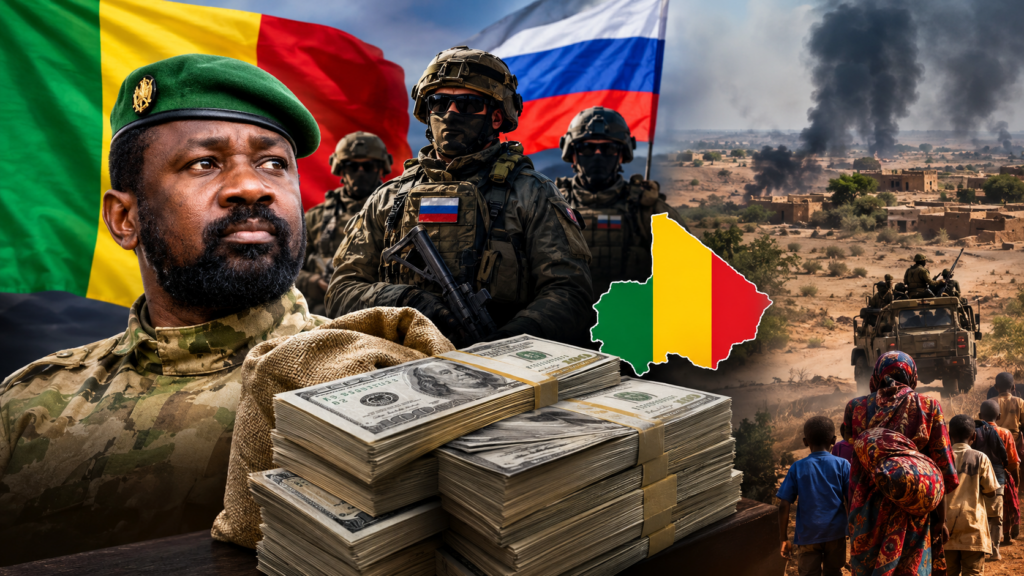
An extensive investigation has lifted the veil on the shadowy financial pipelines that sustain the operations of the Wagner Group across Africa. These clandestine networks, meticulously documented, reveal how illicit gold mining and smuggling operations feed the mercenary group’s war chest, fueling instability in fragile states.
The revelations, based on years of undercover research, expose a web of intermediaries, corrupt officials, and armed factions that facilitate the illicit trade. From remote mining sites to bustling black markets, the flow of blood gold—mined under brutal conditions—is being funneled through complex financial channels to sustain Wagner’s expanding footprint.
the hidden economy behind africa’s security crisis
Wagner’s presence in Africa has long been tied to resource exploitation, but the scale of its financial operations is only now coming into sharp focus. Investigators have traced gold from conflict zones in the Central African Republic and beyond, where armed groups and mercenaries control extraction sites, to international markets where it is laundered and monetized.
This illicit economy thrives on weak governance, porous borders, and the complicity of local elites who benefit from the arrangement. The gold, often extracted under duress by miners subjected to harsh conditions, is smuggled across borders with little oversight, enriching intermediaries while leaving communities in poverty.
how the system operates: a breakdown of the pipeline
- Extraction: Armed groups and Wagner-linked militias oversee gold mining operations in conflict-prone regions, forcing civilians into labor under dangerous conditions.
- Smuggling: Gold is transported across borders using covert routes, often through neighboring countries with lax enforcement, to obscure its origin.
- Laundering: The precious metal is funneled through a series of shell companies, front businesses, and corrupt financial institutions to erase its ties to conflict zones.
- Reinvestment: Profits are used to fund Wagner’s activities, including weapons purchases, recruitment, and logistical support for its African operations.
the human cost of blood gold
The pursuit of profit through illegal mining has devastating consequences for local populations. Miners, including children, work in hazardous conditions, facing exploitation, violence, and even death. Meanwhile, the profits fuel further conflict, creating a vicious cycle of instability that hampers economic development and humanitarian efforts.
International observers warn that without coordinated action to disrupt these networks, the cycle of violence and exploitation will persist, undermining peace and security across the continent.

what can be done to dismantle these networks?
Experts emphasize the need for a multi-pronged approach to disrupt Wagner’s financial lifelines. Key measures include:
- Strengthening border controls and customs enforcement to intercept smuggled gold.
- Imposing sanctions on individuals and entities involved in the illicit trade.
- Enhancing transparency in the gold supply chain to trace the metal’s origin.
- Supporting local communities to develop alternative livelihoods and reduce reliance on illegal mining.
- Collaborating with regional and international partners to track and freeze financial assets linked to Wagner’s operations.
The fight against these criminal networks is not just a matter of security—it is a moral imperative. By cutting off the financial flows that sustain Wagner’s operations, the international community can help restore stability and dignity to the communities caught in the crossfire.