The political landscape of Togo remains indelibly shaped by the events of 2005—a year that continues to evoke deep-seated divisions within the nation. While some interpret it as the dawn of a new era, international reports and survivor testimonies paint a far grimmer picture: a regime established through violent repression, particularly targeting communities in the southern regions, predominantly of the Ewe ethnic group.
The constitutional coup: undermining democracy
On February 5, 2005, the death of General Gnassingbé Eyadéma triggered a swift and controversial succession. Within hours, the Togolese Armed Forces (FAT) suspended the Constitution, barred the President of the National Assembly from returning to the country, and installed Faure Gnassingbé as head of state.
International condemnation from the African Union and ECOWAS forced Faure to resign temporarily, though he soon reclaimed power by hastily organizing a presidential election. This institutional overreach not only violated democratic norms but also sowed lasting distrust between the government and opposition forces.
The April 2005 massacre: a devastating toll
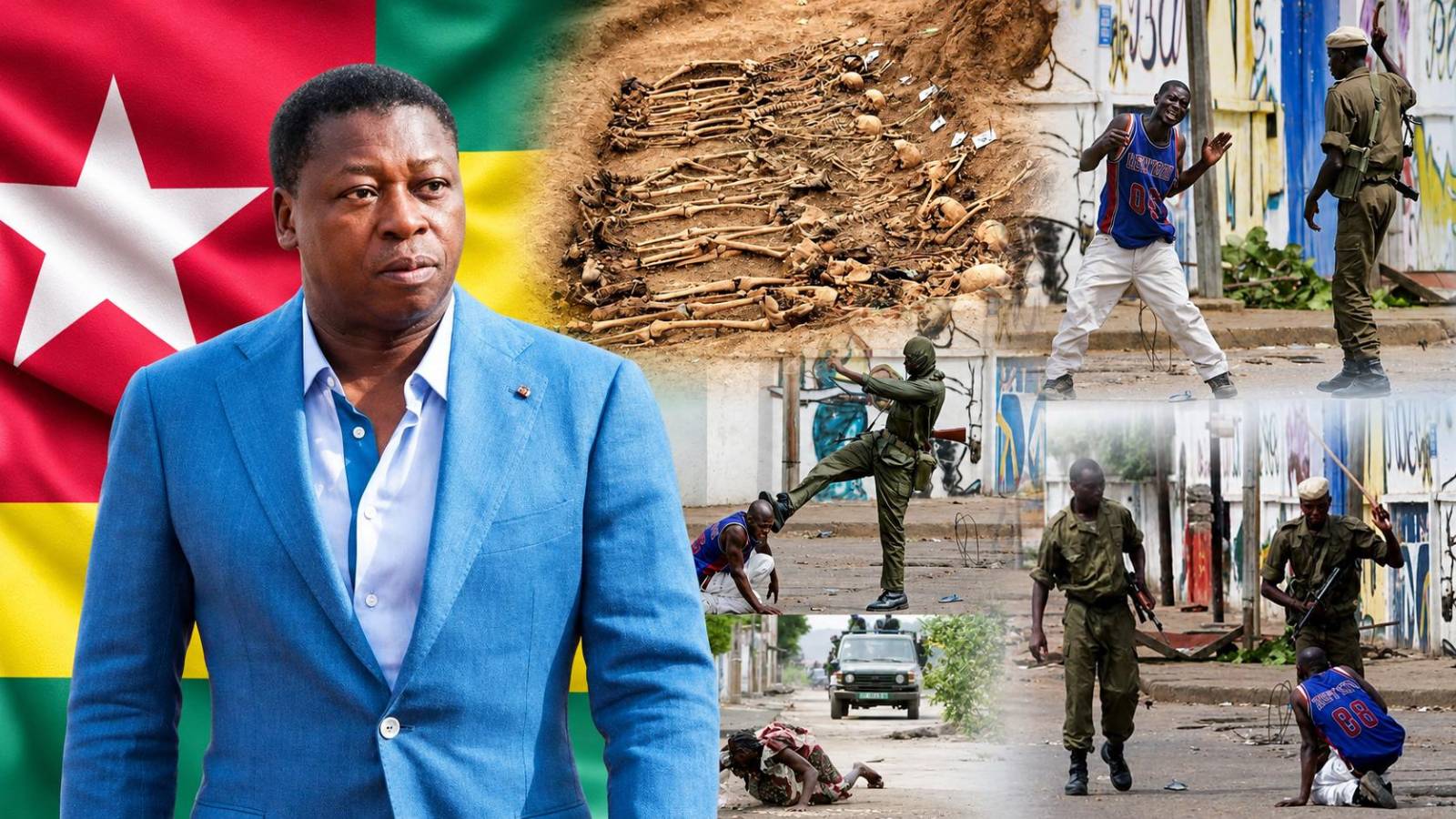
The aftermath of the election results—declaring Faure the winner with 60% of the vote—sparked widespread unrest across Togo. Official figures and independent estimates reveal a harrowing death toll, though discrepancies persist between sources.
The United Nations investigation documented between 400 and 500 fatalities, while human rights organizations, such as the Togolese League for Human Rights (LTDH), reported over 1,000 deaths. These acts of violence were not isolated incidents but systematically targeted opposition strongholds in Lomé and southern cities like Aného and Atakpamé—regions historically aligned with the Ewe community.
The role of Kabyè militias and ethnic exploitation
One of the most disturbing dimensions of the crisis was the deployment of civilian militias, often composed of individuals from the Kabyè ethnic group (the clan of the ruling family). Reports from Amnesty International and other watchdogs detail how these militias, sometimes collaborating with military units, carried out punitive raids against southern neighborhoods.
Survivor testimonies recount horrific scenes: “Militiamen opened fire on unarmed civilians… victims were beaten to death in front of their families.” These atrocities forced nearly 40,000 Togolese to flee to neighboring Benin and Ghana, exacerbating a humanitarian crisis in West Africa.
Impunity as a pillar of governance
Despite the establishment of the Truth, Justice, and Reconciliation Commission (CVJR) in 2009, accountability for the 2005 massacres remains elusive. No high-ranking military officers or militia leaders have been held accountable, reinforcing a culture of impunity that persists to this day.
A legacy of unresolved trauma
Two decades after the events of 2005, Faure Gnassingbé’s rise to power is still overshadowed by accusations of illegitimacy. While the current administration projects an image of stability and progress, analysts argue that true national reconciliation cannot occur without addressing the suffering of the southern communities. Without justice, the wounds of 2005 will remain unhealed, casting a long shadow over Togo’s future.