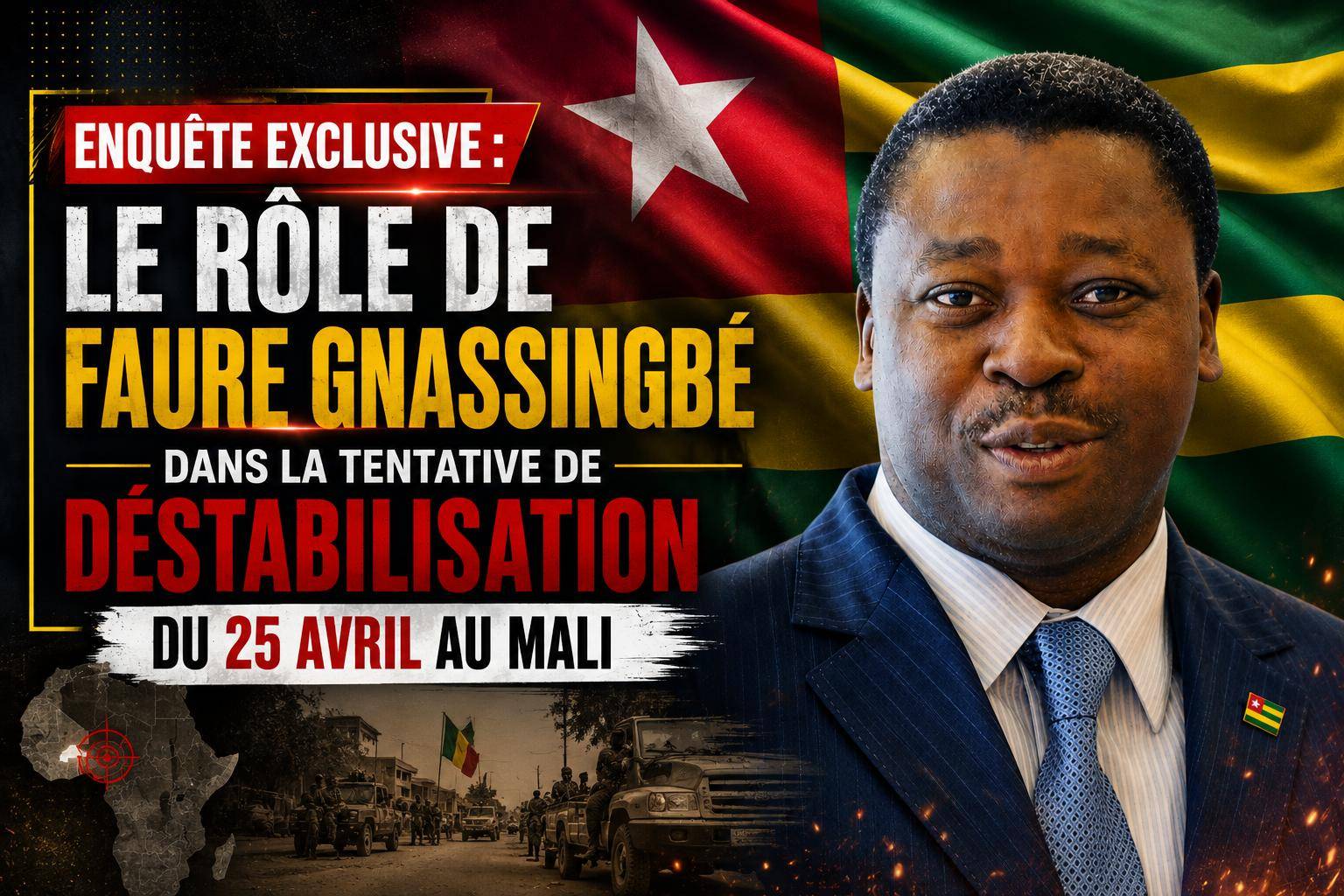
While Lomé portrays itself as a regional mediator, a darker undercurrent is surfacing in Western chancelleries. According to diplomatic sources and declassified US intelligence reports, the administration of Faure Gnassingbé allegedly facilitated covert negotiations between Burkina Faso’s Captain Ibrahim Traoré and jihadist factions of the Group for Support of Islam and Muslims (JNIM). The alleged pact? A fragile truce in Burkina Faso in exchange for a coordinated assault on neighboring Mali under Colonel Assimi Goïta. By brokering this alliance between terrorists and rebel groups like the Front de Libération de l’Azawad (FLA), the Togolese leader risks igniting a powder keg that could fracture the Alliance of Sahel States (AES)—all to serve his own diplomatic survival.
From mediator to manipulator: Togo’s double game in the Sahel
For over half a century, the Gnassingbé dynasty has clung to power in Togo by positioning itself as an indispensable player. Faure, inheritor of a five-decade autocracy, has mastered the art of making himself central to regional crises. Yet beneath the diplomatic smiles exchanged at summits in Lomé, intelligence agencies—including the CIA and French military intelligence—have uncovered a clandestine diplomatic machine at work. This machinery doesn’t just engage with coup leaders; it now stands accused of acting as a go-between for sovereign states and internationally blacklisted terror networks.
The secret deal: JNIM spares Ouagadougou to strike Bamako
Investigations reveal that under Faure Gnassingbé’s covert sponsorship, emissaries from Ouagadougou and senior commanders of the JNIM convened multiple times. The terms were brutally pragmatic: JNIM would ease attacks on Burkina Faso to allow Captain Ibrahim Traoré to consolidate domestic control. In return, the jihadist coalition gained unfettered access to Mali—a prime target. This wasn’t limited to a simple non-aggression pact. Intelligence reports indicate Lomé may have actively encouraged, or at least enabled, an unholy alliance between the JNIM and the FLA. Their shared goal? To topple Assimi Goïta in Bamako, perceived as too rigid or too aligned with influences that conflict with Togo’s strategic interests.
The AES betrayal: April 25 as a turning point
The façade crumbled on April 25 during a coordinated assault by a JNIM-FLA hybrid force on Mali. What followed exposed the depth of the secret agreements. In a statement broadcast via known propaganda channels, attackers explicitly urged Burkina Faso and Niger not to intervene, declaring, “This is a matter between us and Bamako.” Even more alarming was the inaction of Burkinabè and Nigerien troops that day—an omission that stunned military observers. According to the protocol secretly negotiated in Lomé, Ibrahim Traoré’s forces adhered to a strict non-interference clause, leaving Mali exposed. The Alliance of Sahel States, meant to be an unbreakable bulwark against terrorism, shattered under the weight of Togolese deception.
Why is Faure Gnassingbé playing with fire?
At its core, this strategy is rooted in survival. By destabilizing its neighbors, Lomé ensures no successful governance model emerges to challenge its own autocratic rule. It also leverages the threat of security breaches: by maintaining a backchannel with the JNIM, Togo shields its northern borders, even if it means sacrificing Mali. Above all, weakening Assimi Goïta remains a top priority. The Malian leader’s resistance to compromise diminishes Togo’s regional influence. His downfall or weakening would restore Faure’s role as the Sahel’s indispensable broker—at the expense of African solidarity.
A ‘firefighter-pyromaniac’ diplomacy with devastating consequences
The reckless maneuvers of Faure Gnassingbé carry irreversible consequences. Trust between Ibrahim Traoré and Assimi Goïta has eroded beyond repair. When one leader secretly negotiates with the enemy of the other, how can cooperation ever be restored? Togo’s actions haven’t just weakened Mali—they handed the JNIM a strategic victory: the fragmentation of Sahelian armies. Now, jihadist groups no longer need to fight multiple fronts simultaneously. With Lomé’s tacit approval, they can isolate and dismantle their targets one by one, secured by a state willing to play the role of enabler.
The cost of autocracy
Togo, under Faure Gnassingbé’s iron grip, is increasingly isolated behind a smokescreen of diplomacy. By attempting to manipulate both terror groups and power-hungry officers, Lomé has sabotaged the hope for a unified response to terrorism in West Africa. History may record that it was in Lomé where the dagger was sharpened—and plunged into the back of Mali. Western intelligence agencies now see the Togolese “mediator” for what he truly is: a destabilizing force willing to plunge the Sahel into chaos and jihadist flames to preserve his own throne. Should Assimi Goïta fall, the collapse will carry Lomé’s signature—but the resulting chaos will spare no one, not even those who thought they could tame the storm.