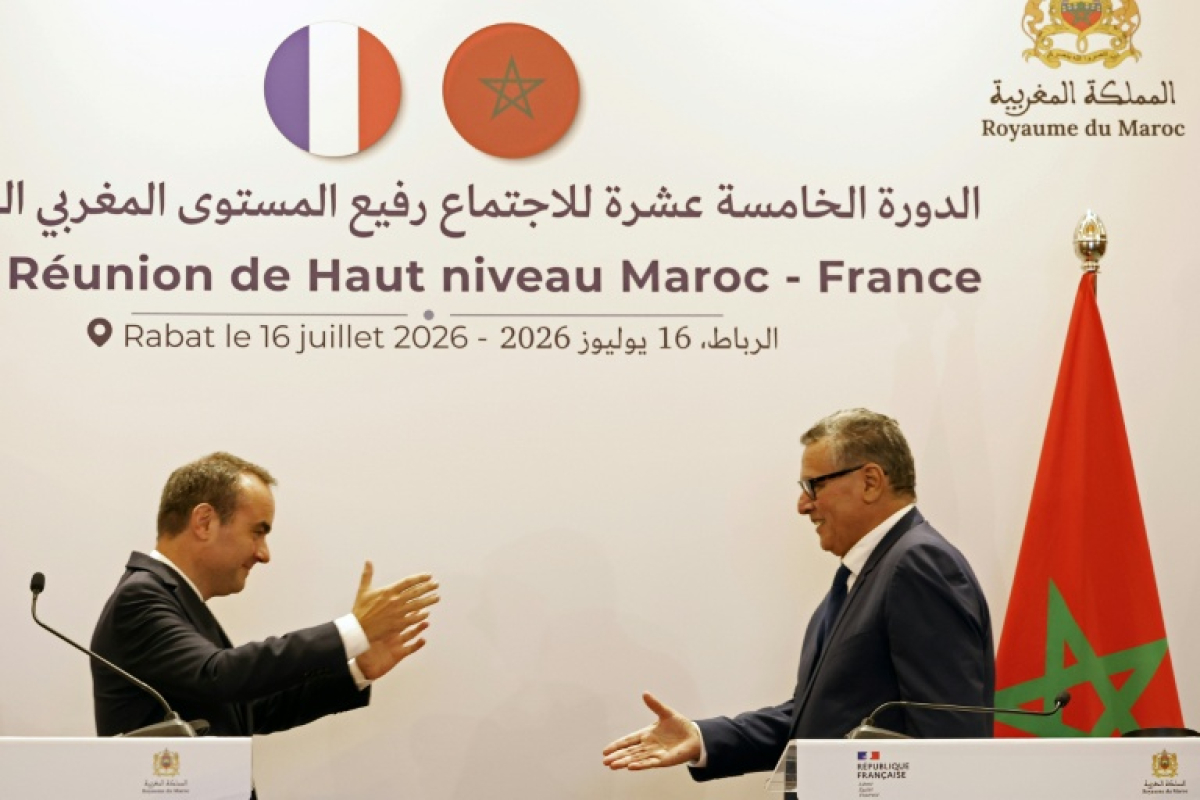
Rabat witnessed a landmark display of diplomatic rapprochement this week as French Prime Minister Sébastien Lecornu met with his Moroccan counterpart, Aziz Akhannouch, to consolidate bilateral relations. The visit marked a significant step forward in the healing process initiated by French President Emmanuel Macron and King Mohammed VI, following a period of strained ties.
The French head of government hailed the current state of Franco-Moroccan relations as “exceptionally positive,” a sentiment echoed by observers who noted the dramatic shift since Macron’s 2024 recognition of Morocco’s sovereignty over Western Sahara—a move that had previously strained relations with Algeria.
The French president’s subsequent state visit to Rabat in October 2024 served as a turning point, ending three years of diplomatic friction fueled by espionage allegations and visa restrictions. The visit culminated in the signing of multiple agreements and the establishment of an “exceptional strengthened partnership.”
During this week’s meetings, both leaders emphasized the need to “elevate the relationship to a new level,” particularly in areas of security, counterterrorism, and economic cooperation. A highlight of the discussions was the announcement of a potential state visit by King Mohammed VI to France, along with the drafting of a groundbreaking treaty—the first such agreement France has pursued outside the European Union.
Navigating challenges amid progress
Despite the positive momentum, shadows lingered over the proceedings. An international media consortium released fresh reports alleging Morocco’s use of the Pegasus spyware, prompting denials from Rabat, which dismissed the claims as “false and baseless.” French officials, including members of Lecornu’s delegation, downplayed the controversy, framing it as an outdated issue.
The absence of a full press conference—replaced by brief statements without Q&A—further fueled speculation, though both governments refrained from addressing the matter publicly. The Quai d’Orsay and the prime minister’s entourage remained tight-lipped, with French officials focusing instead on the broader strategic vision shared by Paris and Rabat.
A partnership rooted in shared ambition
“Our goal is to deepen cooperation and trust with Morocco,” stated a spokesperson for the Élysée Palace. The sentiment was mirrored by King Mohammed VI in a message to Macron on the occasion of Bastille Day, where he praised the “consolidation of privileged relations” between the two nations.
Security cooperation emerged as a central pillar of the renewed alliance, with both sides celebrating recent successes in dismantling organized crime networks and drug trafficking operations. Lecornu underscored the importance of Africa, particularly the Sahel region, where jihadist threats persist. “Working together in Africa is not just beneficial—it’s essential,” he remarked.
Aziz Akhannouch, Morocco’s prime minister, framed the partnership as a strategic alignment built on “shared political will, renewed trust, and collective ambition.” He highlighted the shift in French diplomacy toward prioritizing Morocco over Algeria, signaling a departure from Paris’s traditional balancing act in the Maghreb.
The Sahel dossier, a longstanding source of friction, saw France leaning more heavily on Morocco for intelligence and operational support, as Algeria’s cooperation remained limited despite recent rapprochement efforts.
Economic and infrastructural milestones
The 15th edition of the High-Level Meeting between the two delegations—unprecedented since 2019—yielded a dozen agreements, including a call for expressions of interest in cross-border electricity interconnection. Morocco also inked loan agreements with the French Development Agency for water infrastructure and a regional express rail (RER) project in Rabat.
On visas, a recurring point of contention in past years, Lecornu announced a shift toward facilitating “circular mobility” between the two countries, particularly for entrepreneurs and students. This move aims to ease restrictions that had sparked tensions in 2021 and 2022.
The visit underscored a broader realignment in Franco-Moroccan relations, one that transcends historical grievances and sets the stage for deeper collaboration in the years ahead.